Astrid Lindgren books in order: where to start
Astrid Lindgren wrote in registers so different that a reader who knows only Pippi Longstocking will be unprepared for The Brothers Lionheart, which opens with a child dying and is about death for its whole length. This path is organised by register rather than by publication date, so a parent choosing a book knows what they are handing over: the anarchic comedies first, then the quiet picture books, then the everyday-Sweden stories, then the long adventures, and finally the three dark late novels that are the reason Lindgren is taken seriously as a novelist and not only as a children's writer. One buying note that applies throughout: most of these exist in more than one English translation and several also exist as abridged picture-book adaptations, so check that the edition in your basket is the full novel.
The Anarchic Comedies
BeginnerStart with the books Lindgren is famous for, and see the thing she does that almost no other children's writer does — a child with total power and no adult supervision, played entirely straight.
▸ Study plan for this stage
Pace: A week or two, depending on whether you are reading these yourself or aloud. Best of Pippi Longstocking is a 381-page omnibus containing the whole Pippi trilogy — Pippi Longstocking, Pippi Goes on Board and Pippi in the South Seas — so buying it gets you all three and you do not need the individual
- A child with total power and no adult supervision, played entirely straight — Pippi is stronger than any adult, lives alone, and is never once punished
- Lindgren's refusal to moralise: the adults who try to correct Pippi are the comic butts, and the book does not eventually side with them
- Karlson as the same joke from the ordinary child's side — Lillebror is supervised, lonely and normal, and the ungovernable figure arrives at his window
- Karlson is selfish, boastful and unreliable, and Lindgren does not soften him, which is why the book is funnier and less comfortable than its reputation
- The episodic chapter as a unit: each is a self-contained set-piece, which is what makes both books work read aloud a chapter at a time
- Translation and abridgement — several of these exist in more than one English version and also as shortened picture-book adaptations, so check that the edition in your basket is the full text
- What does Lindgren gain by making Pippi physically stronger than every adult rather than merely cleverer than them?
- Where in the Pippi books does an adult win an argument, and what happens next?
- Karlson does things a children's book character is normally punished for. Name three, and say what the book does instead.
- What is the difference between the comedy of Pippi and the comedy of Karlson, given they share a premise?
- If you are handing one of these to a child, what have you actually learned about them by the end — and what have you not?
- Read the first chapter of Pippi Longstocking in the omnibus aloud, even if you are reading the rest silently. The prose is built for the voice and the jokes land differently spoken.
- Keep a list of every adult authority figure Pippi encounters across the three novels in the omnibus and what happens to them. The pattern is completely consistent and it is the book's actual argument.
- Read one Karlson chapter immediately after a Pippi chapter and write down which one you would rather have in your house. That comparison is the fastest way to see what Lindgren is doing with the two characters.
- Before buying anything further on this path, check one title against two editions — a full novel and a picture-book adaptation of the same story. Knowing what an abridgement looks like saves a wasted purchase later.
Next up: Having seen Lindgren at her loudest, the picture books show the register almost nobody expects from her.

This is the omnibus, and in our catalogue it is the only clean English record for the first Pippi book — it collects Pippi Longstocking, Pippi Goes on Board and Pippi in the South Seas in one volume, so buying it gets you the whole trilogy in order and you do not need the individual books as well. A nine-year-old lives alone with a horse and a monkey, is stronger than any adult, and is never once punished for it.
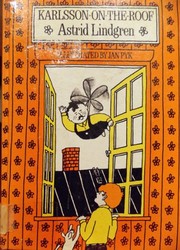
Pippi's less famous companion piece: a small fat man with a propeller on his back lands on a lonely boy's windowsill and proceeds to be selfish, boastful and enormous fun. Read it after Pippi — it is the same joke about ungovernable freedom, told from the ordinary child's side.
The Quiet Picture Books
BeginnerMeet the other Lindgren — slow, wintry and almost wordless — and have something short to read aloud alongside the longer books.
▸ Study plan for this stage
Pace: An evening for both. The Tomten is a picture book and The runaway sleigh ride is 33 pages, so this is the shortest stage on the path by a wide margin — its value is contrast, not volume. Read The Tomten first and read it slowly; the whole effect depends on not hurrying. Note for the adult: these two
- Deliberate plotlessness — a farm gnome walks around a sleeping farm in the snow and talks to the animals, and nothing else happens
- The Tomten as the clearest statement of Lindgren's tone: affectionate, unhurried, entirely unsentimental about winter and cold
- Text and image doing separate jobs, which is different from the illustrated chapter books elsewhere on this path
- The winter and the farm as Lindgren's permanent setting — the same landscape carries the Noisy Village books and the Emil books
- Reading aloud as the intended mode: both of these are performance texts and lose something read silently
- Register as a real variable in this author, established here with the two furthest-apart books sitting one stage apart
- What holds The Tomten together if there is no plot — what is the actual structure?
- How much of the book's effect belongs to the pictures rather than the words?
- Why does the tomten speak to the animals and not to the people?
- Having now read Pippi and this, could you describe Lindgren's voice to someone in one sentence that covers both?
- Read The Tomten aloud at the pace the pictures suggest rather than the pace the sentences allow. The mismatch is the book's whole method.
- Cover the illustrations and read the text of The Tomten alone. Then do the reverse. Write one line on which half carries more.
- Read The runaway sleigh ride straight after a Pippi chapter, then write two sentences on what the same author is doing differently. Keep the note — it is the register argument this whole path is organised around.
- Pick which of these two you would give to a three-year-old and which to a six-year-old, and say what in the text decided it.
Next up: You have now seen both ends of Lindgren's range, which makes the everyday books legible as the middle ground they are.
A farm gnome walks around a sleeping Swedish farm in the snow, talking to the animals. Nothing happens, deliberately. It is the quietest thing Lindgren put her name to and the best short introduction to her tone.

A short, warm winter story that works for a much younger listener than anything else on this path. Useful as the bridge for a family reading Pippi to an older child with a smaller one in the room.
Everyday Sweden
BeginnerRead the loosely linked series about ordinary farm and small-town children, which is where most Swedish readers actually start, and see why the Emil books are structured as a list of disasters.
▸ Study plan for this stage
Pace: Three to four weeks. Five short books: The Children of Noisy Village is 124 pages, Emil in the Soup Tureen 110, Lotta on Troublemaker Street 57, plus Happy Times in Noisy Village and Emil's Pranks. Read the two Noisy Village books in order, then the two Emil books in order — in both cases the second
- The accumulation of ordinary days as a structure — Noisy Village has no plot and no villain, and the appeal is entirely the accretion
- Six children on three farms across a year: the calendar, not conflict, is what organises the book
- Emil as escalation comedy — each book is a list of disasters, and the second is funnier only because you already know the toolshed
- The wooden figures as a running tally of offences, which is the joke's engine and Lindgren's neatest piece of comic bookkeeping
- Lotta as the smallest possible domestic crisis — a five-year-old runs away across the road because a jumper is scratchy — and the most contained thing here
- These are the books Swedish children actually start with, which is worth knowing when the English-language reputation is all Pippi
- Where these sit for the adult choosing: gentler and quieter than Pippi, so they are the answer for a child who found Pippi too loud
- What makes The Children of Noisy Village readable when nothing happens in it?
- Why is Emil's Pranks funnier than Emil in the Soup Tureen, given the jokes are the same shape?
- How does the toolshed work as a comic device, and what does it require the reader to accept about the setting?
- Lotta is 57 pages about a jumper. What does Lindgren treat seriously in it, and what does she treat as comic?
- Which of these five would you hand to a child who liked Pippi, and which to a child who did not?
- Read the two Noisy Village books and keep a list of the six children with one distinguishing fact each. The books never summarise the cast and the second assumes you have it.
- Count Emil's wooden figures as you read both books. The count is the plot, and tracking it turns a loose comic collection into a structure.
- Read Lotta in one sitting and then reread the first two pages. Lindgren establishes the entire domestic geography — houses, road, attic — in about 400 words, and the trick is worth seeing twice.
- Set a Noisy Village chapter beside a Pippi chapter from stage one and mark every place a Noisy Village adult behaves differently from a Pippi adult. That difference is the whole reason these two series are on separate stages.
- Write the two-line note you would give another adult about the Emil books before lending them, covering the toolshed. Practising that note here is the point of the exercise, because the last stage needs a harder version of it.
Next up: These are short episodic books; the next stage moves to full-length novels with real plots, which is a genuine step up in stamina.
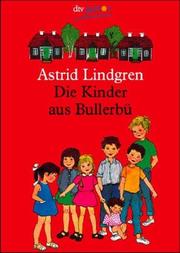
Six children on three neighbouring farms, one chapter per small event across a year. No plot and no villain; the appeal is the accumulation of ordinary days, and it is the gentlest full-length Lindgren.

More of the same, and read second because the characters are already established. Together these two are the book to reach for when a child found Pippi too loud.
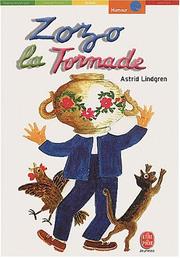
The first Emil book, and the funniest: a small boy in rural Smaland gets his head stuck in a soup tureen and is locked in the toolshed, where he carves a wooden figure for every offence. The whipping-and-toolshed detail is period-accurate farm discipline and is played for comedy, which some parents will want to know in advance.

The second collection, funnier for a reader who already knows the toolshed running joke. The escalation only works in order.
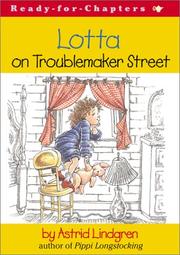
A five-year-old runs away from home to the attic across the road because her jumper is scratchy. The shortest and most contained of the everyday books, and the easiest first chapter book on this path.
The Longer Adventures
IntermediateMove up to full-length novels with real plots, and read the two books that show Lindgren working in adult genres for children.
▸ Study plan for this stage
Pace: Two to three weeks. Bill Bergson, Master Detective is 200 pages and Seacrow Island 286 — the first full-length novels on the path, and the first books here where a reader needs to hold a plot across chapters. Read Bill Bergson first; it is shorter, faster and more conventionally structured. Seacrow
- Lindgren writing in an adult genre for children — Bill Bergson is a properly plotted detective novel, not a spoof of one
- Plot as a new demand on the reader: chapters that depend on earlier chapters, which nothing in the previous three stages required
- Seacrow Island's summer-holiday structure, in which the island and the season do the work a plot would normally do
- Adults with their own interior lives, which is new here and is one of the things that makes Lindgren readable to adults
- Length and pace as the practical variable for a child moving up from Noisy Village — this is the bridge stage, and it exists for that reason
- How Lindgren handles a bereaved family without making the book about bereavement
- Does Bill Bergson play fair as a detective novel — is the reader given what Kalle is given?
- What is Seacrow Island actually about, if it is not about an event?
- How do the adults in Seacrow Island differ from the adults in Noisy Village, and what does the book gain from the change?
- Which of these two is the better recommendation for a reader who has outgrown Emil, and on what grounds — length, subject or difficulty?
- Is either of these a preparation for the dark novels, or are they a different kind of book altogether?
- Read Bill Bergson with a suspect list and update it at each chapter break. Then check, at the reveal, whether you had the information in time.
- Map Seacrow Island — the house, the shore, the other families — on a sheet of paper as you read. Lindgren builds the geography carefully and the book is much clearer with it drawn.
- Pick one adult character in Seacrow Island and write down everything the book tells you about their life outside the children's view. It is more than you expect and it is why the novel reads older.
- Compare the first page of Bill Bergson with the first page of Emil in the Soup Tureen. Same author, one aimed at a reader who can hold a plot and one at a reader who cannot — say in two sentences how the sentences themselves differ.
Next up: A reader who can carry a 286-page novel is ready for the three late books, which are shorter than Seacrow Island and much heavier.
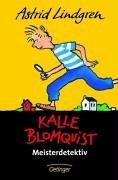
A straight detective novel with a schoolboy detective, written before Lindgren had a reputation to protect and plotted properly. Good for a reader who has outgrown Noisy Village but is not ready for Lionheart.
A widowed father takes his four children to a Stockholm-archipelago island for the summer. It is longer and slower than anything above, with adult characters who have their own problems, and it is the natural step up in length.
The Dark Novels
IntermediateRead the three late books that changed what Lindgren was, and be able to tell a parent exactly what is in them before handing one over.
▸ Study plan for this stage
Pace: Three to four weeks, and worth spacing out rather than reading back to back. Mio, My Son is 178 pages, The Brothers Lionheart 192 and Ronia, the Robber's Daughter 176 — short books, and the shortness is part of why they hit hard. Read Mio first as the least frightening, then Lionheart, then Ronia. S
- Death as the subject rather than as an event — Lionheart is about it from the first page to the last, and does not resolve it
- The neglected or unwanted child as the starting position of both Mio and Lionheart, and the fantasy world as the place where that child is finally wanted
- The 1973 controversy over Lionheart, and Lindgren's stated defence, as a fact about the book's reception rather than a verdict on it
- Ronia as the best-constructed of the three and the least bleak: two children refuse their fathers' feud, and the book is about that refusal rather than about death
- Lindgren's late style — short sentences, formal cadence, almost no comedy — and how far it is from the Pippi voice
- Register as the thing this whole path is organised around, and this stage as the reason it had to be: Pippi and Lionheart are the same author and not the same book for the same child
- Why Ronia belongs last: it is more demanding than anything in the earlier stages and it is the novel Lindgren ended on
- What is Mio actually escaping from, and how does the framing story change the fantasy that follows?
- The Brothers Lionheart ends with a choice. State what the choice is, and what the book does and does not tell you about what follows it.
- What was the 1973 objection to Lionheart, and what was Lindgren's answer to it?
- How is Ronia less bleak than Lionheart when its threat is more physical?
- Which of the three would you hand over first, to which reader, and what would you say to the adult in the house beforehand?
- Having read all five stages, can you now state the range of this author in two sentences, one for each end?
- Read the first chapter of Mio and the first chapter of Lionheart on the same evening. Both begin with an unwanted or dying child; write down how differently each book tells you so.
- Write the note you would actually give another adult before lending them The Brothers Lionheart — what the book contains, in plain terms, and why it is worth reading anyway. This is the practical deliverable of the whole path and stage three was the rehearsal.
- Reread the closing pages of Lionheart after finishing Ronia. Ronia's ending is a refusal and Lionheart's is an acceptance; the pair reads as an argument, and setting them together makes it visible.
- Go back to the omnibus in stage one and read one Pippi chapter immediately after finishing Ronia. That single reading does more than any summary to show what 'organised by register' means.
- Draw up a one-page guide for yourself: five stages, which register each holds, and which book you would reach for in three specific situations — a child who found Pippi too loud, a child who has outgrown Emil, and an adult who has never read Lindgren at all.
Next up: This is the end of the path: you have Lindgren's full range in order of register, and you can tell an adult exactly what is in each book before it changes hands.
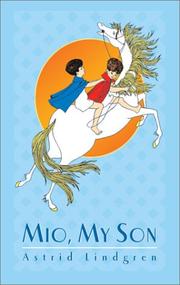
A neglected foster child is taken to a fairy-tale kingdom and sent to kill a knight who steals children and turns them into birds. The first of the dark books, and the least frightening of the three — start here.
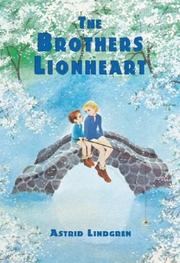
A dying boy and his brother meet again in an afterworld and fight a tyrant, and the book ends with the two of them choosing to die a second time. It is about death from the first page to the last, it was attacked on publication for exactly that, and Lindgren defended it on the grounds that children already know about death. Read it, but read it knowing.

Her last novel and the best-constructed: two children born to feuding robber clans grow up in a forest full of genuinely menacing creatures and refuse their fathers' war. Less bleak than Lionheart and more demanding than anything in the earlier stages, so it belongs last.