Start with Pippi. Our catalogue's record for her is a collected edition, Best of Pippi Longstocking, which gathers the original Swedish volumes named in its subtitle rather than being a single novel — so one purchase gets you the whole of the character. Pippi is the fastest possible test of whether Lindgren's comic voice works in your house: a girl who lives alone with a horse and a monkey, lifts the horse when she feels like it, and treats every adult who tries to manage her as a mild logistical problem.
The reason to be deliberate about the rest is that Lindgren wrote in three registers that have almost nothing to do with each other, and a child who loves one may want nothing to do with another. There are the comedies. There are the pastoral books where essentially nothing happens. And there are the fairy-tale novels, which are about death. Buying by author name alone will eventually put a book about a dying child in the hands of someone who wanted more Pippi.
The comedies
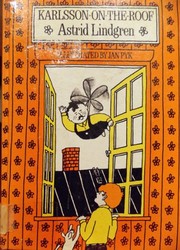
Karlson on the Roof is the purest of them — a small, fat, self-satisfied man with a propeller on his back who lands on a lonely boy's windowsill and causes chaos. He is enormously popular in Sweden and in Russia and much less known in English, which is a shame.
Emil in the Soup Tureen and Emil's Pranks follow a farm boy in Smaland whose every good intention produces a catastrophe, told in short episodes that read aloud very well. Lotta on Troublemaker Street is a small, warm book about a five-year-old who decides to leave home and gets as far as the attic next door. Our list has the first Emil and the first Lotta; there are further volumes in both, not in our catalogue.
The pastoral books
The Children of Noisy Village and Happy Times in Noisy Village have almost no plot at all: six children on three neighbouring farms, across a year of haymaking and crayfishing and name days. Adults sometimes find them slight. Children who like them tend to like them enormously, and they are the gentlest thing Lindgren wrote. Seacrow Island does the same for a family's summers in the Stockholm archipelago and is aimed a few years older.
The Tomten and The runaway sleigh ride are picture books, for a much younger listener than anything else here. The Tomten is Lindgren's version of a Viktor Rydberg poem: a farm gnome walking through a winter night, talking to sleeping animals. It is a mood, not a story.
The fairy-tale novels, and what they contain
Mio, My Son is about a neglected foster child who is taken to another world and sent to fight a knight who steals children's hearts. It is frightening on purpose.
The Brothers Lionheart is the one to know about before you hand it over. The younger brother is dying of an illness in the opening chapters and knows it; the older brother dies first, in a fire, saving him; they meet again in an afterworld. The ending, in which both brothers choose to move on to a further world, has been argued over since the book was published in 1973 and continues to be. It is also, by wide agreement, the best book she wrote. Both things are true, and the adult handing it over is the one who should decide.
Ronia, the Robber's Daughter is her last major novel and the easiest of the three to give to anyone: two children born to feuding robber clans, a forest, a winter alone in a cave. It has real danger in it and no dying child.
The detective books, and Lindgren for adults
Bill Bergson, Master Detective is a boy-detective story pitched older than the comedies; two sequels exist and are not in our catalogue. If you are reading Lindgren yourself rather than for a child, start with Ronia, the Robber's Daughter and then The Brothers Lionheart, in that order — they are short, and neither is written down to anyone. More reading paths are on Discover.
Follow the full ordered path here: Astrid Lindgren books in order: where to start.