Arthur Miller in Order: Where to Start with the Plays
Almost everyone meets Miller through The Crucible at fifteen, decides he is the playwright of assigned reading, and stops. This path deliberately delays The Crucible: it starts with the two father-and-son plays that contain everything Miller cared about, then reads the famous work with its politics attached, then follows him into the uncomfortable self-accusing middle period, and ends with the prose. Publication order and reading order agree here almost all the way through, which is unusual and worth taking advantage of.
The Two Family Plays
BeginnerGrasp Miller's central mechanism — a man's private compromise surfacing as a public reckoning inside one household over one day — before meeting it in historical costume.
▸ Study plan for this stage
Pace: Two to three weeks. These are short — All My Sons is around 85 pages and Death of a Salesman around 140 — and each should be read in one sitting, because both take place across roughly a day and lose their pressure when interrupted. Read All My Sons first, leave two or three days, then read Salesman
- The buried past as Miller's engine: in both plays a decision made years earlier is already true when the curtain rises, and the action is its surfacing rather than its occurrence
- The Ibsen shape of All My Sons — a tightly built three-act structure where an outsider arrives, evidence accumulates, and a household is dismantled inside a day
- Joe Keller's defence that he did it for the family, and the play's title as the counter-argument in three words
- What breaks in Salesman: time stops being sequential, the past intrudes onstage as staged memory rather than as reported information, and the set becomes permeable
- Willy Loman as the same guilty father as Keller with the guilt made psychological rather than legal — nobody can indict Willy, which is why he has to do it himself
- Biff and Chris as two versions of the son who discovers what his father did, and the different things each does with the discovery
- Miller's argument that tragedy belongs to the common man rather than to kings, which Salesman is the demonstration of and which he defended in print
- The requiem at the end of Salesman as a formal oddity — the play continues past its own death scene to let the survivors disagree about what it meant
- What exactly did Joe Keller do, when do you learn it, and how much has the play already told you before it says so outright?
- Where in Salesman does the first memory intrusion occur, and how does Miller signal it on the page? Note that a stage direction is doing work a novel would give to a sentence.
- Chris Keller and Biff Loman both know their fathers' secret. Why does one confront and one flee, and which does the play judge more harshly?
- Is Willy Loman a tragic figure or a deluded one? Argue the position you find less appealing first, then decide.
- In the Requiem, Charley, Linda and Biff give three incompatible accounts of Willy. Which does the play endorse, and how can you tell?
- Read All My Sons in one sitting, then write down on one page every fact you were given about the past and the page on which you got it. That page is Miller's exposition technique made visible.
- Mark every stage direction in Salesman that describes light, music or the flute. Miller uses them to mark the boundary of memory, and tracked in a list they form a second script.
- Read Willy's final scene with Biff aloud, both parts. It is written to be spoken over the top of itself and the interruption pattern does not register silently.
- Summarise in 200 words what changes formally between the two plays. Being able to state it precisely is what this stage is for.
- Find Miller's essay Tragedy and the Common Man, which is printed in many editions of Salesman, and test its claims against the play you have just read.
Next up: You can now recognise the Miller mechanism — a private compromise surfacing as a public reckoning — which is exactly what lets you see Salem and Red Hook as costumes for it rather than as subjects in their own right.
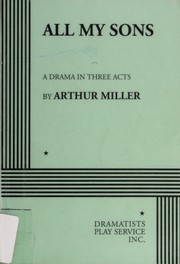
The right first Miller rather than the obvious one. It is his most conventionally built play, an Ibsen-shaped drama in which a wartime business decision comes home, and it teaches you to read the buried past that every later Miller play depends on.

Second, because it is All My Sons with the realism broken open — the same guilty father, but time collapses and memory intrudes onstage. Reading them in this order makes the formal leap visible instead of just impressive.
The Public Plays
BeginnerRead Miller's two best-known works as political arguments rather than set texts, and be able to say what he is doing with the informer figure.
▸ Study plan for this stage
Pace: Two to three weeks. The Crucible is around 150 pages and the longest play in this stage; read it in two sittings split at the courtroom act. A View from the Bridge is around 100 pages and must be read in one sitting, because Alfieri tells you the ending in his first speech and the play's whole effec
- Salem as a device rather than a subject: Miller is using a documented seventeenth-century episode to write about naming names in his own present, and the play's power depends on the analogy holding
- John Proctor as another Miller man whose private sin becomes his public test — the affair is what makes the confession cost something, which is why the play needs it
- The specific mechanism of the accusation: confess and live, refuse and hang, and the confession must include other names. That structure is the historical parallel in a sentence
- Miller's own later appearance before HUAC, which happened after the play was written and is worth knowing about because it changed how the play was read
- A View from the Bridge as the informer play stripped of history — Eddie Carbone makes the phone call in his own kitchen with no court and no theology to hide behind
- Alfieri as a Greek chorus who announces the outcome in advance, so that suspense is replaced by inevitability, which is Miller's clearest statement of his tragic theory
- Eddie's desire for his niece as the private compromise that drives the public betrayal, kept unspoken by every character including him
- The two plays as a matched pair: one gives the informer a historical alibi, the other gives him none
- What does Proctor refuse to sign at the end, and why does the specific document matter more than the confession itself?
- The Crucible works as an analogy for the anti-communist hearings. Where does the analogy strain — what is true of Salem that was not true of the hearings, and does that damage the play?
- Abigail Williams is given a motive The Crucible's historical sources do not support. What does Miller gain by inventing it, and what does he lose?
- Alfieri tells you Eddie's fate at the start. What is the play doing with the time it buys by giving away the ending?
- Both plays turn on a man who informs. Compare what each man believes he is doing at the moment he does it.
- Read the courtroom act of The Crucible aloud with the character names covered. The play's dialogue is designed so that authority is audible in rhythm alone.
- Spend an evening reading a factual account of the HUAC hearings, then reread the last act of The Crucible. Write two sentences on what changed.
- For A View from the Bridge, mark every Alfieri speech and read them consecutively, ignoring the rest. They form a complete short summary of the play, which is the structural point.
- Write 200 words on what Eddie Carbone wants, using only what he says out loud. The impossibility of the task is the exercise.
- Set Proctor's final refusal beside Joe Keller's last decision in All My Sons. Both men choose a name over survival, and the difference in how Miller stages it is worth a paragraph.
Next up: Having watched Miller put the informer on stage twice with historical distance, you are ready for the plays where he removes the distance and the accused man is transparently himself.

Placed third on purpose. Once you have read the family plays you can see that Salem is a device, not a subject, and that Proctor is another Miller man whose private sin becomes a public test. Read it against the HUAC hearings Miller himself was later called before.

The companion piece — an informer play set in Red Hook rather than Salem, with a Greek-chorus lawyer telling you the ending in advance. Its shortness and its inevitability make it the purest statement of Miller's tragic theory.
The Difficult Middle
IntermediateFollow Miller into the plays where the accused man is transparently himself, and understand why critics found this period self-indulgent and why it is worth reading anyway.
▸ Study plan for this stage
Pace: Four weeks. After the Fall is around 120 pages and needs two sittings and patience; it has no scene breaks in the ordinary sense because the whole play happens inside one man's mind. Incident at Vichy is 70 pages, a single unbroken scene, and must be read in one sitting. The Price is around 115 page
- After the Fall as a memory play with the Salesman technique pushed to its limit — there is no realistic frame left at all, only Quentin's mind and the figures moving through it
- The Maggie character, unmistakably drawn from Marilyn Monroe, and the fact that the play opened not long after her death, which is why the reception was so hostile
- The critical charge of self-indulgence, which is worth taking seriously rather than dismissing: the play asks for sympathy for a man whose failures it is also displaying
- Incident at Vichy's argument about complicity — that the man who is safe has to account for his safety, and that decency is not the same as innocence
- The prince's final act in Vichy, which converts an argument into a decision and is the single hardest moment Miller wrote
- The Price as the closing of the account All My Sons opened: two brothers, a dead father's furniture, and no way to settle which of them paid
- Solomon the appraiser as Miller's one great comic character, and his function as the person who refuses to let either brother have a clean version of the past
- The middle period's common subject: not what a man did, but what he tells himself about why
- After the Fall stages Quentin's memories in the order he can bear them rather than the order they happened. What does that reveal that a chronological account would hide?
- The play was attacked for exposing a real woman shortly after her death. Set the artistic case and the ethical objection side by side — what would each side have to concede?
- In Incident at Vichy, what does the prince conclude that the doctor cannot, and what does the play claim it costs to reach that conclusion?
- The Price gives each brother a complete and incompatible account of the same twenty years. Is either lying, and does the play let you decide?
- Solomon has no stake in the family. Why does Miller need someone outside it in the room, and what would the play be without him?
- Read After the Fall in two sittings and keep a list of which memory arrives when. Reordering that list chronologically afterwards shows you Quentin's avoidance pattern precisely.
- Read Incident at Vichy in one uninterrupted sitting and time yourself. It runs about an hour, which is the duration of the wait it depicts, and reading it in pieces destroys that.
- In The Price, mark every object in the furniture inventory as it is mentioned. Miller is using the props as an argument about value, and the list is the argument.
- Write 300 words on complicity as Incident at Vichy defines it, then test the definition against Eddie Carbone and John Proctor. It will not fit either cleanly, which is the finding.
- Read the last five pages of The Price immediately after the last five pages of All My Sons. Twenty years apart, same question, and the change in Miller's answer is the whole middle period.
Next up: The middle plays exhaust the family machinery, which is precisely why the late work goes looking for other structures — and why the autobiography, read last, has something to explain.
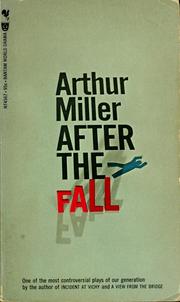
The most exposed thing he wrote — a memory play staged inside one man's mind, with a character unmistakably drawn from Marilyn Monroe. It was savaged on those grounds; read as a formal experiment continuing Salesman it is far more interesting than the scandal suggests.
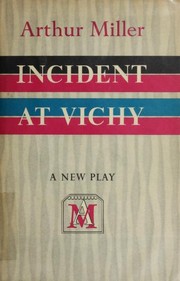
A single-scene play in a detention room in occupied France, and the hardest, coldest argument about complicity in the whole body of work. Short, and it strips the family machinery away entirely.
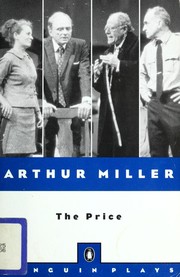
The return to form and, for many readers, the underrated masterpiece: two brothers, a dead father's furniture, and an old appraiser who refuses to let either of them settle the account. It closes the argument All My Sons opened.
Late Miller and the Prose
BeginnerSee the range outside the canonical plays — the Depression panorama, the Holocaust-adjacent late work, the fiction and the screenplay — and read his own account of all of it.
▸ Study plan for this stage
Pace: Eight to ten weeks, and this stage is depth rather than obligation. Read the two late plays first — The American Clock at around 85 pages and Broken Glass at around 110, each a single sitting. Then Focus, a novel of around 215 pages, in a week. The Misfits reads as a screenplay and takes an evening.
- The American Clock as Miller's one attempt at a play with no protagonist — a vaudeville-structured Depression panorama adapted from Studs Terkel's oral history
- What is lost and gained by removing the central man: the social sweep arrives, the tragic mechanism goes, and the result divides audiences for reasons worth articulating
- Broken Glass as the direct descendant of Incident at Vichy — a Brooklyn woman is paralysed by news from Germany and nobody in the play will connect the two facts out loud
- Denial as a physical symptom, which is the late Miller's most economical device and the closest he came to writing an unexplained event
- Focus as apprentice work in the wrong medium: a man is mistaken for Jewish once he starts wearing glasses, and the premise is stronger than the prose that carries it
- The Misfits as Miller outside the theatre entirely — written as a screenplay for Marilyn Monroe, published as a text, and structurally unlike anything else on this path
- Timebends' associative organisation, which cuts between decades by resemblance rather than sequence, so its difficulty is the same difficulty Salesman's audiences met
- Reading the autobiography last converts it from a confusing book into a commentary on a shelf you have already read
- The American Clock has no central figure. Does the play find something to replace him, or does it simply do without?
- In Broken Glass, is the paralysis explained? Decide what the play commits to and what it deliberately leaves open.
- Focus was written before any of the major plays. What is already present in it, and what did Miller only learn to do in the theatre?
- The Misfits was written for a specific performer. Reading it as a text, can you see where the writing is serving the actor rather than the story?
- Timebends discusses the HUAC years, the marriage, and the reception of After the Fall. Where does his account differ from what the plays imply, and which do you trust?
- Having read the whole path, would you still delay The Crucible — and where would you now put Focus?
- Read The American Clock and list its scenes by type — song, monologue, vignette. The list shows you the vaudeville skeleton the play is built on.
- In Broken Glass, write down every time a character changes the subject away from Germany. The count is the play's argument.
- Read Focus's opening chapter and then the opening of All My Sons back to back and write two sentences on the difference in how information is delivered. Prose exposition versus stage exposition is the lesson.
- Read Timebends with a pencil, marking each page where he discusses a play you have read. Those marks, gathered, are effectively a commentary volume, and reading them alone afterwards is worth an evening.
- Write a 500-word reading order of your own for a newcomer, disagreeing with this path wherever you now think it is wrong. You have the evidence to defend a different sequence.
Next up: This is the end of the path. The natural next step is not more Miller but Ibsen's An Enemy of the People — which Miller adapted himself, and which is where the shape of All My Sons came from.

A vaudeville-structured Depression panorama rather than a family drama, adapted from Studs Terkel's oral history. It shows Miller trying to write a play with no protagonist, which is the one thing he had never attempted.
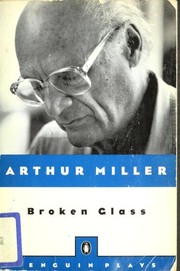
Late, tight and largely forgotten: a Brooklyn woman is paralysed by news of Kristallnacht and nobody will connect the two facts. The best of the final plays and a direct descendant of Incident at Vichy.
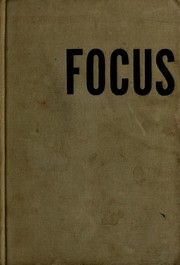
His 1945 novel, published before any of the major plays — a man is mistaken for Jewish after he starts wearing glasses. Read here rather than first, because its crudeness is instructive only once you know what the plays achieved.

Written as a screenplay for Monroe and published as a text in its own right. It is Miller outside the theatre entirely, and it makes a useful bridge into the autobiography.

The autobiography, and the correct last book: it is organised associatively rather than chronologically, so it presumes you know the plays it keeps cutting between. Read cold it is confusing; read last it is the key to the whole shelf.