Art Collecting: The Best Books to Read, in Order
Books about art collecting divide sharply into how-to guides written by advisers and market analysis written by economists and journalists, and reading only the first kind is how people overpay. This path deliberately reads both. It starts with the practical guides — how a gallery relationship works, what an auction actually costs you, how to build a collection on a real budget — then turns to the literature on how prices are set, which is far stranger than the guides admit, then goes inside the trade, and finishes with provenance, forgery and the case against treating art as an asset class.
The Practical Guides
BeginnerLearn the mechanics: primary versus secondary market, gallery waiting lists, auction premiums and fees, condition, storage and where a first purchase should actually come from.
▸ Study plan for this stage
Pace: Three to four weeks for roughly 700 pages. Art Collecting Today is 208 pages and can be done in a week; Collecting Art for Love, Money and More is 207 and is as much a book of principles as of procedure; Collecting Contemporary Art is 298 pages of interviews and can be grazed rather than read straig
- Primary versus secondary market: what a gallery is selling on behalf of a living artist, and what changes when the same work reappears at auction
- The real cost of a purchase — buyer's premium, seller's commission, sales tax, shipping, insurance, framing, storage and eventual restoration — which Woodham itemises and most first buyers do not
- The gallery relationship and the waiting list: why a desirable primary-market work is allocated rather than sold, and what a gallery is allocating for
- Coherence as the collector's actual discipline, which is the Wagners' central claim — a collection is an argument, not an accumulation
- Condition and conservation as price-determining facts, not afterthoughts
- Whose advice to discount, which is the practical use of Lindemann's interviews: each participant explains their own incentive in their own words
- Budget realism — every one of these books has a version of what to do with a small budget, and they do not agree
- Walk through the full cost of buying a $20,000 lot at auction and reselling it three years later. What percentage of the purchase price disappears in fees?
- Why would a gallery refuse to sell a work to a buyer who can pay for it?
- What does Woodham say a first purchase should actually be, and how does the Wagners' answer differ?
- Reading Lindemann's interviews, which participant has the most to gain from convincing you a market is rising, and which has the least?
- What is the difference between a collection and a set of purchases, in the Wagners' terms?
- Take a real recent auction result you can look up and reconstruct the full buyer cost using the fee structure Woodham sets out. Then add the seller's side and calculate what the work would have to make for the seller to break even.
- Write the one-paragraph statement of what you would collect and why, in the form the Wagners argue for. Keep it — every later book on this path is a test of whether it survives contact with the market.
- Read three of Lindemann's interviews and write a single line for each on what that person is selling. Do it before reading their advice, then read the advice again.
- Visit one gallery and one auction preview and write down the differences in how price information is presented to you. The contrast is the primary-versus-secondary distinction made physical.
Next up: You now know how a transaction works; the next stage is about why the number in that transaction is what it is, which the practical guides largely take as given.

A former Christie's president writing the clearest available explanation of how the market is structured and what a buyer at any budget should do about it. The best first book by a wide margin, and unusually candid about fees.
Wagner and Thea Westreich Wagner are advisers, and this is essentially their working method: how to look, how to build a coherent collection, and when to say no. Read it second for the taste-formation side that Woodham treats as given.

Interviews with dealers, collectors, curators and auction specialists, each explaining their own incentives. Read it third — hearing the participants describe their own side is the fastest way to understand whose advice to discount.
How Prices Are Actually Set
IntermediateUnderstand why art prices behave unlike other asset prices, and stop treating a price as evidence of quality.
▸ Study plan for this stage
Pace: Five to six weeks, and this is the stage where the reading level jumps. The $12 Million Stuffed Shark is 304 pages and The Supermodel and the Brillo Box is its follow-up — both are popular books by an economist, written for a general reader and best taken as reported economics rather than as researc
- Findlay's three-way split — commercial value, social value and essential value — and his argument that only the last is a sound basis for collecting
- Branding as price determinant: the dealer's name, the auction house and the provenance chain doing more work than the object, which is Thompson's core claim
- Auction machinery — reserves, guarantees, third-party irrevocable bids, chandelier bidding and the buy-in — and how each distorts the published result
- Why dealers discount but almost never publicly lower a price, which is Velthuis's most reproduced finding and the sharpest evidence that art prices are not simply market-clearing
- Price as a signal about the seller rather than about the work, and the reputational cost of a failed sale
- The gap between reported prices and transaction prices, and how much of the published record is unreliable in a knowable direction
- The methodological difference on display here: journalism describes behaviour, and a sociological study explains it — the two stages of the same argument
- What is a third-party irrevocable bid, who bears the risk, and why does it make the hammer price less informative?
- Findlay is a dealer arguing that commercial value should not drive collecting. What is the strongest objection to his position, and does he answer it?
- Velthuis finds that dealers hold prices and grant private discounts instead of cutting. What does standard price theory predict, and why does the art market do otherwise?
- Where do Thompson's two books actually differ — is the second an update, a repetition, or a change of argument?
- After this stage, what does a headline auction record tell you and what does it not?
- Pick a single well-publicised evening-sale result and annotate it with every mechanism from Thompson that could have shaped it: reserve, guarantee, irrevocable bid, estimate placement. Then say what you can and cannot infer about demand.
- Ask a gallery for a price list for a current show, then apply Velthuis's findings: what does the list price mean, what discount would be conventional, and what would a public price cut signal?
- Take one work you can find both a primary-market price and a later auction price for, and write the difference in Findlay's three terms rather than as a single number.
- Read Velthuis's methodology section before his findings and write down what he can and cannot claim from interview-based fieldwork. Doing this once teaches you how to read every other market claim on this path.
Next up: Prices come out of a social world, and the next stage goes inside it — the fairs, dealers, critics and specialists who make the numbers in the first place.

Findlay separates commercial value, social value and essential value, and argues that only the last is worth building a collection on — from a dealer who spent decades setting the first. The most useful conceptual book here.
An economist on branding: why the dealer's name, the auction house and the provenance chain determine the price far more than the object does. Read it second — it supplies the mechanism behind Findlay's distinction.

Thompson's follow-up on the post-2008 boom, guarantees, third-party irrevocable bids and the machinery of a modern evening sale. Read it directly after the first — it updates rather than repeats it.
A sociologist's study of how dealers actually set prices, including why they will discount but almost never publicly lower a price. The most rigorous book on this list and the one that explains the behaviour the journalists only describe.
Inside the Trade
IntermediateSee the market as a social world with fairs, dealers, critics and auction specialists, and learn how taste is manufactured and sold.
▸ Study plan for this stage
Pace: Six weeks or so for about 1,300 pages, but three of the four read very quickly. Seven Days in the Art World is 295 pages of ethnography, one chapter per institution; Breakfast at Sotheby's is 352 pages structured as an A-to-Z and is designed to be read in fragments; Rogues' Gallery is a 293-page his
- The institutions as a system: auction, art fair, critique, magazine, studio visit, prize — Thornton's seven chapters are seven mechanisms for converting attention into value
- Taste as manufactured rather than discovered, and the specific people whose job that is
- What actually adds and subtracts value at auction — subject, size, date within an artist's career, condition, freshness to market — which is Hook's A-to-Z and the most immediately usable material on this path
- The art fair as the dominant primary-market venue and what it does to the gallery relationship you learned about in stage one
- Dealing as a trade with a long history: Rogues' Gallery puts current practice in a lineage running back to the eighteenth century
- The Gilded Age transfer of European collections to American buyers as a worked case of a market shift, and how it built the major US museums
- The insider's blind spot — Hook is describing a business he works in, which makes him precise about mechanics and gentle about ethics
- Which of Thornton's seven institutions has the most influence on price, and which has the most on reputation? Are they the same one?
- Name five things from Hook that raise a price and five that lower it, holding the artist constant.
- What does 'fresh to market' mean, why does it matter, and what does that tell you about how much information buyers actually have?
- How much of what Hook describes is new, on Rogues' Gallery's evidence, and how much is a two-hundred-year-old practice with new vocabulary?
- In Saltzman's account, who captured the value in the transfer of European pictures to America — the sellers, the buyers, or the dealers between them?
- Read Thornton's auction chapter and then watch or read a transcript of a live sale, marking each thing she describes as it happens.
- Build your own one-page value checklist from Breakfast at Sotheby's, then apply it to three lots in an upcoming catalogue and predict which will exceed its estimate. Check afterwards.
- Go to one art fair, or read the coverage of one, and write down how many of Thornton's mechanisms you can identify operating in the same room.
- Trace one painting in Old Masters, New World from its European owner to its American museum and list every intermediary who took a margin. That chain is the same shape as a modern one.
Next up: Knowing how the trade works makes it possible to see where it can be attacked, which is what the last stage is about.

Seven ethnographic chapters — an auction, a crit, a fair, a magazine, a studio visit — and still the best account of how the art world's institutions actually operate. Read it first here.

An A-to-Z of what adds and subtracts value at auction, written by a specialist with thirty years on the rostrum. Funny, and more practically useful for a buyer than anything else in this stage.

Hook's history of art dealing from the eighteenth century to the present, which puts the current market's practices in a long tradition. Read it after Breakfast at Sotheby's for the historical depth.

How American Gilded Age money stripped European collections, and how that buying spree built the major US museums. The historical case study that shows a market shift of the kind the earlier books only theorise about.
Provenance, Fakes and Money
IntermediateLearn why provenance is the collector's real due diligence, how forgeries survive it, and what the case against art-as-investment actually is.
▸ Study plan for this stage
Pace: Four to five weeks for around 1,040 pages. Provenance is 352 pages of narrative non-fiction and reads like a thriller; The Art of the Con is 264 pages by a museum security director and is a case survey rather than a story; Dark Side of the Boom is 232 pages of market journalism; Art as an Investment
- Provenance as the collector's real due diligence — and John Drewe's insight that falsifying the archive is more effective than falsifying the painting
- Why institutional archives are a soft target, and what a forged provenance actually consists of
- The recurring structural gaps that frauds exploit: time pressure, flattery, an incomplete catalogue raisonné, and the reluctance of an expert to say no in writing
- Freeports, opacity and the anti-money-laundering problem, which is Georgina Adam's subject and the market's current regulatory pressure point
- Art as an asset class, honestly assessed: illiquidity, high transaction costs, insurance and storage as a negative carry, and survivorship bias in the published indices
- Why index-based art returns overstate performance — repeat-sales indices only see works that sold twice, and works that failed do not enter the data
- The closing argument of the whole path: collect for reasons other than return, which is the same conclusion Findlay reached from inside the trade and Gerlis reaches from the numbers
- What did Drewe falsify, and why was that harder to detect than the paintings themselves?
- Across Amore's cases, what is the most common failure — technical, procedural or social?
- How does a freeport change the economics of holding art, and what makes it a regulatory concern rather than merely a storage arrangement?
- Explain survivorship bias in an art price index in your own words, and say what it does to a reported annual return.
- Gerlis is largely making a case against art as an investment. State her strongest argument and the strongest counter-argument a dealer would make.
- After all four stages: what would you now do differently before your first purchase compared with what stage one told you?
- Take one work in a public museum collection and reconstruct its published provenance line by line from the museum's own record. Mark every gap, every 'private collection' and every undated transfer — those are the openings Salisbury's book is about.
- Write your own due-diligence checklist from Provenance and The Art of the Con — what you would demand in writing, from whom, before paying. Keep it to one page.
- Take the published index return for art over a period you can find and adjust it downward for the costs Gerlis itemises: buyer's premium, seller's commission, insurance, storage. Compare the residual to a bond return over the same years.
- Reread the one-paragraph collecting statement you wrote in stage one and revise it in light of Findlay, Velthuis and Gerlis. If it has not changed at all, the path has not done its job.
- Pick one claim from a dealer, a journalist and an academic on this path that contradict each other, and write a paragraph on which you believe and why. Sourcing beats consensus here, and this is the exercise that proves it.
Next up: This is the end of the path: you have the mechanics, the price formation, the trade and its failure modes, and a documented case for collecting on grounds other than return.
The John Drewe and John Myatt affair, in which the forger's real innovation was falsifying archive records rather than paintings. The single best argument for taking provenance seriously, told as narrative.

A survey of major art frauds and the specific psychological and procedural gaps each exploited. Read it after Provenance as the systematic version of the same lesson.
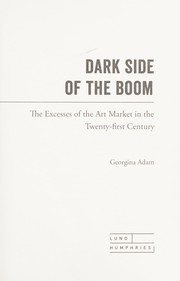
The Art Newspaper's market correspondent on freeports, speculation, money laundering and the opacity that makes them possible. The best current account of the market's regulatory problem.

A sober comparison of art against other asset classes — illiquidity, transaction costs, survivorship bias in the indices — and largely a case against. The right last book: it argues you should collect for reasons other than return.
Discussion
Keep reading
Paths that share books, cover the same subject, or open a related topic.