If you want to start buying art, read a practitioner first and a critic second. The practitioner tells you how a gallery waiting list works, what a condition report is, and why the invoice price is not the price. The critic tells you why the practitioner frames it that way. Reversing the order leaves you cynical about a market you cannot yet navigate.
Keep track of who is speaking. Roughly half the books below are by people with a commercial stake in the art market — auction-house executives, dealers, advisers — and the other half by economists, sociologists and journalists observing it from outside. Neither group is dishonest, but they are answering different questions, and a reader who cannot tell them apart will mistake sales sense for analysis.
The insider guides: how buying actually works
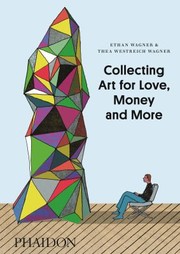
Start with Art collecting today by Doug Woodham, a former president of Christie's Americas, which is the most practical single volume here: how primary and secondary markets differ, how to work with a dealer, what fees and commissions really are. Collecting Art For Love Money And More by Ethan Wagner comes from the advisory side and is strongest on building a coherent collection rather than accumulating objects. Adam Lindemann's Collecting contemporary art is a collector-and-dealer's book, largely interviews, and it is the best way to hear how buyers at the top of the market talk when they are not being careful.
Michael Findlay spent decades as a dealer, and The value of art is his attempt to separate commercial value from social value and from what he calls essential value — the argument that price and worth are different measurements. Philip Hook wrote from inside Sotheby's: Breakfast at Sotheby's is an A-to-Z of the market's vocabulary and superstitions, and Rogues' gallery is his history of the dealers who built the trade.
The outsider analysis: why the prices are what they are
Donald Thompson is an economist, and The $12 million stuffed shark remains the clearest account of how branding, scarcity and auction theatre produce contemporary art prices. His follow-up, The Supermodel And The Brillo Box, revisits the same terrain with newer cases; if you are reading only one, read the first. Olav Velthuis approaches the question as an economic sociologist in Talking prices, which is a study of how dealers set and justify prices at all — drier than Thompson, and considerably more rigorous. Sarah Thornton's Seven Days in the Art World is ethnography: seven days, seven settings, from an auction to a studio visit to an art fair.
For historical distance, Cynthia Saltzman's Old Masters, New World tells how Gilded Age Americans bought European painting wholesale, which is the origin story of most great US collections.
Fakes, provenance and the money
The last stage is the part of collecting that costs people money. Provenance by Laney Salisbury reconstructs a forgery operation that worked by corrupting archives rather than by painting well — the strongest argument you will read for taking documentation seriously. Anthony Amore's The art of the con surveys art fraud more broadly, from the security side. Georgina Adam's Dark side of the boom is the journalist's account of freeports, speculation and opacity in the recent market, and Melanie Gerlis asks the question most collectors eventually ask in Art As an Investment?, comparing art with other asset classes and finding the comparison awkward.
Read the practitioners for competence and the observers for judgement, and you will buy better than someone who read only one side. Follow the full path in order, or browse related reading on art collecting.
Follow the full ordered path here: How to Start Collecting Art: The Best Books, in Order.
Ready to learn something deeply?
Build a reading path — free