Anne Enright in Order: Where to Start with Her Novels
Enright won the Booker with her fourth novel and a great many readers have read only that one, which is a shame — it is also her bleakest and least representative. This path starts there because it is what people arrive for, then shows the range on either side of it.
Start here
IntermediateBegin with the Booker winner.
▸ Study plan for this stage
Pace: 2 weeks for about 260 pages. The chapters are short but they jump between the present-day wake, Veronica's childhood in the 1960s and a 1920s strand she did not witness, so roughly 20 pages a day with a clear head is better than long sittings.
- Veronica Hegarty as a narrator who repeatedly tells you she is inventing what she describes
- The wake for her brother Liam, who drowned at Brighton, as the present-tense frame for everything else
- The 1920s strand - her grandmother Ada, Lambert Nugent, and a scene Veronica cannot possibly have seen
- The enormous Hegarty family and the arithmetic of children and miscarriages that Veronica keeps reciting
- What happened to Liam as a child: named, circled, and never quite confirmed
- Enright's sentence - short, physical, unsentimental about bodies, and willing to be ugly
- Why this book is her bleakest and least representative, and why most readers meet her here anyway
- How many times does Veronica admit she is making something up, and does that make her more or less reliable?
- The 1920s scenes are explicitly imagined. Why does Enright let the novel's central explanation rest on invented material?
- What does the family's size do to the book - is it background, or is it the cause of what happened?
- Is Veronica grieving Liam, or grieving something else that his death has made speakable?
- The Gathering won the Booker and is often called cold. Where, if anywhere, does the coldness break?
- Mark every sentence where Veronica says she does not know, cannot remember, or is imagining. Read the marked sentences consecutively at the end - they are a second, shorter novel about the limits of family memory.
- Write down the family arithmetic each time Veronica recites it and check whether the numbers stay the same. The variations are deliberate.
- Read the Ada and Lambert Nugent scenes on their own, in sequence, skipping the present-day chapters. Then decide whether they work as an explanation or as a story Veronica needs.
- Take one page describing a body - Enright is relentlessly physical - and rewrite it euphemistically. The comparison shows what her plainness is doing.
Next up: With Enright's bleakest book behind you, the next two novels show the same eye applied to material she allows to be warm.
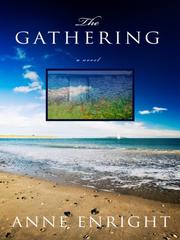
A large Dublin family gathers for a brother's wake and the narrator circles what happened to him as a child. It won the Booker in 2007 and it is deliberately difficult company.
The novels after
IntermediateRead the two that follow, which are warmer and just as sharp.
▸ Study plan for this stage
Pace: 3-4 weeks. The Forgotten Waltz is about 240 pages and The Green Road about 315. Read The Forgotten Waltz first and fairly quickly, since it is one continuous voice; The Green Road's first half is a set of long separate stories, so read one story per sitting rather than by page count.
- Gina Moynihan's narration in The Forgotten Waltz: an affair recounted by a woman with no interest in being liked or forgiven
- The Celtic Tiger and its collapse as the economic weather of the affair - property, aspiration, and the snow of the closing sections
- Evie, Sean's daughter, as the person the novel is actually about, and who is watching
- The Green Road's split structure: a first half of separate long stories in different countries and decades, then a second half converging on one Christmas in Clare
- Rosaleen Madigan and the four siblings - Constance, Dan, Emmet and Hanna - each given a story before they are given a family
- Dan's New York section, and Enright's shift into a communal voice for the AIDS years
- The Green Road as the more generous book, and the better introduction for a reader who found The Gathering too cold
- Gina justifies herself constantly. Does Enright want you to convict her, and does the novel supply a verdict?
- What does Evie's presence do to the affair - is she a complication, a judge, or the novel's actual subject?
- Why does The Green Road spend its whole first half apart from the family before assembling them?
- What does the shift in voice in Dan's section achieve that a close third person could not?
- Rosaleen's threat to sell the house drives the second half. Is she the villain of the book or its casualty?
- Set beside Veronica, is Gina a different kind of narrator or the same kind with the guilt removed?
- In The Forgotten Waltz, mark each of Gina's self-justifications and note what she is justifying against. Read the list and see whether the excuses escalate or wear out.
- Note where each of the four opening stories in The Green Road is set and in what year, then draw the four on one timeline before starting the second half. The book gets much clearer.
- Read Dan's New York section, then reread the first ten pages of his Christmas chapter. Write half a page on what the communal voice knew that the family does not.
- Put Gina's first page and Veronica's first page side by side. Both are women explaining themselves to nobody; list the concrete differences in tone, tense and address.
- Pick the Green Road chapter you found warmest and identify the sentence where Enright lets the warmth in. She does it rarely and always on purpose.
Next up: Both books are about children reconstructing a parent, which is the exact task the later novel takes as its whole subject.
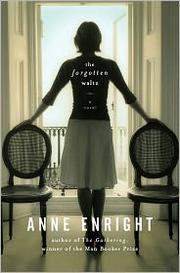
An affair in Dublin as the Celtic Tiger collapses, narrated by a woman with no interest whatever in being liked.
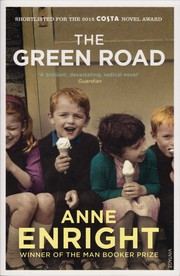
Four siblings summoned home to Clare for one last Christmas. The most generous of her books, and the better introduction if The Gathering felt too cold.
The later work
IntermediateThe recent novel about performance and inheritance.
▸ Study plan for this stage
Pace: 2 weeks for about 270 pages. It is a single continuous act of reconstruction, so it reads best in a few long sittings - 25 to 30 pages at a time keeps the daughter's voice intact.
- Norah reconstructing her mother, Katherine O'Dell, an Irish stage actress whose reputation long outran the actual career
- Manufactured Irishness as the novel's central irony, and the revelation about where Katherine's Irishness really came from
- The scandal - Katherine shooting a producer - treated as a fact everyone knows and nobody can explain
- The daughter as biographer: Norah works from hearsay, cuttings and her own unreliable childhood memory
- Fame as a form of inheritance and a form of damage, passed down rather than earned
- Enright's Dublin theatrical and literary world observed with the affection and contempt of an insider
- How this novel completes the trio with The Gathering and The Green Road: a child assembling a parent out of insufficient material
- How much of what Norah tells you about Katherine did she witness, and how much comes from other people?
- What is the novel saying about Irishness by making its emblem of it a performance?
- Why does Katherine shoot the producer, and does Norah's explanation satisfy you?
- What does Norah want from the reconstruction - understanding, revenge, or possession?
- Set beside Veronica in The Gathering, is Norah a more reliable narrator, or just a calmer one?
- Keep a two-column note while reading: what Norah saw herself, and what she has from someone else. The proportions are the argument of the book.
- Mark every moment where Katherine's Irishness is revealed as technique - accent, story, costume, advertisement - and read them together at the end.
- Reread the opening chapter after finishing. Norah tells you her method in the first pages and you will only recognise it in retrospect.
- Write a paragraph reconstructing a relative you never fully knew, using only things other people told you. Then read Norah's first attempt again.
Next up: With the four major novels in place, the debut and the outliers stop looking like juvenilia or detours and become visible as the range.

A daughter reconstructs her famous mother, an Irish stage actress whose reputation long outran her actual career.
Early and non-fiction
IntermediateThe debut, the historical outlier, and the memoir.
▸ Study plan for this stage
Pace: 4 weeks for roughly 660 pages across three very different books. Read The Wig My Father Wore first over about ten days, then The Pleasure of Eliza Lynch over a week, and keep Making Babies for last - it is essays, so read two or three at a time rather than straight through.
- The Wig My Father Wore as a first novel unlike anything after it: an angel named Stephen arrives at the door of a television researcher and simply moves in
- The surreal register of the debut, and what Enright kept from it - the physical comedy, the refusal to explain - once she dropped the surrealism
- The Pleasure of Eliza Lynch as the historical outlier: an Irishwoman who became the effective ruler of Paraguay in the 1860s
- Its alternating structure, in which a second witness gives a counter-account of the woman we are watching
- That an unreliable and hostile witness is the same device as Norah in Actress and Veronica in The Gathering, twenty years earlier
- Making Babies as the corrective: essays on pregnancy and small children that are genuinely funny
- The discovery that the sentences producing bleakness in the novels produce comedy unaltered when the subject changes
- What does the angel in The Wig My Father Wore let Enright write about that a realist novel would not?
- The debut is surreal and the later novels are not. What actually survived the change, at the level of the sentence?
- In The Pleasure of Eliza Lynch, why is a counter-narrator needed, and does he discredit Eliza or himself?
- Eliza Lynch is a real historical figure. What does Enright refuse to settle about her, and is that the same refusal as in Actress?
- After Making Babies, is the bleakness of the novels a worldview or a genre choice?
- Read the first chapter of The Wig My Father Wore and the first chapter of The Gathering back to back. The voice is already fully formed; find three sentences that could belong to either book.
- In The Pleasure of Eliza Lynch, mark every claim the counter-narrator makes about Eliza and note which ones the main narrative confirms. Read the unconfirmed ones together.
- Read Making Babies immediately after The Green Road and pick two passages that use the same rhythm to opposite effect - one for grief, one for comedy.
- Write out a short list of every book on this path with its publication year, then note the order in which you read them. The mismatch is the argument the path was making.
- Take a single paragraph from Making Babies and rewrite it as a scene in The Gathering. The exercise makes it obvious how little Enright has to change to switch registers.
Next up: You now have the whole shape - debut, Booker, the warm novels, the historical outlier and the essays - which is enough to read her short story collections and later fiction without needing a route.
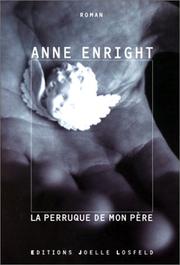
Her first novel — an angel arrives at the door of a television researcher and moves in. Surreal, and unlike anything she wrote afterwards.
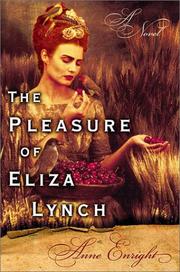
An Irishwoman who became the effective ruler of Paraguay in the 1860s. A real life, and the strangest book on this path.
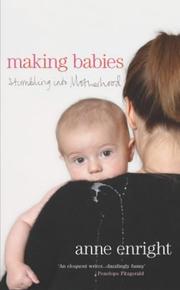
Essays on having small children, and genuinely funny — the best corrective to the idea that she only does bleak.