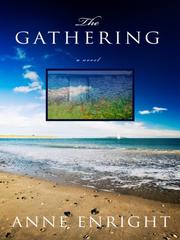
Start with The Gathering. It won the Booker in 2007, it is the book that made her reputation outside Ireland, and it does the thing Enright does better than almost anyone: a narrator circling a family death, telling you things she is not sure happened, correcting herself, and getting angrier as she goes.
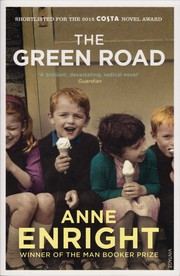
There is one good reason to start elsewhere. The Gathering is bleak, its narrator Veronica is deliberately unreliable and deliberately repetitive, and a substantial number of readers put it down at the halfway mark. If you want to meet Enright without committing to that, start with The Green Road instead — the same family material, four siblings and a mother, but structured as separate long chapters that each work as a story. It is the warmer book and the easier sell. It is not the better one.
Either way, do not start with the debut. The Wig My Father Wore is surreal, comic and unrepresentative — an angel turns up in a television producer's house — and it will give you an entirely wrong idea of what her novels are like.
The core three, in order
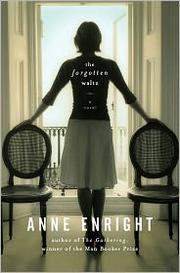
The Gathering, then The forgotten waltz, then The Green Road.
The forgotten waltz is the outlier of the three and the most underrated: an affair conducted through the Irish property boom and told by a woman who is completely certain she is the wronged party. It is funny in a way The Gathering refuses to be, and the economics of the boom are load-bearing rather than decorative. Read it second because it is a relief after the first book and a good calibration of how much you should trust an Enright narrator.
The Green Road is the most generous thing she has written. The Madigan siblings scatter across the world and are pulled back to Clare for one last Christmas; the New York section in particular is as good as any single chapter in modern Irish fiction.
Then the fourth
Actress is narrated by the daughter of a famous Irish stage actress, reconstructing her mother's life and collapse. It is her most conventionally structured novel and it works, though readers who came for the raw voice of The Gathering sometimes find it too composed. Read it fourth, when the family novels have stopped surprising you and you want to see her do something else.
The early and the odd
The Wig My Father Wore belongs here, read late, as a document of a genuinely strange writer before the material found her. The Pleasure of Eliza Lynch is the true outlier — a historical novel about the Irish courtesan who became the effective first lady of Paraguay and was blamed for a catastrophic war. It divides readers more sharply than anything else she has written, and it is the one book of hers that is fair to skip on a first pass.
Her second novel, What Are You Like?, is not in our catalogue. It sits between the debut and the Booker book and is worth finding if you end up going deep, but it is nobody's recommended entry point.
The nonfiction
Making babies is a short collection of essays about having small children, written while she had small children, and it is the funniest thing she has published. It also contains the plainest statement of the attitude that runs through the fiction: that families are not sentimental objects and that saying so is not the same as hating them. Read it whenever you like — it needs no preparation, and it is the book most likely to convert someone who bounced off the novels.
Where to stop
Three books is a complete reading: The Gathering, The forgotten waltz, The Green Road. Add Making babies for the voice off duty. Enright is not a writer whose late work supersedes the early — she has been consistently good for twenty-five years, which is why the order here is about temperament rather than development.
More Irish fiction is on Discover.
Follow the full ordered path here: Anne Enright in Order: Where to Start with Her Novels.
Ready to learn something deeply?
Build a reading path — free