Amulet Reading Order: Where to Start Kazu Kibuishi's Graphic Novel Series
Amulet is nine volumes long, tells one continuous story, and — unusually for a long middle-grade graphic novel series — actually finishes it, seventeen years after the first book. There is no reading-order puzzle here: read one through nine. What this path adds is where the series changes gear, which volumes are the hard ones, and what else Kibuishi made if you finish and want more. One practical note: each volume is catalogued under its own title rather than as "Amulet, Volume N", so that is how they are listed below.
The Opening Arc
BeginnerMeet Emily, Navin and the amulet, and get through the setup volumes that establish Alledia and the stakes.
▸ Study plan for this stage
Pace: One to two weeks for three volumes, about 640 pages. These are graphic novels of roughly 200 to 224 pages each, and a volume takes 40 minutes to an hour at an unhurried pace — most readers do one in a sitting and often two in an evening once the story takes hold. Read The Stonekeeper and The Stoneke
- The bargain at the centre of the series: the amulet gives Emily power and wants something in return, and volume two makes that explicit
- Alledia as a built world — the geography, the factions and the history are introduced by being walked through rather than explained
- Emily and Navin as the double protagonist, with the younger brother given his own competence rather than being a burden
- Kibuishi's colour as storytelling: the palette shifts by location and by mood, and it is doing work the dialogue does not
- Cinematic pacing — establishing shot, cut, close-up — borrowed from film and unusually disciplined for the category
- The opening as a deliberate hard start: the series establishes early that it will not protect its characters
- Volume three as the commitment point, where the airship, the crew and the actual scale of the story arrive
- What does the amulet ask of Emily, and at what point in volume two does the cost become clear rather than hinted?
- How does Kibuishi introduce Alledia's history without an exposition scene — name three things you learned from a background rather than from dialogue?
- What does Navin do in these three volumes that he could not do in volume one, and how is his competence established?
- Why does the series open with the accident rather than referring to it? What would change if it began after the move to the house?
- By the end of The Cloud Searchers, what is the stated goal, and how many separate groups are pursuing something?
- Reread the first ten pages of The Stonekeeper after finishing volume three. Almost nothing is said and the sequence is built entirely from panel timing; count the panels and note where Kibuishi slows down.
- Keep a one-line-per-character list from volume one onward: name, species or faction, whose side they appear to be on. The series triples its cast by volume four and expects you to remember.
- Pick one page from each of the three volumes and write down the dominant colour. Then say what location and what emotional register it belongs to. The palette is systematic and noticing it once changes how the rest reads.
- Track the amulet's voice: mark every panel where the stone speaks or its glow changes. The series' entire argument is in that sequence of moments.
Next up: You have the world, the cast and the bargain; the middle volumes take all three and complicate them faster than the opening arc did.
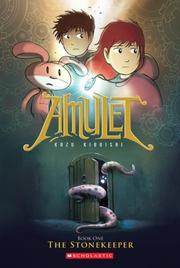
Volume one, and it opens with the car accident that kills the children's father — a genuinely hard first ten pages that surprises most adults handing this to a child. Everything else in the series follows from Emily putting on the amulet at the end of it.

Volume two, where Alledia opens out and the amulet's cost becomes explicit: the stone talks, and what it wants is not what Emily wants. Read straight on — the first two volumes are effectively one book.

Volume three adds the airship, the crew and the series' real scale. This is the volume where readers who were unsure usually commit, so it is worth pushing to.
The Middle Books
BeginnerFollow the series into its most complicated stretch, where the cast triples and the plot starts tracking several groups at once.
▸ Study plan for this stage
Pace: One to two weeks for three volumes, about 620 pages, at the same reading speed as the opening arc — but this stretch rewards reading the volumes close together rather than spacing them out. The Last Council is the first volume that assumes you remember minor characters, so it is best read soon after
- The turn from quest to politics: Cielis and the Guardian Council make the story about institutions rather than a journey
- Villain interiority — Prince of the Elves gives the Elf King a history that makes him legible without excusing him
- Parallel plotting: from volume six the narrative tracks three groups at once, which is why the cast list from the previous stage matters
- The Voice as an antagonist inside Emily rather than outside her, which is the series' most interesting structural choice
- Recurrence of minor characters — Kibuishi plants people volumes in advance and expects the reader to have kept them
- Escalating stakes handled by widening scope rather than raising volume, which is why the middle books feel more complicated rather than louder
- Where readers stall: volume six is the common stopping point, and knowing that in advance is the practical reason to push through it
- What does moving the story to Cielis change about what the series is about?
- After Prince of the Elves, is the Elf King a villain, a victim, or both — and does the book commit to an answer?
- In Escape from Lucien, name the three groups being tracked and what each is trying to achieve. Could you do it without checking?
- How does the Voice work — what does it offer Emily, and what has she already given up by volume six?
- Which character introduced early reappears here in a role you did not expect, and was it planted or improvised?
- Update the character list before starting The Last Council and again after Escape from Lucien. The second update will be twice as long as the first, which is exactly why this stretch is the hard one.
- Draw a map of Alledia from what the six volumes have shown you — Kanalis, the Charnon Mountains, Cielis, Lucien. Kibuishi is consistent about geography and the map makes the parallel plotting followable.
- In Escape from Lucien, mark every cut between groups and note how Kibuishi signals the switch. He uses colour and establishing shot rather than captions, and identifying the system makes the volume much less confusing.
- After Prince of the Elves, go back to the Elf King's first appearance in volume two and reread that scene. Write two sentences on whether the later backstory is consistent with how he was first drawn.
Next up: The plot is at its most complicated here and the final three volumes spend the rest of the series resolving it, so the cast list and the map you have built are what carry you through.
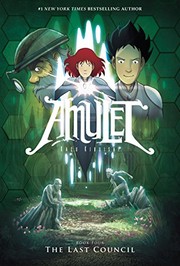
Volume four moves to Cielis and turns the story political. It is the first volume that assumes you remember minor characters, so it rewards reading soon after volume three rather than a year later.

Volume five gives the villain a backstory and complicates him considerably. The point at which the series stops being a straightforward quest, and the volume most often named as the turn.

Volume six is the densest and most divided-up book in the run, cutting between three separate groups. If any volume makes a reader stall, it is this one — read it in one sitting if you can.
The Ending
BeginnerRead the final three volumes, including the six-year gap between the eighth and the ninth, and see how the amulet's bargain resolves.
▸ Study plan for this stage
Pace: One to two weeks for three volumes, about 630 pages. Firelight and Supernova are around 200 pages each and Waverider is 239. Read Waverider immediately after Supernova — there is a six-year gap in publication between the two, since Supernova came out in 2018 and Waverider in 2024, but there is no ga
- The series' actual question, finally asked directly: can the stone be used without owning the user
- Supernova's interior setting, which abandons the adventure format entirely for a volume
- A middle-grade series willing to be genuinely uncomfortable, and what it does not soften
- The six-year publication gap and what it does to a serialised story — nothing internally, a great deal for readers who waited
- Actually finishing: long middle-grade graphic novel series usually stop rather than conclude, and Waverider is a real ending
- How the ending resolves the bargain from volume one, and whether it costs what the series said it would cost
- Reading a completed nine-volume run as one work, which is available to a reader now and was not available to anyone before 2024
- What does Firelight resolve that the middle books left open, and why is it placed before Supernova rather than after?
- In Supernova, what is actually happening in the sequences inside Emily's mind, and how does Kibuishi make the interior legible?
- Does Waverider deliver a real ending or a stopping point? Name what it closes and what it leaves.
- The amulet's bargain was set up in volume two. Is the resolution in volume nine consistent with what was promised seven volumes earlier?
- Now that the run is complete, would you recommend reading it as a whole or volume by volume as it appeared? What is gained and lost by each?
- Before starting Firelight, write down what you think the amulet will finally turn out to want. Keep the prediction and check it against Waverider.
- In Supernova, mark where the visual style changes for the interior sequences — palette, panel border, line weight. Kibuishi signals the shift graphically and cataloguing the signals is the best way to follow the volume.
- Read the last five pages of Supernova and the first five of Waverider consecutively. Six years separate them in publication; write one sentence on whether anything in the drawing or the pacing gives that away.
- After finishing, reread volume one's final page. The whole series is an answer to the choice made there — write a paragraph on whether Emily had a choice at all, which is the question the nine volumes are actually about.
Next up: The story is finished; the last stage is about the rest of Kibuishi's work and about where to go next, which is what a completed series always leaves you needing.

Volume seven pulls the story back to Emily and the question the whole series has been circling — whether the stone can be used without being owned by it. The strongest volume of the second half.

Volume eight, and the darkest book in the series: Emily inside the Voice, and a genuinely uncomfortable stretch for a middle-grade title. It ends on the cliff that readers then waited six years to resolve.

Volume nine, published in 2024, and the actual conclusion — a rarity in this category. Read it immediately after Supernova; the gap in publication does not mean a gap in the story.
If You Want More Kibuishi
BeginnerSample the rest of his work, including the anthology series that launched a generation of American all-ages cartoonists.
▸ Study plan for this stage
Pace: One week for three books, and none of them is a continuation of Amulet. Copper collects his webcomic strips and can be read in an hour, in pieces or in one go — it is not a continuous narrative. Daisy Kutter is 153 pages and is a complete standalone graphic novel from before Amulet. Explorer is a 12
- Copper as the personal work: quieter, funnier, more openly philosophical, and the best short demonstration of Kibuishi's colour and landscape drawing
- The single-page strip as a form — Copper has to do in one page what Amulet takes a volume to do, and comparing the two shows what each format is for
- Daisy Kutter as origin: the airships, the machinery and the robot design in Amulet are visibly developed here first
- Tone as an authorial decision rather than a fixed trait — the same cartoonist writes for very different readerships across these three books
- The editor's role: Explorer is a curated anthology, and choosing and sequencing other people's stories is a distinct kind of authorship
- The all-ages American comics scene that Explorer helped launch, and the cartoonists in it who now have their own series
- Using an anthology as a directory — the practical function of Explorer at the end of this path is to find your next series
- What can Copper do in a single page that Amulet needs a whole volume for, and what can it not do at all?
- Which visual elements of Amulet appear first in Daisy Kutter? Name at least three.
- Daisy Kutter is written for older readers than Amulet. What specifically changes — the content, the pacing, or the assumptions about the reader?
- In Explorer, which contributor's story is most unlike Kibuishi's own work, and why do you think he included it?
- Having read all twelve books on this path, what would you say Kibuishi is consistently interested in?
- Pick one Copper strip and one page from Amulet with a comparable image — a landscape, a machine, a quiet moment — and set them side by side. The difference in what a page is for is the whole exercise.
- List every design element in Daisy Kutter that recurs in Amulet, then find the earliest Amulet page where each reappears. It is a genuine developmental record and it is short enough to complete.
- Read Explorer and rank the stories, then look up which contributors have their own ongoing series. Following one of them is the intended use of the anthology and the practical answer to what to read after Amulet.
- Write a one-paragraph recommendation of Amulet for someone who has not read it: where to start, which volume is the hard one, and where the story ends. You have now read the complete run, which almost nobody had been able to do before 2024.
Next up: This closes the path: the nine-volume story read in order, its difficult stretch identified in advance, its ending intact, and the rest of Kibuishi's work as a bridge to whatever you read next.
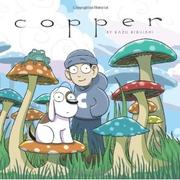
A collection of his webcomic strips about a boy and a talking dog — quieter, funnier and more openly philosophical than Amulet, and the best short demonstration of his colour work.
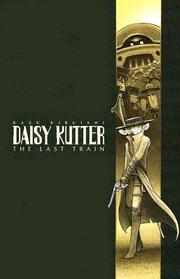
His pre-Amulet science-fiction western about a retired train robber. Older in tone than Amulet and worth reading to see where the airships and the machinery came from.

The anthology he edited, with stories by Emily Carroll, Raina Telgemeier, Dave Roman and others, so he is one contributor among many rather than the sole author. A good way to find the next series after this one.