Alistair MacLean books in order: where to start
MacLean wrote twenty-eight novels and the quality curve is one of the steepest in popular fiction: the first dozen are among the best adventure thrillers in English, and the last dozen were written fast, sometimes from outlines, by a man in poor health. Reading him in publication order therefore means finishing on the worst books, so this path starts with the four he is actually remembered for, works back through the strong early run, and then tells you plainly where the series stops being worth your time.
Start Here: The Four Best
BeginnerRead the books that made his name and understand the two things he did better than anyone — enclosed hostile spaces, and a plot that keeps turning over after you think it has settled.
▸ Study plan for this stage
Pace: Three weeks for four novels, about 1,090 pages. These are short, fast thrillers of 250 to 320 pages each and most readers finish one in two or three evenings — with the exception of H.M.S. Ulysses, which is the same length as the others and reads considerably slower because it is not really a thrill
- The enclosed hostile space as MacLean's central device — a ship, a submarine, a castle, a cliff face — where the environment is the primary antagonist
- The men-on-a-mission structure that The Guns of Navarone essentially invented and that a hundred later thrillers copy
- The traitor inside the group, which appears in all four and is the mechanism that keeps the plot turning after it looks settled
- The withheld narrator: MacLean routinely lets a first-person narrator know things he does not tell the reader, and the trick is what makes the reversals possible
- Weather and cold written as physical fact rather than atmosphere — the single thing Ulysses does better than any other book on this path
- Competence as characterisation: his protagonists are defined almost entirely by what they can do under pressure
- The gap between Ulysses and the three that follow — one is a war novel and three are entertainments, and MacLean never wrote a serious book again
- What does H.M.S. Ulysses do that the other three do not, and is it a better book or simply a different kind of one?
- Lay out the Navarone structure — team, objective, deadline, obstacles — and identify the same shape in Where Eagles Dare.
- In Ice Station Zebra, at what point did you know something was being withheld, and what tipped you off?
- Count the reversals in Where Eagles Dare. Does the plot survive the count, and does MacLean care whether it does?
- MacLean served on Arctic convoys. Which details in Ulysses read as first-hand rather than researched?
- Keep a four-column table across the four books: the enclosed space, the deadline, the traitor, and the page on which you first suspected them. By book four the pattern is explicit, which is what the rest of this path tests.
- Read the first chapter of H.M.S. Ulysses and the first chapter of Where Eagles Dare back to back. Both open on a briefing; measure how many pages each spends on it and what that difference tells you about the two books' ambitions.
- In Where Eagles Dare, mark each chapter's final line. MacLean ends nearly every one on a reversal, and the list of them is essentially the novel's engine laid bare.
- Take one action sequence from Ice Station Zebra and one from The Guns of Navarone and count the sentences given to physical procedure versus dialogue. MacLean's pace is a prose effect and this is where you can see it.
Next up: You now know the four books MacLean is remembered for and the machinery underneath them, which is what makes the early novels legible as him working the same problem in different settings.
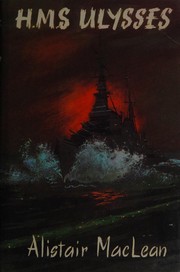
His first novel and, unusually, his best: an Arctic convoy escort ground down by weather, exhaustion and the enemy, drawn from his own Royal Navy service. Start here because it is the only MacLean that is a serious book as well as a thriller, and it explains the cold, attritional streak that runs through everything after it.
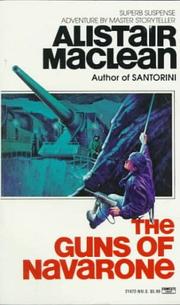
The book that invented the modern men-on-a-mission story: a small team must climb an unclimbable cliff and destroy two guns before a deadline. Read it second, because it is the template that Where Eagles Dare and a hundred imitators later work from.

A nuclear submarine under the polar ice, a burnt-out weather station, and a murderer aboard — the purest example of his enclosed-space method. Read it after Navarone so you can see him swap an open landscape for a sealed one and get more menace out of it.

A castle in the Bavarian Alps, a rescue that is not a rescue, and roughly one reversal per chapter. The fastest and most purely entertaining thing he wrote, and best read fourth, once you already know how straight he can play the same setup.
The Early Run
BeginnerFill in the late-fifties and early-sixties novels, where he was still writing carefully and each book tried a different setting.
▸ Study plan for this stage
Pace: Two weeks for three novels, about 800 pages, all in the 250 to 290 page range and all readable in two or three sittings. Read South by Java Head directly after H.M.S. Ulysses if you can — the two wartime sea novels belong together — then Night Without End and Fear Is the Key. Stated plainly: South b
- The second war novel: South by Java Head drawn from the same sea service as Ulysses, and the last time MacLean writes about war as experience rather than as setting
- The closed-circle mystery — a fixed group in an isolated place, one of whom is a killer — which Night Without End states in its purest form
- The Greenland ice cap and the Arctic sea as the same landscape reused: MacLean returns to cold repeatedly because he writes it best
- Fear Is the Key's opening: a hundred pages in which the narrator's actual purpose is concealed, which is the most extreme version of the withheld-narrator trick
- Setting variation as deliberate craft — each early novel tries a different place, which stops after the mid-1960s
- Pace built by chapter length: these books use short chapters ending on a turn, and the rhythm is consistent enough to measure
- The bridge from war novel to thriller, visible across these three in sequence
- What do South by Java Head and H.M.S. Ulysses share beyond their setting, and where does Java Head make concessions to entertainment that Ulysses does not?
- Night Without End is a closed-circle mystery. List the suspects and the point at which the field narrows; does MacLean play fair?
- In Fear Is the Key, when did you work out what the narrator was doing, and what information had MacLean deliberately withheld to that point?
- Which of the three settings is best realised, and does MacLean research or invent?
- Where in these three does the war stop being a subject and start being a backdrop?
- Time yourself over the first hundred pages of Fear Is the Key and note every point where you formed a hypothesis about the narrator. The book is engineered against exactly that process and the log is the best way to see the engineering.
- In Night Without End, write down each survivor and the evidence for and against them as it accumulates. Then check your reasoning against the resolution — this is the only book in the run that can be solved rather than merely followed.
- Add these three books to the four-column table from the previous stage. Two of the three fit the template exactly; identify the one that does not and say why.
- Compare the description of cold in Night Without End with the equivalent passages in H.M.S. Ulysses. Same author, same conditions, five years apart, one written to be endured and one to be enjoyed.
Next up: With the early novels behind you, the late-1960s stretch shows what MacLean produced when he had complete command of the formula and was writing at maximum speed.

His second novel: the fall of Singapore, a crowded lifeboat and a slow retreat south. Read it directly after HMS Ulysses — it is the other book drawn from wartime sea service, and the two together are the serious end of his work.
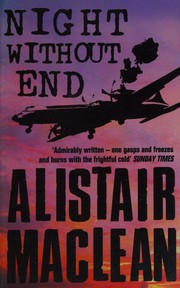
An airliner crashes on the Greenland ice cap near a research station, and one of the survivors is a killer. The first full statement of the closed-circle mystery he would keep returning to, and the clearest bridge from the war novels to the thrillers.

Opens with a courtroom escape and a hostage and does not explain itself for a hundred pages. Read it here because it is the first book where he trusts a withheld narrator completely — a trick that later became his default.
The Late-Sixties Peak
BeginnerRead the four-book stretch where he was writing at maximum speed and still at full strength, and notice the formula hardening.
▸ Study plan for this stage
Pace: Three weeks for four novels, about 1,080 pages, all in the 250 to 290 page range. Read When Eight Bells Toll first, then Puppet on a Chain, then Force 10 from Navarone — which must come after The Guns of Navarone from stage one — and finish with Bear Island. Stated plainly: Puppet on a Chain deals w
- First-person MacLean at its best: When Eight Bells Toll's narrator is the driest voice in his work and carries the book almost alone
- Puppet on a Chain as an attempt to write something darker rather than merely faster, and the only place his books show real cruelty
- The sequel problem: Force 10 from Navarone arrives twelve years after the original with the same characters and visibly less invention
- Formula hardening — across these four the same beats arrive at the same points, and the interest shifts from what happens to how it is executed
- Bear Island as a deliberate return to the Ulysses weather, and the last novel where the setting does real work
- Speed of production, which is documented rather than inferred: MacLean was writing to contract and the pace shows in the plotting
- The difference between a thriller that surprises you and one that merely moves quickly, which these four sit on both sides of
- What does the first-person voice in When Eight Bells Toll do that a third-person telling of the same plot would lose?
- Puppet on a Chain is unusually cruel for MacLean. Does the nastiness serve the book, or is it a writer reaching for effect?
- Compare Force 10 from Navarone directly with The Guns of Navarone. Name three specific things the sequel does worse.
- By Bear Island, how many of the reversals could you predict in advance? What does that say about where the series is by 1971?
- Which of these four would you keep and which drop, and on what criterion?
- Read the first three chapters of The Guns of Navarone and the first three of Force 10 from Navarone consecutively. Note where the sequel reuses a beat and where it substitutes a weaker one; the comparison is the cleanest measure of MacLean's decline available.
- Extend the four-column table to all eleven books read so far. Mark each entry as invented, varied or repeated. The proportion of repeated entries climbing across the 1960s is the argument this path is making.
- In When Eight Bells Toll, mark every joke the narrator makes. The count is high, it is the book's distinguishing feature, and it disappears almost entirely from the later novels.
- Take the opening set-piece of Bear Island and rewrite its first page in the flat register of the late books. If you cannot make it worse easily, MacLean was still writing carefully here — which is the point of placing it as the last of the good ones.
Next up: The formula is now fully hardened, which sets up the last stage: seeing what it looks like when the craft holding it together goes, and reading the biographical account of why.
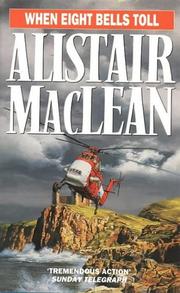
Hijacked bullion ships in the Western Isles, narrated by a secret-service diver with a very dry voice. The most enjoyable of his first-person books and the one that reads most like a Scottish answer to Bond.

Heroin, Amsterdam, and a genuinely nasty streak that most of his books do not have. Read it here because it shows him trying to write something darker rather than just faster.
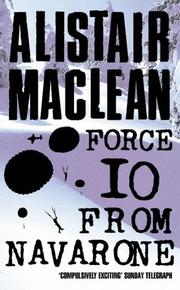
The direct sequel, moving the Navarone survivors to Yugoslavia and a dam. Worth reading only after the original, and worth reading mainly to see how much thinner a sequel written twelve years later is.

A film crew on a trawler heading for the Arctic, and a body count that starts before they arrive. The last of the genuinely good ones, and a deliberate return to the Ulysses weather.
The Decline, and Where to Stop
IntermediateSee what the late books look like, understand why they are different, and get the biographical explanation.
▸ Study plan for this stage
Pace: Three weeks for two novels and a biography, about 820 pages. Breakheart Pass is a short 192 pages and can be read in an evening. Santorini is 233 pages and is included as evidence rather than as entertainment — read it, but do not expect to enjoy it, and the disappointment is the exercise. Jack Webs
- The exception that tests the rule: Breakheart Pass is a genuine late success, and it works because it is a closed-circle mystery — the structure MacLean could still execute
- What the late books actually lack: not plot but prose, pacing and any evident interest from the author
- Santorini as checkable evidence — a promising premise delivered in flat dialogue with the tension entirely absent
- Contract pressure and ghost-outlined books, documented in Webster rather than merely rumoured
- The authorised biography as a category: privileged access, with the constraints that come with it
- Alcoholism and declining health as biographical fact and as partial explanation, without treating either as a complete one
- Where to stop, decided from evidence: you now have the strong books, the transitional ones and the failures, and can defend a stopping point
- Why does Breakheart Pass work when the books around it do not — is it the structure, the setting, or the length?
- In Santorini, name three specific craft failures. Vague dissatisfaction is not enough; the book is here to be diagnosed.
- What does Webster document about the late books' production, and how much of the decline does it actually explain?
- The biography is authorised. Where can you see that constraint operating — what does it decline to press on?
- Where would you tell a new reader to stop, and which three books would you name as the essential MacLean?
- Read the first chapter of Santorini and the first chapter of H.M.S. Ulysses on the same evening. Count sentences, count clauses per sentence, count how many pages pass before something is at stake. This is the whole argument of the path in one sitting.
- Diagnose Santorini in writing: one page naming the specific failures with a quoted example for each. Deciding why a bad book by a good writer is bad is a more useful skill than praising a good one.
- Apply the four-column table one last time to Breakheart Pass. It fits the closed-circle template from Night Without End almost exactly, fourteen years later — write a paragraph on what that continuity suggests about which of MacLean's instincts survived.
- After Webster, go back to your three-book recommendation and revise it if the biography changed your mind. Note explicitly whether it did; a biography that changes how you read the novels is doing something different from one that only explains them.
Next up: This closes the path: the four books he is remembered for, the early novels that built them, the peak run where the formula set, and the documented account of what happened afterwards.

A closed-circle mystery on a train in the 1870s American West — a genuine late success and the exception to the decline. Read it as the last stop before the drop-off rather than as part of it.

His final novel, and included here so the claim is checkable rather than asserted: a promising setup about a sunk yacht and a lost nuclear weapon, delivered in flat dialogue with almost no tension. If you want to know why readers say he stopped, this is the evidence.

The authorised biography, by a journalist who knew him. It supplies the thing the novels cannot — the alcoholism, the contract pressure and the ghost-outlined late books — and is the right closing item once you have read enough to have formed your own view.