Alexander the Great: the best books to read, in order
Every surviving account of Alexander was written at least three hundred years after he died, all of them drawing on lost contemporaries, and the result is that the same evidence yields a visionary who dreamed of uniting mankind to some historians and a brutal alcoholic warlord to others. This path is built around that disagreement: a clear narrative first, then the two great rival biographies read side by side, then the ancient sources themselves, then the Macedon and the logistics that made the conquest possible, and finally the sceptical scholarship and the wars that followed his death.
The story, told straight
BeginnerGet the chronology and the geography — Macedon, Granicus, Issus, Tyre, Gaugamela, Bactria, India, Babylon — in one readable narrative before meeting any argument about it.
▸ Study plan for this stage
Pace: One to two weeks for Philip Freeman's Alexander the Great — around 390 pages of fast narrative, so 30-40 pages an evening finishes it comfortably. Read it with an atlas or a map tab open rather than stopping to look things up afterwards; the campaign covers roughly 20,000 miles and the geography is
- The campaign's spine in order: Granicus, Issus, the siege of Tyre, Gaugamela, the burning of Persepolis, the Bactrian and Sogdian years, the Hydaspes, the Gedrosian desert, Babylon
- That every surviving narrative was written centuries after the events, so Freeman's clean story is itself a reconstruction from sources you have not yet met
- The Achaemenid Persian empire as a functioning state with satraps, road systems and treasuries — not a vacuum Alexander walked into
- The mutiny points as the structure of the second half: the Hyphasis in India and Opis are where the army stops being an instrument and becomes a party to the story
- The proskynesis controversy and the killing of Cleitus as the first places where a straight narrative has to start choosing an interpretation
- The distinction between the campaign and the succession: Alexander dies in 323 with no functioning arrangement in place, which is the hinge the whole final stage turns on
- Can you narrate the route from Macedon to the Hydaspes and back to Babylon without notes, naming the four pitched battles in order?
- What did the Persian empire look like before Alexander arrived, and how much of its administrative structure survived him?
- Where in Freeman's narrative does the army refuse Alexander, and what does he do each time?
- Which episodes does Freeman narrate as fact that he could plausibly have narrated as disputed — and did you notice him making a choice as you read?
- By the end of the book, what is Freeman's implied verdict on his subject, even though he mostly avoids stating one?
- Draw the campaign route freehand from memory on a blank sheet after finishing, marking the four battles and the two mutinies. Redo it a week later; what you lose is what you did not really have.
- Build a one-page dated chronology, 359 BC to 323 BC, with a line per year. You will annotate this same sheet in every later stage, and it is the cheapest way to see where the biographers actually diverge.
- Pick three episodes Freeman narrates in a single confident sentence — the Gordian knot, the death of Cleitus, the fire at Persepolis — and write down what he does not tell you about each. Keep the list for the ancient-sources stage.
Next up: With the chronology secure, the two rival biographies stop being competing stories and become visibly competing interpretations of the same fixed sequence of events.
The most accessible modern life: a straightforward narrative biography that moves quickly, keeps the campaigns clear and stays out of the scholarly quarrels. Read it first purely for the map and the timeline, so that the disputes in the next stage are disputes about something you already know.
The two rival portraits
IntermediateRead the same life told by an admiring historian and a hostile one, and see how far the evidence can be pushed in either direction.
▸ Study plan for this stage
Pace: Five to six weeks — Robin Lane Fox's Alexander the Great runs nearly 570 pages and Peter Green's Alexander of Macedon over 610, and both are dense. Roughly 25 pages a day gets you through each in three weeks. Read Lane Fox first and Green immediately after with no gap; the point of the stage is the
- That two serious historians working from an identical, closed body of evidence can produce portraits this far apart — the evidence underdetermines the man
- Source preference as the hidden engine of biography: Lane Fox leans toward the friendlier tradition, Green toward the hostile one, and most of the difference between the books lives there rather than in new facts
- Lane Fox's Alexander as a figure of Homeric ambition, read partly through the imitation of Achilles and the culture Alexander was educated into
- Green's counter-reading of the same career as escalating autocracy, with the deaths of Philotas, Parmenio and Cleitus as its evidence
- How each biographer handles the Persepolis fire, the Cleitus killing and the Gedrosian crossing — the three episodes where the two books are most directly opposed
- The Alexander-as-unifier thesis and its critics: whether the mass marriages at Susa and the integration of Persian troops were policy, expedience, or a modern invention read backwards
- Take the death of Cleitus. What does Lane Fox make it mean, what does Green make it mean, and what in the evidence does each of them lean on?
- Where does each biographer place the turning point of the reign — and does either of them really need a turning point, or is that a demand readers bring?
- Which parts of the disagreement are about evidence and which are about temperament? Can you find one dispute that new evidence could actually settle?
- Green is often described as the sceptical corrective to Lane Fox. Reading both, does that description hold, or does Green have a thesis of his own that the evidence has to fit?
- After both books, what do you think can be known about Alexander's intentions — as opposed to his actions — and on what basis?
- Pick four episodes — Granicus, Persepolis, Cleitus, the Hyphasis mutiny — and write the two accounts side by side in two columns, a paragraph each. The columns will do more for you than any summary of the controversy.
- Underline every hedge in one Lane Fox chapter (probably, we may suppose, it is likely that) and do the same for a Green chapter. Count them. The prose registers of confidence are part of what is being argued.
- Write 300 words on the death of Philotas as an advocate for Lane Fox's reading, then 300 as an advocate for Green's, then a third paragraph saying which you found harder to write and why.
- Annotate your chronology sheet from the first stage: mark every date or event where the two books actually conflict on fact rather than on interpretation. The list will be shorter than you expect, and that is the finding.
Next up: Having watched two historians pull the same material in opposite directions, you now need the material itself — the ancient accounts both of them are quarrelling over.
The 1973 biography that made Lane Fox's name and is still the most vividly written life in English — sympathetic, romantic about its subject, and openly willing to prefer the friendlier sources where they conflict. This is the Alexander of ambition and genius, argued at full strength.
Green's biography covers the identical years and reaches an almost opposite conclusion: a paranoid and increasingly murderous autocrat whose propaganda has been taken at face value for two millennia. Read it immediately after Lane Fox. Neither has won the argument, and holding both is closer to the historical truth than choosing.
The ancient evidence
IntermediateRead the surviving sources directly and understand what they were working from and why they disagree.
▸ Study plan for this stage
Pace: Four to five weeks. The Landmark Arrian is around 500 pages but the apparatus is half the value — read the introduction and the relevant appendices, not just the narrative. Plutarch's The Age of Alexander is a Penguin selection of lives including the Alexander; read the Alexander first, then at leas
- The lost primary sources — Ptolemy, Aristobulus, Callisthenes, Cleitarchus — and the fact that everything surviving is a later writer's use of them
- The vulgate tradition versus Arrian's preferred sources, and why source choice alone produces most of the ancient disagreement
- Arrian's own position: a Roman-era Greek official writing centuries later, explicit about his method, and a partisan for the participants he trusts
- Plutarch's declared purpose — moral portraiture, not history — and why that makes him the origin of the famous anecdotes and a poor foundation for argument
- How to read the Landmark apparatus: the dated headers, maps and appendices are the fastest available orientation to the scholarly problems
- What the sources are silent about, especially Persian and Indian perspectives, and how that silence has shaped every modern account you have read so far
- Arrian states his method at the outset. What is it, and does he keep to it where his sources conflict?
- Take three anecdotes you met in Freeman — the Gordian knot, Bucephalus, the doctor Philip. Where do they come from, and how does Plutarch's purpose change what they are worth as evidence?
- Where does Arrian's account diverge most sharply from what Green built his case on, and can you see which tradition Green was preferring?
- What kinds of question do these sources simply cannot answer, and how did Lane Fox and Green each handle that limit?
- Having read Arrian directly, is the Landmark edition's framing doing interpretive work of its own? Where can you see it?
- For one episode — Gaugamela is the best candidate — write out Arrian's account and Plutarch's account in parallel and mark every point of fact on which they differ.
- Work through the Landmark's appendices on the army and the sources, then go back and re-read the Granicus chapter. Note what the apparatus made visible that a bare translation would not have.
- Build a source-tree diagram: lost writers at the top, Arrian and Plutarch below, Lane Fox and Green at the bottom, arrows for who is drawing on whom. One page. Keep it for the final stage.
- Take five sentences from Plutarch's Alexander that read as pure character sketch and rewrite each as the historical claim it would have to be if it were evidence. Note how much thins out.
Next up: You now know what the evidence is and where it came from, which is the precondition for the next stage's argument that the conquest was made possible by an inherited machine rather than by the personality the sources are obsessed with.
Arrian's Campaigns of Alexander is the fullest and generally the most trusted ancient account, drawing on the lost memoirs of Ptolemy and Aristobulus, who were there. The Landmark edition is the one to use for the maps, dated headers and appendices; Arrian is also a partisan for his sources, and the introduction says so.

Plutarch's lives of Alexander and his contemporaries, written for moral instruction rather than record, and the origin of most of the famous anecdotes — Bucephalus, the Gordian knot, the killing of Cleitus. Invaluable for the tradition and unreliable as evidence, and the contrast with Arrian is the clearest possible demonstration of what a source is for.
How it was actually done
IntermediateUnderstand the state, the army and the supply system Alexander inherited, and stop treating the conquest as a matter of personal genius alone.
▸ Study plan for this stage
Pace: Five to six weeks for three books of very different weights. Ian Worthington's Philip II of Macedonia is a compact 320 pages; his By the Spear runs to about 400 and covers both reigns; Donald Engels's Alexander the Great and the Logistics of the Macedonian Army is only around 215 pages but is a tech
- What Philip II actually built — the reformed phalanx and sarissa, the Companion cavalry, the mines and finances, and the Greek settlement after Chaeronea
- The inheritance argument: that the army, the treasury and the strategic plan for the Persian invasion were all in place before 336, and Alexander's contribution was the execution
- Worthington's continuous treatment in By the Spear, in which Macedon's rise and fall is one story and Alexander is a chapter of it rather than its subject
- Engels's core method: calculating water, grain and fodder requirements against what pack animals and men can carry, then deriving the possible routes from the answer
- The consequence of that calculation — that marching seasons, halts, coastal routes and the timing of major decisions were set by supply before they were set by strategy
- The great-man problem this stage poses: how much of what the biographies attribute to genius was determined by logistics, institutions and predecessors
- That Engels's specific figures have been contested since publication while his approach reshaped the field — a useful example of a book being influential and superseded at once
- Set out the case that Philip was the more consequential of the two. What is the strongest evidence for it, and what is the strongest objection?
- Worthington is markedly cooler about Alexander than Lane Fox. Where does that judgement actually come from in his evidence, rather than in his framing?
- Take one decision the biographers treat as a choice — the coastal march through Asia Minor, the Gedrosian crossing, the halt at the Hyphasis. What does Engels's method say about how much of a choice it was?
- If Engels is broadly right, which claims in Lane Fox and Green stop being available? Name two specifically.
- Where do you think Engels's method reaches its limit — what does a supply calculation genuinely not explain about this campaign?
- Work through Engels's calculation for one leg of the march with pen and paper — army size, daily water and grain, days to the next source. Do not skim the arithmetic; the argument is the arithmetic.
- Take the Gedrosian desert crossing and write two accounts of a page each: one as a decision of character, one as a consequence of supply. Then say which you find better supported and why.
- Annotate your chronology sheet a third time, marking which events Engels would say were constrained rather than chosen.
- List every military and financial institution Worthington credits to Philip, then go back to your notes on Lane Fox and mark which of them he attributes to Alexander instead.
Next up: With the machine and its constraints understood, you are ready for the current scholarship — which largely consists of specialists doing to individual problems what Engels did to supply — and for the question of what any of it finally amounted to.

The father who built the army, the finances and the Greek settlement that Alexander then used. A serious case that Philip was the more consequential of the two, and the necessary correction to biographies that begin in 336.

Worthington's joint treatment of Philip and Alexander and the rise and fall of the Macedonian empire, tying the two reigns into one story. He is markedly cooler about Alexander than Lane Fox, and this is where his overall judgement is stated.

A technical study of water, grain and pack animals which argues that the route of the whole campaign was dictated by what an army could physically carry and find. Dry, short and quietly devastating to the great-man reading. Some of its calculations have been challenged since 1978, but the approach reshaped the field.
The sceptics, and the aftermath
IntermediateRead the current scholarly treatment and the hostile case, then follow the forty years of wars that decided what the conquest actually amounted to.
▸ Study plan for this stage
Pace: Six to eight weeks for four books. Waldemar Heckel's volume — published as Alexander the Great: A New History — is a scholarly collection of about 240 pages and should be read slowly, essay by essay, one or two a sitting. John Prevas's Envy of the Gods is short and fast. James Romm's Ghost on the Th
- Where academic opinion currently sits, problem by problem — the source tradition, the army, the Persian administration, the divinity question — and where it is genuinely split rather than merely unsettled
- The specialist-essay form itself: what a collection can show about a field that a single-authored biography structurally cannot
- Prevas's hostile case at full strength — the eastern years as paranoia, drunkenness and the killing of his own officers — and the difference between a polemic making an argument explicit and a polemic proving it
- The succession crisis at Babylon: no adult heir, a mentally incapacitated half-brother, an unborn son, and an officer corps with armies
- The Diadochi wars as the real test of the achievement — Romm on the immediate dismemberment, Waterfield on the forty-year settlement into Hellenistic kingdoms
- The question the whole path has been circling: whether Alexander founded anything durable, or whether the durable things were founded by his generals out of the wreckage
- Historiography as a live activity — that every book on this path was written into an argument, and Heckel's volume is where you can see that most plainly
- After Heckel, name three questions about Alexander that specialists consider genuinely open, and say what would have to turn up to close each one.
- Prevas makes explicit what Green implies and Lane Fox rejects. Does making it explicit strengthen the case or expose it? Point to a specific chapter in answering.
- Romm and Waterfield cover overlapping ground at different scales. What does Waterfield's longer view show that Romm's close narrative cannot, and what does Romm show that Waterfield loses?
- Given the speed with which the empire came apart, what — if anything — did Alexander actually build? Argue it from the succession wars rather than from the conquest.
- Having read all five stages, whose Alexander do you now hold, and can you state precisely which evidence moved you rather than which prose you enjoyed most?
- Write a 1,000-word review essay of the Lane Fox and Green biographies as if you had read Heckel's volume first. This is the single best test of whether the path worked.
- Take one essay from the Heckel collection and trace its argument back through your source-tree diagram to the ancient writers it depends on.
- Make a table of the major Diadochi — Perdiccas, Antipater, Ptolemy, Seleucus, Antigonus, Cassander, Lysimachus — with what each held in 323 and what their line held by 280. Romm and Waterfield between them supply all of it.
- Return to the verdict you wrote after the second stage and revise it in the light of Engels, Heckel and the succession wars. Note which of your original reasons you have dropped.
- For each of the four books in this stage, write one sentence on what kind of book it is — collection, polemic, narrative, synthesis — and one on what that form can and cannot establish.
Next up: This is the end of the path. The natural continuation is not another Alexander book but the Hellenistic world Waterfield leaves you in, or a return to Arrian, which reads entirely differently once you know what everyone has done with him.

Published as Alexander the Great: A New History, an edited scholarly volume in which specialists take individual problems — the sources, the army, the Persian administration, the divinity question — in turn. The best single view of where academic opinion currently sits and where it is split.
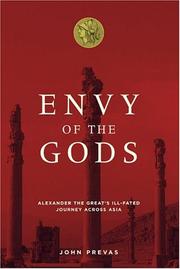
The hostile case pressed to its limit: Alexander's eastern campaigns as a descent into paranoia, drunkenness and the murder of his own officers. It is a polemic and reads like one, and it is useful precisely because it makes explicit the reading that Green implies and Lane Fox rejects.

What happened in the years immediately after Babylon — the generals, the widows, the child heir, and the dismemberment of the empire. It answers the question every biography leaves hanging and is as gripping as any of the lives.

The longer view of the same succession wars and the Hellenistic kingdoms that came out of them. Read last: it is the evidence for judging whether Alexander built anything or only conquered, which is the question the whole path has been circling.