Alexander is a subject where reading order genuinely changes the conclusion you reach. Not one line survives from anyone who marched with him. Everything we have was written three hundred to five hundred years later, by Greeks and Romans working from lost memoirs written by men with reputations to protect. Read a hostile modern account first and Alexander is a drunk who murdered his friends; read a sympathetic one first and he is a visionary. Both are built from the same thin evidence.
So the sequence below does something deliberate: a plain narrative first, then the ancient source itself, then the specialists who explain why the narrative is shaped the way it is. That order lets you see the seams.
Start with a modern narrative
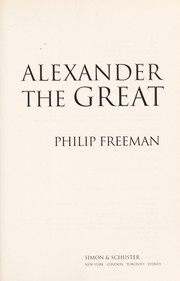
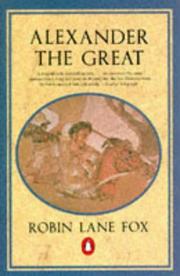
Two books in this path share the title Alexander the Great. Philip Freeman's is the short, fast, readable one, and it is the better first book — around three hundred pages, no argument with other scholars in the text, just the campaign. Robin Lane Fox's book of the same name is the famous one, gorgeously written and openly enchanted by its subject; read it second, knowing that its warmth is a position, not a neutral default.
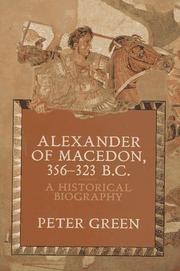
Then read Peter Green's Alexander of Macedon, which is the corrective. Green sees a gifted paranoid whose empire was a personal project and died with him. Green and Lane Fox disagree about almost everything that matters, and the disagreement is not settled by new evidence, because there is no new evidence. Holding both in your head is the actual scholarly position.
Go to the ancient sources
The Landmark Arrian is the essential one — Arrian's campaign history with maps, appendices and a usable apparatus, which is what makes the Landmark editions worth their price. Arrian relied on Ptolemy, who became a king and had reasons to be flattering, so this is the most reliable account we have and it is still not neutral.
The age of Alexander is a Penguin selection of Plutarch's Lives covering the period. Plutarch is writing moral biography rather than history: he says so himself, and he is often the source of the anecdotes everyone knows. Enjoy him, and do not treat him as a chronicle.
Macedon before and after
Alexander inherited an army and a state. Ian Worthington's Philip II of Macedonia makes the case that the father built the machine and the son drove it, which is a live argument among historians rather than a settled fact. Worthington's By the spear covers both reigns in one volume and is the efficient choice if you want one book instead of two.
Donald Engels' Alexander The Great And The Logistics Of The Macedonian Army is a specialist monograph, and a short one, but it is the book that most changes how the campaign looks: water, grain and mules dictate the route more than genius does. Waldemar Heckel's The Conquests of Alexander the Great is a compact scholarly overview, useful once you know the outline.
The dark side and the aftermath
John Prevas's Envy of the gods is a frankly prosecutorial account of the march into Central Asia and the killings that came with it. Take it as advocacy and read it against Lane Fox.
Then the part most books skip. James Romm's Ghost on the throne and Robin Waterfield's Dividing the Spoils both cover the forty years of war among Alexander's generals after his death — the period that actually created the Hellenistic world. They overlap heavily; read whichever you find first, not both. Related sequences sit on the Alexander the Great hub.
Follow the full ordered path here: Alexander the Great: The Best Books to Read, in Order.