Alex Delaware Reading Order: Where to Start with Jonathan Kellerman
Jonathan Kellerman has written more than forty Alex Delaware novels, and the series has a genuinely unusual premise for crime fiction: the detective is a child psychologist, Kellerman was one, and the clinical material is real. The order matters less than in most long series — later books stand alone — but the early ones are where the format is invented and where the partnership with LAPD homicide detective Milo Sturgis, which carries everything afterwards, gets built. This path reads the opening four in sequence, takes the strongest middle stretch, and then picks selectively rather than pretending forty books are worth equal attention.
The First Four, in Order
BeginnerWatch the series invent itself: the psychologist-narrator, the Los Angeles setting, and the friendship with Milo Sturgis that is the real continuing story.
▸ Study plan for this stage
Pace: Five to six weeks for about 1,600 pages. These are commercial crime novels and they read fast — 60 to 80 pages an evening is normal — but do not batch them, because the point of this stage is watching a format get invented and that is easier to see with a day or two between books. Read them strictly
- The consulting-psychologist premise: Delaware has no badge and no gun, so every book needs a plausible reason to bring him to a crime — watch how Kellerman solves that problem differently each time
- Kellerman was a working child psychologist at Childrens Hospital Los Angeles, and the clinical procedure in these books is real rather than invented
- Milo Sturgis as the engine of the series: a gay LAPD homicide detective in the 1980s, whose career constraints supply most of the books' institutional friction
- Los Angeles as a class map — Kellerman routes each case through a specific stratum of the city, and the geography is doing characterisation
- The first-person retrospective voice, and what it lets Delaware withhold from the reader
- Robin Castagna and the domestic thread, which exists so that the cases have something to threaten
- How the series distinguishes itself from the private-eye novel it superficially resembles: the interviewing, not the investigating, is where the plot moves
- How is Delaware brought into each of the four cases, and which of the four mechanisms is the most contrived?
- What does the clinical material in Blood Test give the novel that a purely procedural treatment of the same plot could not?
- Over the Edge turns on a former patient. What does the book decide a therapist can and cannot know about someone, and does the plot honour that answer?
- By the end of Silent Partner, what do you know about Delaware's own history, and why does Kellerman withhold it for four books?
- What exactly does Milo contribute that Delaware cannot, and at what point does the friendship stop being a plot convenience?
- Keep a four-line log per book: how Delaware gets involved, who the client actually is, how many therapy sessions are shown on the page, and whether Milo is present at the resolution. By book four you will have the series formula written out in sixteen lines.
- Mark every scene in Blood Test that takes place in a hospital and note what Kellerman assumes the reader knows about oncology consent. Compare with the equivalent scenes in When the Bough Breaks; the professional confidence visibly increases between the two.
- Count the pages between Delaware's first appearance and Milo's in each of the four novels. The number shrinks, and that shrinkage is the series deciding what it is about.
- After Silent Partner, go back to the opening chapter of When the Bough Breaks and reread it. The same character is being introduced twice, four years apart, and the difference is the clearest measure of what these four books built.
Next up: You now know the format and the partnership well enough to notice when Kellerman is working at the top of it, which is exactly what the next three books are.
The first novel, an Edgar winner, and the right place to start: a burned-out Delaware is pulled back to work because a murder's only witness is a seven-year-old girl. It establishes the clinical method that distinguishes the series from every other Los Angeles crime novel.
A family removes a child from cancer treatment and vanishes. The medical-ethics material is the strongest of the early run, and Kellerman is writing directly out of his own hospital experience here.
A former patient of Delaware's is arrested for a string of killings, which forces the question the whole series keeps circling: how much a therapist can know about someone. Third in sequence and the darkest of the openers.

A woman from Delaware's past kills herself the day after seeing him, and the book goes deep into his own history. The most personal of the early novels and the one that makes the character rather than the cases the reason to continue.
Where the Series Peaks
BeginnerRead the stretch most Delaware readers rate highest, where the psychology and the procedural are best balanced.
▸ Study plan for this stage
Pace: Four to five weeks for three long novels totalling about 1,500 pages. Time Bomb and Private Eyes are around 500 pages each and Devil's Waltz is similar; a week to ten days apiece is comfortable. These are the books most Delaware readers rate highest, and they are noticeably denser than the first fou
- Kellerman's strongest structural move: put Delaware in his actual professional role — treating survivors — and let the investigation come to him rather than the reverse
- Munchausen syndrome by proxy as it was understood and diagnosed in the early 1990s, which is the specialist ground Devil's Waltz is built on
- The child-patient-returns plot, which Private Eyes uses and which the series will reuse repeatedly afterwards
- Institutional settings — a school district, a hospital, a family trust — as the series' preferred antagonist
- Political material handled directly: Time Bomb is unusually explicit about extremism and Los Angeles racial politics for a mainstream thriller of its date
- Plot density: these three novels carry two or three interlocking cases where the first four carried one
- The point at which a formula becomes a form — the machinery is now invisible enough that Kellerman can spend pages on clinical procedure without losing pace
- In Time Bomb, what does Delaware actually do with the children, and how much of the novel would survive if those scenes were cut?
- Private Eyes is widely called the best-plotted early Delaware. How many separate cases is it running, and where do they turn out to be one?
- What does Devil's Waltz get right about Munchausen by proxy that a non-clinician writing the same plot would probably get wrong?
- Compare the political writing in Time Bomb with the first four books. What has Kellerman decided he is now allowed to do?
- These three are longer than the openers. Is the additional length plot, character, or clinical material?
- Read the assessment scenes in Devil's Waltz with the diagnostic criteria for factitious disorder imposed on another beside you. Kellerman is dramatising a real diagnostic process; checking it against the criteria is the intended test and it holds up.
- Diagram Private Eyes as a timeline rather than a plot: put every event in the order it happened rather than the order it is revealed. The gap between the two diagrams is the book's craft.
- In Time Bomb, list every institution that fails the children — school, district, police, press, parents. Kellerman is making an argument by accumulation and the list is the argument.
- Take the sixteen-line series formula you built in the last stage and update it for these three books. Note specifically which formula elements have been dropped rather than developed; that is the series learning what it does not need.
Next up: Having seen the series at full strength, you can now watch a writer in complete control of a form decide how far he is willing to bend it.
A sniper at a school and Delaware brought in to treat the children who saw it. The political material is unusually sharp for the series, and it is the clearest demonstration of what a psychologist actually does at a crime scene.

A former child patient, now an adult, calls Delaware back into an inheritance and a disappearance. It is the best-plotted book of the early run and the one that most rewards having read the first four.

A hospital case of suspected Munchausen syndrome by proxy, and the novel where Kellerman's professional background counts for most. Widely regarded as the strongest in the series; if you read one middle Delaware, read this.
The Mid-1990s Run
IntermediateFollow the series into its settled form, and see how Kellerman varies a formula he now has complete control of.
▸ Study plan for this stage
Pace: Six weeks for four novels, about 1,800 pages. Bad Love, Self-Defense, The Web and The Clinic are all substantial but they read faster than the peak books because the format is now settled and Kellerman is no longer building anything. Read them in order — The Web only makes sense as a deliberate depa
- The inversion: Bad Love makes the psychologist the target, which is the one variation the premise permits and which Kellerman spends the rest of the series drawing on
- Recovered memory in fiction, and the fact that Self-Defense is written at the exact moment the clinical profession was arguing hardest about it
- Continuity as a resource — Self-Defense reaches back to a character from an earlier novel, which is the series starting to feed on itself
- What The Web removes: no Milo, no Los Angeles, no consulting frame. Reading it tells you which of the three the series actually cannot do without
- Cruise mode: The Clinic is a good example of a competent book by a writer with nothing left to prove, and recognising that state is useful for deciding what to read next
- The series' settled shape — a murder, an institution, a clinical thread, a domestic thread and a Milo thread, resolved in that order
- Where a long series stops rewarding sequential reading, which for Delaware is roughly here
- Bad Love puts Delaware in danger rather than at a remove. What does the series gain, and what does it have to give up to do it?
- How does Self-Defense handle the reliability of the juror's memory — does the novel take a position on recovered memory, or arrange the plot so that it never has to?
- Strip The Web of everything the other books have: what is left, and is it a Delaware novel at all?
- The Clinic follows the standard configuration exactly. Name the five components and where each one lands in the book.
- At what page in this stage did you stop being surprised by the structure, and does that change your view of the earlier books?
- Chart the formula across all four books on one page: victim, institution, clinical thread, Milo's role, domestic threat. The Web will have blanks in three columns, and those blanks are the exercise's answer.
- Read the opening chapter of Bad Love and the opening chapter of When the Bough Breaks back to back. Both introduce a threat to Delaware; measure how many pages each takes to do it and what the ten-year difference in economy tells you.
- In Self-Defense, mark each scene that is a genuine clinical session as against a conversation that happens to occur in an office. The ratio is the highest in the mid-run, which is the case for this being the stage's best book.
- Pick one plot device you have now seen three times across the eleven books read so far — the returning patient, the corrupt institution, the anonymous message — and write down what Kellerman varies each time. Series craft is variation, not invention.
Next up: You have read eleven consecutive novels and can now see the pattern from the inside, which is the only sound basis for reading the remaining thirty selectively rather than dutifully.

Delaware is stalked by someone using a recording of a screaming child, which turns the psychologist into the case. The most suspenseful book in the series and a deliberate inversion of its usual structure.
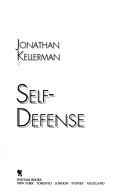
A juror from a previous novel comes to Delaware with a recurring nightmare that turns out to be memory. It is the tightest of the mid-run books and the one that stays closest to actual clinical work.

Delaware and Robin on a remote Pacific island with an elderly doctor and his archive. Structurally the odd one out — no Milo, no Los Angeles — and worth reading precisely because it shows what the series loses without them.
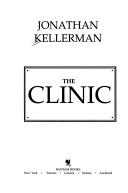
A murdered celebrity psychologist and a campus full of suspects, back in the usual configuration. A good example of the series in cruise mode, and the point at which you can reasonably start picking and choosing.
Later Books Worth Picking Up
IntermediateSample the long later run using three books that stand on their own, rather than continuing volume by volume through thirty more.
▸ Study plan for this stage
Pace: Four to five weeks for three books, about 1,400 pages, and this stage is deliberately not sequential — there are roughly thirty further Delaware novels and these three are picked as the ones that stand alone and repay attention. Read The Murder Book last regardless of the order you take the other tw
- Selective reading of a long series: after book eleven or so, the correct question is which book, not which next book
- The stand-alone late novel — Kellerman writes each one to be enterable, which is why they can be sampled but also why they repeat themselves
- Survival of the Fittest as the most ambitious late plot, and the risk a mass-market thriller runs in taking eugenics as its subject
- monster returning to the psychiatric institution, which is the setting the series has always handled best
- The Murder Book finally making Milo the subject rather than the instrument, twenty books after he was introduced
- Milo's backstory as the payoff the first four books were quietly setting up — a gay detective in the LAPD of the 1970s and 1980s, told at last
- Knowing where to stop: The Murder Book resolves the series' actual continuing story, which makes it a natural endpoint even though the books continue
- Survival of the Fittest brings in an outside investigator alongside Milo. What does that let Kellerman say about the LAPD that he has been unable to say for fifteen books?
- What does the institutional setting of monster restore that the mid-1990s books had drifted away from?
- Why does The Murder Book work as the best late Delaware — is it the plot, or is it that the plot is finally about the partnership?
- Having read fourteen of these novels, what would you tell someone who asked whether the remaining thirty are worth it?
- Which of Milo's earlier scenes read differently once The Murder Book has told you about his first years in the department?
- Before starting The Murder Book, write down everything you know about Milo Sturgis's past from the previous thirteen novels. It will be a short list. Then read the book and note how much of what it reveals was genuinely planted rather than retrofitted.
- Take the formula chart from the previous stage and apply it to all three of these books. Two will fit it exactly; one will not, and identifying which is the whole judgement this stage is asking you to make.
- In Survival of the Fittest, mark where the novel states the eugenic argument in a character's own voice as against summarising it. Thrillers usually flinch here; write down whether this one does.
- Write your own three-book recommendation from the fourteen you have read — an entry point, a peak, and a stopping place — with one sentence each. That list, not a complete read of forty-plus novels, is what this path was for.
Next up: This closes the path: you have the four books that built the series, the three where it works best, the run where the formula sets, and the late novel that finally tells the story the whole thing was about.

Killings of disabled children and a eugenics group, with an Israeli investigator brought in alongside Milo. The most ambitious plot of the later 1990s books; note that the year on this catalogue record is wrong.

A psychiatric hospital inmate appears to predict murders, which returns the series to the institutional setting it does best. Filed here under a lower-case display title.
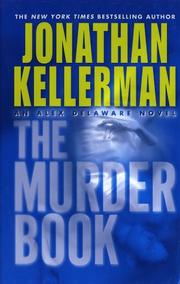
An anonymous album of crime scene photographs arrives, and the novel finally opens up Milo Sturgis's own past and his first years as a gay detective in the LAPD. The best late Delaware and the natural place to stop: the partnership that the first four books built is the subject at last.