Alberto Moravia in Order: Where to Start with the Italian Novelist
Moravia published for fifty years and his best books are scattered across that span rather than clustered early or late, so a chronological read gives a very uneven first impression. This path starts with the short novels the films made famous, then the wartime books, then the debut.
Start here
IntermediateBegin with the two short novels that are his most perfectly made.
▸ Study plan for this stage
Pace: 2-3 weeks. Contempt runs about 250 pages and The Conformist is a similar length; both go quickly. Read Contempt over four or five sittings, then leave a clear day before starting The Conformist so the two failing marriages do not blur into one.
- Indifference as Moravia's permanent subject: characters who cannot feel what they are supposed to feel and construct elaborate reasons why
- Riccardo Molteni's narration in Contempt as a rationalising machine - every chapter is another theory about why Emilia stopped loving him
- The Odyssey screenplay argument inside Contempt, where Rheingold's psychoanalytic Odysseus and Battista's spectacle version stand for two ways of reading any story
- Marcello Clerici's pursuit of normality in The Conformist, and normality as the motive for political atrocity
- The Conformist's frame: a childhood episode with Lino at one end and the collapse of fascism in 1943 at the other
- Moravia's flat, unornamented sentence, which reports appalling things in the same register as furniture
- Sex as the only place in these novels where the truth about a relationship becomes visible
- Contempt never confirms why Emilia's feeling changed. Does the novel give you enough to decide, and is Riccardo's version of the moment on the road credible?
- Which reading of the Odyssey does Contempt endorse - Rheingold's or Battista's - and how does the novel's own ending answer the question?
- In The Conformist, is Marcello's conformity a cause of his crimes or a cover story for them?
- What does the Lino episode establish that the rest of The Conformist depends on?
- Both novels are told about men who cannot account for themselves. Why does Contempt use first person and The Conformist third?
- In Contempt, mark every passage where Riccardo offers a new explanation of Emilia's contempt. Read the list in order at the end - the sequence is the novel's real plot.
- Read only the screenplay-conference chapters of Contempt in one pass and write down each man's Odysseus in a sentence. Then decide which one Riccardo actually believes.
- Watch Godard's Le Mepris after finishing Contempt and note what the film does with the ending, which it changes. The gap tells you what the novel was for.
- Read the prologue and the final chapter of The Conformist back to back before reading the middle, then again after. The book is built to be re-entered.
- Take one paragraph of Moravia's prose and rewrite it with adjectives and interiority added. The exercise shows what the flatness is doing.
Next up: Having seen Moravia's coldness applied to private life, the wartime books show the same eye turned on a whole country coming apart.

A screenwriter watches his wife stop loving him and cannot find out why. Godard filmed it as Le Mépris. Short, cold and the best entry point.

A man seeks ordinariness so badly that he becomes a fascist assassin. Bertolucci's film is famous; the novel is colder and better on the psychology.
The war
IntermediateRead the wartime novel and the Rome stories.
▸ Study plan for this stage
Pace: 3-4 weeks. Two Women is about 350 pages and should be read continuously - roughly 25 pages a day. Roman Tales is a story collection at 230 pages; read three or four stories a sitting rather than trying to consume it whole.
- Cesira's first-person peasant narration in Two Women - a completely different instrument from the intellectual narrators of stage one
- The flight from Rome into the Ciociaria hills in 1943 and the year of waiting for liberation
- Rosetta's transformation after the assault in the church, and Moravia's refusal to redeem it
- That the liberators are not exempt: the violence in the novel comes from Allied troops, which is why the book was controversial
- Roman Tales as evidence that Moravia can write ordinary life warmly - the bleakness in the novels is a choice, not a limit
- The repeating shape of a Roman tale: a small scheme, a small humiliation, no lesson drawn
- Wartime and postwar Rome as a place where survival and morality are simply separate questions
- Why does Moravia give the story of the war to an uneducated shopkeeper rather than to an intellectual, as he does everywhere else?
- What changes in Rosetta after the church, and how does Cesira's narration handle a change she cannot understand?
- Two Women was filmed with Sophia Loren and is Moravia's most emotionally direct book. Is the directness a departure or the same method with the irony removed?
- What do the Roman Tales share as a shape, and what does that shape say about the lives they describe?
- Does Cesira ever judge anyone? What does the absence of judgement do to the reader?
- Read the first ten pages of Two Women and the first ten of Contempt back to back and list the concrete differences in the sentences - vocabulary, clause length, what the narrator notices. The comparison is the whole point of reading them in this order.
- Mark the chapter containing the assault, then reread the twenty pages before and after it a week later, watching what Cesira reports and what she does not.
- Read three consecutive Roman Tales in one sitting and write a one-line summary of each. If the three summaries share a shape, you have found Moravia's story engine.
- Pick one Roman Tale and write a paragraph continuing it in the same register - flat, present, no moral. It is harder than it looks.
Next up: The war novels show people who feel too much under pressure; the next stage returns to Moravia's core subject, people who cannot feel at all.
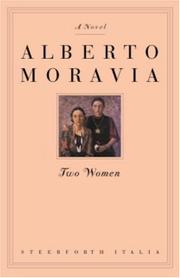
A mother and daughter fleeing Rome in 1943. It contains the assault scene that De Sica filmed with Sophia Loren, and it is his most emotionally direct book.
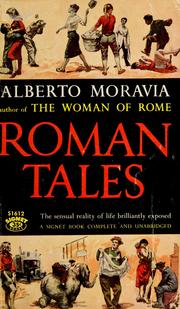
Short stories of working-class Rome. The best evidence that the bleakness of the novels is a choice, not a limit.
Alienation
IntermediateThe novels about not being able to feel anything, which is his real subject.
▸ Study plan for this stage
Pace: 4 weeks. Boredom is around 320 pages and The Woman of Rome about 390, and both are slow by design - budget roughly 25 pages a day and expect Boredom in particular to resist being read fast, because very little happens on purpose.
- Boredom as Moravia defines it: not tedium but a failure of reality to hold together - objects and people stop being real to Dino
- Dino's painting, and the destroyed canvas that opens the novel as a statement of the problem
- Money as the only mechanism by which Dino can attach himself to Cecilia, and what that says about desire in Moravia
- Cecilia's total unavailability to interpretation - she frustrates the reader exactly as she frustrates Dino
- Adriana's first-person account in The Woman of Rome, and prostitution presented as an economic decision rather than a fall
- The Woman of Rome as the novel that made Moravia internationally famous after the war, and its comparative warmth
- How the same condition - contempt, conformity, boredom - keeps recurring under different names across the whole body of work
- What does Dino mean by boredom, and how is it different from ordinary depression or ennui?
- Why must the money be involved in Dino's relationship with Cecilia? What would the novel lose if he simply loved her?
- Cecilia is unknowable to Dino. Is she unknowable to the reader, or does the novel let you see past him?
- Adriana narrates her own life without self-pity or self-justification. How does Moravia keep the voice from collapsing into either?
- Set beside Riccardo, Marcello and Dino, is Adriana the only character in these books who is actually alive?
- Read the opening scene of Boredom, where the canvas is destroyed, then reread it after finishing. Write two sentences on what the act means at each reading.
- Keep a running note of every payment or gift in Boredom, with the amount where given. Read the list at the end as a graph of the relationship.
- Read Adriana's account of her mother's ambitions for her in The Woman of Rome and set it beside a Roman Tale from the previous stage. Both are about getting by in Rome; note which one has room for a future.
- Write out in one sentence each what Riccardo, Marcello, Dino and Adriana want. Three of the four cannot answer, and seeing that on one page is the argument of the whole path.
Next up: Every symptom in these three novels is already present in the book Moravia wrote at twenty-two, which is why the debut is the last thing you read rather than the first.
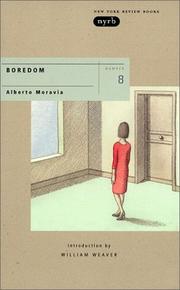
A painter who has stopped being able to want anything, and the young woman he becomes obsessed with anyway.

A prostitute's account of her own life, and the novel that made him internationally famous after the war.
The debut
IntermediateFinish where he started, which reads better last.
▸ Study plan for this stage
Pace: 2 weeks. The record here is an omnibus that bundles The Time of Indifference with Two Adolescents, so budget for two separate reads: The Time of Indifference over about a week, then the two short pieces of Two Adolescents over a few evenings.
- That the entire method arrives fully formed in a novel written at twenty-two and published in 1929
- Michele's inability to feel the outrage his situation demands, and his attempt to manufacture it - the origin of every later Moravia protagonist
- Carla's decision about Leo Merumeci as an act taken out of exhaustion rather than desire
- Mariagrazia's household as a bourgeois family rotting quietly, which fascist authorities correctly read as an attack even though no politics are stated
- The compressed, near-theatrical structure - a few days, a few rooms, a handful of characters
- Agostino and the second novella in Two Adolescents as the same material distilled to boyhood, and the value of reading them straight after the debut
- Why this book is more legible last: with Contempt, The Conformist and Boredom behind you, the flaws read as a first statement rather than a failure
- Michele knows exactly what he ought to feel and cannot feel it. How does the novel dramatise that gap without an interior monologue explaining it?
- Why did a novel with no explicit politics offend the fascist authorities more than an argument would have?
- What is the effect of the very short time span and the confined setting - does it read as a stage play, and does that help or hurt?
- Reading Agostino directly after The Time of Indifference, what has Moravia learned to leave out?
- Having now read six decades of his work, is Moravia a novelist who developed or one who kept rewriting the same book better?
- Read The Time of Indifference first, then Agostino. Write half a page on what the shorter book achieves in a fraction of the space.
- Take Michele's most self-aware passage and Dino's from Boredom and set them side by side. Nearly thirty years separate them; list what actually changed.
- Reconstruct the chronology of the whole path on one sheet - 1929, 1947, 1951, 1954, 1957, 1960 - and mark which book you read at which point in this path. The mismatch between publication order and reading order is the argument this path is making.
- Write a single paragraph in Moravia's register describing a family meal, reporting only what is said and done. Then read your paragraph next to the opening of The Time of Indifference.
Next up: With the debut in place you have the full arc, and the many untranslated or minor novels between these books become optional rather than a gap - you already know what they are doing.
Written at twenty-two and published in 1929 — a bourgeois family rotting quietly, which the fascist authorities correctly read as an attack. Our record bundles it with Two Adolescents.