Start with Contempt. A screenwriter watches his wife stop loving him and cannot work out why, and spends the novel constructing explanations that are all slightly wrong. It is short, it is merciless, and it is the purest distillation of the subject Moravia wrote about for fifty years: people who cannot tell the difference between what they feel and what they have decided they feel.
The obvious alternative is to start at the beginning, with the 1929 debut that made him famous at twenty-two. There is a practical reason not to. In our catalogue that book comes as The Time Of Indifference & Two Adolescents, a combined volume — it holds the debut novel plus two later short novels about adolescence, which were written fifteen years apart from it and from each other. It is a fine book to own and a confusing place to begin, because it presents three separate phases of a career as one object.
The entry point, and its companion
Read Contempt first, then Boredom. They are the same novel written twelve years apart with the temperature lowered. In Boredom a painter stops being able to paint and attaches himself to a much younger woman largely to have something to fail at; the flatness of the narration is the point, and readers who find it monotonous are not misreading it so much as declining the experiment. Between them these two books tell you whether Moravia is for you. If the coldness reads as honesty, keep going. If it reads as a pose, stop here — he does not warm up later.
The Rome novels
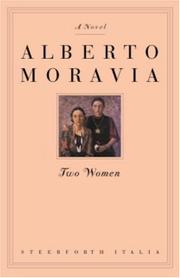
This is the richest vein and the one most worth the time. The woman of Rome (1947) is his most conventionally satisfying novel, narrated by a young model and prostitute in the late Fascist years, and it is the best book to recommend to someone who found Contempt too airless. Two women follows a mother and daughter fleeing wartime Rome into the countryside; it is his most emotionally direct book, and the source of the film that won Sophia Loren an Oscar. Roman tales collects the short stories, told in the voices of taxi drivers, waiters and small-time thieves. The stories are the strongest argument against the charge that Moravia only wrote about the bourgeoisie.
The political novel
The Conformist (1951) is the one most people have heard of, usually through Bertolucci's film, and it should be read after the Rome novels rather than before. A man who is desperate to be ordinary discovers that in Fascist Italy the way to be ordinary is to become an assassin. The psychology is schematic — the childhood incident that explains the adult is laid out very plainly — and the novel is better read as a moral diagram than as a study of a person. On that basis it is superb.
The debut, read late
Come back to The Time Of Indifference & Two Adolescents once you know the mature writer. The 1929 novel is astonishing for a writer that age and genuinely rough: a family disintegrating in a few rooms over a few days, with a hatred of its own characters that the later books channel more carefully. The two short novels bound with it are quieter and better made. Reading the volume last turns it from a strange introduction into a useful bracket around the whole career.
Where to stop
Most readers need four: Contempt, The woman of Rome, The Conformist and Two women. Moravia wrote a great deal, much of it repetitive by his own admission, and the late work is not where his reputation lives. The frankness about sex that got him banned by the Vatican reads as dated rather than daring now, which is worth knowing before you open a book expecting scandal. What has lasted is the diagnosis of self-deception, and the four novels above contain all of it.
More Italian fiction is on Discover.
Follow the full ordered path here: Alberto Moravia in Order: Where to Start with the Italian Novelist.
Ready to learn something deeply?
Build a reading path — free