Agent Pendergast Reading Order: Where to Start with Preston and Child
Preston and Child have written more than twenty Pendergast novels, and the single most useful thing to know before starting is that they are not a uniform series of standalone thrillers. They cluster into internal trilogies with cliffhanger endings, and a reader who stops in the middle of one is left genuinely stranded — the Diogenes and Helen sequences in particular do not resolve until their third volume. This path reads the two opening museum novels, the best standalones, and then each multi-book arc as a unit, marking where you can safely stop and where you must not. It also stops long before the series does; the later books are competent but the arcs that made Pendergast worth reading are behind them.
Start with the Museum Duology
BeginnerMeet Pendergast the way readers first did — as a strange supporting figure in a monster novel — and get the New York Museum of Natural History setting the series keeps returning to.
▸ Study plan for this stage
Pace: Three to four weeks. The Relic is 471 pages and Reliquary 464, and both move at thriller pace — a week to ten days each is realistic. Read them consecutively; they function as one story. Both are creature-horror novels with graphic killings and mutilation described in forensic detail, and Reliquary
- Pendergast is a supporting figure here, not the protagonist. He arrives as an unexplained FBI agent from New Orleans with a white suit, an antique manner and no visible chain of command, and the series' later scale grows out of how strange he was allowed to be in a book that did not depend on him.
- The New York Museum of Natural History is the series' home ground and its best setting — the subbasements, the collections, the institutional politics — and Preston and Child return to it repeatedly.
- The supporting cast introduced here carries the whole run: Vincent D'Agosta of the NYPD, the graduate researcher Margo Green, and the journalist Bill Smithback.
- The Relic is a monster novel with a scientific explanation; Reliquary takes the same premise underground and makes it a story about what the city keeps out of sight. The pairing establishes the series' habit of giving a gothic set-up a rationalist payoff.
- These are co-written procedural thrillers with short chapters and cliffhanger chapter endings, and the prose is functional by design. Judging them on sentences is a category error; judging them on structure is fair.
- The reading-order question for this series is not chronology but arc membership. Some books are standalone and some are one third of a story, and the whole point of this path is to mark which is which.
- This duology is genuinely self-contained. If it does not work for you, stopping here costs nothing.
- What is Pendergast's function in The Relic, given that he is not the lead? What does he do that D'Agosta and Margo cannot?
- How do the authors keep the museum plausible as a setting for a monster? Name three institutional details that do the work.
- What changes between The Relic and Reliquary in who the story belongs to?
- Both books give a rational explanation for an apparently supernatural threat. Does the explanation satisfy, and what would the books lose if it did not exist?
- What do you actually know about Pendergast after two books — background, resources, authority — and what has merely been implied?
- Keep a Pendergast file from page one: every fact stated about his family, money, jurisdiction and past. It will be one short page after two books, and by stage four it is the plot.
- Log the structural pattern of each book — chapter length, how many viewpoints, where the first body falls, where the midpoint reversal is. Preston and Child are extremely consistent, and having the template written down is what makes the later arcs readable at speed.
- Compare Margo Green's role in The Relic with her role in Reliquary and note what the sequel does with a character the first book had finished with.
- Before starting stage two, write one sentence on why Pendergast is interesting. The two standalones are a test of whether that sentence holds up when he is carrying the book.
Next up: With the museum, the supporting cast and a first sight of Pendergast established, the next two novels put him at the centre and are the series at its best.
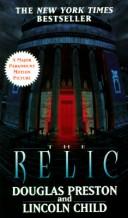
The first novel and the correct starting point, even though Pendergast is not the protagonist: a creature is killing people inside the museum on the eve of a major exhibition. Our catalogue holds it under the British title The Relic; it is the same book, and it introduces D'Agosta and Margo Green along with Pendergast himself.
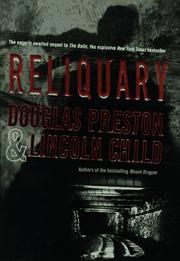
The direct sequel, moving the same premise underground into the tunnels beneath Manhattan, and the book where Pendergast starts pulling focus. The pair function as one story; read them together and then decide about the rest.
The Two Best Standalones
IntermediateRead the two novels most often named as the series' peak, both of which can be read on their own and neither of which commits you to an arc.
▸ Study plan for this stage
Pace: Four weeks. The Cabinet of Curiosities is 522 pages and Still Life with Crows 584, both fast. Read Cabinet first. Neither commits you to an arc, so this is a genuine stopping point if you want one. Cabinet turns on a nineteenth-century killer's surgical experiments on living victims and Still Life w
- The Cabinet of Curiosities is where Pendergast becomes the lead and the series finds its actual register: a Manhattan building site, a charnel pit of nineteenth-century remains, and a present-day killer working from a Victorian murderer's notes. If you read one Pendergast novel, this is it.
- The dual-period structure — a historical crime and its modern echo — becomes the series' most reliable engine, and Cabinet is its cleanest execution.
- Constance Greene is introduced here, and she is the series' other long-running oddity. Everything strange about the later books runs through her.
- Still Life with Crows moves Pendergast alone into a Kansas farming town with no institutional support, and it is the strongest character study in the run precisely because he has no museum, no D'Agosta and no jurisdiction to hide behind.
- Corrie Swanson is introduced in Still Life with Crows and becomes a recurring figure. The series' habit of promoting one-book characters into fixtures starts here.
- Both novels are complete. No hook, no cliffhanger, nothing owed — which is worth noticing, because the next two stages are built entirely out of books that do not have that property.
- Still Life with Crows depends on you already finding Pendergast interesting, which is why it comes second even though it is the more self-contained of the two.
- What does the historical strand of The Cabinet of Curiosities supply that a purely contemporary plot could not?
- Who is Constance Greene, as of the end of Cabinet? Separate what is stated from what is suggested.
- In Still Life with Crows, what does removing Pendergast's institutional support do to the character?
- Both books end cleanly. Compare those endings with how Reliquary ended, and with how you expect Brimstone to end.
- Which of these two is the better novel, and which is the better Pendergast novel? They may not be the same answer.
- Add to the Pendergast file: Cabinet roughly triples what you know about his family and money. Note the page where each new fact lands, because the Diogenes arc is built entirely on this material.
- Reread the chapters of The Relic where Pendergast first appears immediately after finishing Cabinet. Almost every oddity in those early scenes now has an explanation, and seeing which ones still do not is useful.
- Take Still Life with Crows and mark every scene where Pendergast is alone. The proportion is unusual for the series and it is what makes the book the character study it is.
- Update the structural log with these two and note where the standalones deviate from the template you built in stage one.
Next up: Cabinet has now planted the family history that the next three books detonate, and those three must be treated as a single unit.
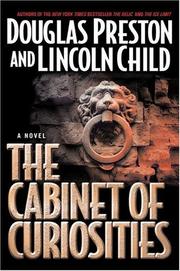
A nineteenth-century charnel pit found under a Manhattan building site, and a killer working from a Victorian serial murderer's notes. The book where Pendergast becomes the lead and the series finds its actual register; if you read only one Pendergast novel, this is it.

Pendergast alone in a Kansas farming town among ritualised killings in the corn. It works completely as a standalone, and it is the strongest character study in the run — read it second because it depends on you already finding him interesting.
The Diogenes Trilogy: Do Not Stop Mid-Way
IntermediateRead the three-book arc about Pendergast's brother as a single unit, and understand why the series' reputation rests largely on it.
▸ Study plan for this stage
Pace: Six to seven weeks for roughly 1,800 pages. Brimstone is 660 pages, Dance of Death 580, The Book of the Dead 582. Have all three to hand before starting: Brimstone reads almost as a standalone until its last fifty pages and then commits you, Dance of Death resolves nothing at all, and there is no sa
- Brimstone opens with apparently diabolical deaths among a circle of art collectors, and its rationalist explanation is the series' standard move deployed at its largest scale so far.
- Diogenes Pendergast is the series' reputation. The brother as antagonist gives Preston and Child a villain who knows everything Pendergast knows and shares his resources, which is the only structure that makes the character beatable-in-principle.
- The arc's real subject is the family: Cabinet of Curiosities set up the Pendergast lineage, and this trilogy spends it. The Pendergast file you have been keeping is now the plot.
- Dance of Death is structurally a chase with a countdown, and it deliberately gives you no resolution. Reading it alone is not a rewarding experience and the authors are not pretending otherwise.
- The Book of the Dead pays off around the reopening of an Egyptian tomb exhibition at the museum, which returns the series to its original setting for the arc's climax.
- Many readers stop the series here, and it is a defensible place to do it — the Diogenes arc is the most complete thing Preston and Child have built and nothing after it is quite the same shape.
- The trilogy costs the series regular cast members, and those losses carry forward into everything in stage four.
- Where in Brimstone does the standalone novel become the first third of a trilogy? Name the chapter.
- What makes Diogenes a workable antagonist, structurally, that an ordinary criminal could not be?
- What does Dance of Death actually accomplish, given that it resolves nothing? Is a middle volume with no resolution a failure or a design?
- Why set the climax in the museum? What does the return to the original setting do for the arc?
- Which of the family revelations in this trilogy were planted in Cabinet of Curiosities, and which arrive without preparation?
- Before opening Brimstone, reread your Pendergast file and write your prediction of what the family secret is. The trilogy is fair enough that a careful reader can get partway there from Cabinet alone.
- Mark the last thirty pages of Brimstone and the last thirty of Dance of Death, and describe in writing what each ending obliges the reader to do. This is the clearest demonstration in the series of what a cliffhanger is for.
- Track Constance Greene's presence across the three books, chapter by chapter. Her arc through this trilogy is what makes her the character the later books orbit.
- Compare the museum chapters of The Book of the Dead with the museum chapters of The Relic and note what nine books of continuity let the authors assume about the reader's knowledge of the building.
- At the end of The Book of the Dead, write down whether you are stopping here. If you continue, note what specifically you still want from the series — the answer usually predicts how you will feel about stage five.
Next up: The family arc is closed and the cast is diminished, which is the state the Helen books begin from.
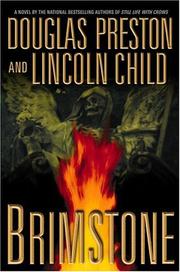
Opens the arc: apparently diabolical deaths among a circle of art collectors, and the first real sight of Diogenes. It reads almost as a standalone until the last fifty pages, which is exactly the trap — the ending commits you to two more books.

The middle volume, and structurally a chase with a countdown. It resolves nothing and ends worse than it starts; there is no version of reading this book alone that is satisfying.
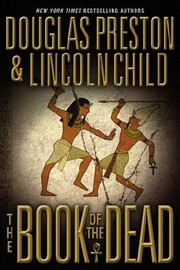
The payoff, set around the reopening of an Egyptian tomb in the museum, and the volume that closes the Diogenes story. Read it immediately after Dance of Death, which it continues without pause. Many readers stop the series here and it is a defensible place to do it.
The Helen Trilogy
IntermediateFollow the second big arc — the investigation into the death of Pendergast's wife — after the one standalone that precedes it.
▸ Study plan for this stage
Pace: Seven to eight weeks. Cemetery Dance is 577 pages and is a standalone palate cleanser; read it first, on its own terms. Then treat Fever Dream (548), Cold Vengeance (368) and Two Graves (552) as one 1,450-page book and have all three available before starting. Cold Vengeance stops mid-situation and
- Cemetery Dance is a standalone about a Manhattan zombii cult, and its main function on this path is to precede the Helen books and re-establish D'Agosta. The preceding novel, The Wheel of Darkness, is the weakest in the series and can be skipped without loss.
- Fever Dream opens the arc with the discovery that Helen Pendergast's death on safari twelve years earlier was murder. It is the best-constructed opening of any of the arcs and it ends on a hook rather than a resolution.
- This arc reverses the series' usual movement: instead of a case pulling Pendergast in, Pendergast's past pulls a case out, and the investigation is entirely personal from the first chapter.
- Cold Vengeance is the volume most likely to annoy an unwarned reader. It deepens the conspiracy, answers almost nothing and ends, dramatically speaking, mid-sentence.
- Two Graves closes the trilogy and answers the questions the first two raised, at a cost to the series' regular cast that carries forward into everything after it.
- The conspiracy behind Helen's death is on a larger scale than anything in the Diogenes books, and how much of that scale the series can carry is the fair critical question about this arc.
- Structurally these four are the series' clearest demonstration of the difference between a standalone and an arc volume, and reading Cemetery Dance first makes that difference visible.
- What does Cemetery Dance restore to the series before the arc begins — which characters, which register?
- What does Fever Dream establish about Helen in its first hundred pages, and how much of it turns out to be wrong?
- Cold Vengeance ends without resolution. What does it move forward that Fever Dream had not?
- Is the conspiracy revealed in Two Graves proportionate to the personal story that started it? Argue either way.
- What does the arc cost the series' regular cast, and does the loss earn its place or is it a shock?
- Compare this arc's construction with the Diogenes trilogy. Which is better built, and on what criteria?
- Keep a Helen file separate from the Pendergast file — every fact stated about her, with the page and the source. Fever Dream and Cold Vengeance systematically overturn earlier entries, and tracking the revisions is how you read the arc actively rather than passively.
- At the end of Fever Dream and again at the end of Cold Vengeance, write down what you believe happened on the safari. Compare both versions with Two Graves.
- Mark every scene in the trilogy where Pendergast withholds information from D'Agosta. The pattern is the arc's structural weakness and its main source of tension.
- Read the last chapter of Cold Vengeance and the first chapter of Two Graves on the same evening, and describe how the seam works. This is the clearest example in the series of two books that are one book.
- Update the structural log and note where these four break the template you built in stage one.
Next up: With both major arcs complete, the remaining books are a shelf to select from rather than a sequence to finish.
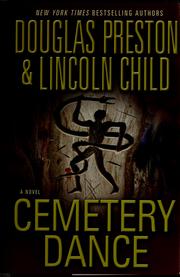
A standalone about a Manhattan zombii cult, and a palate cleanser between the two arcs. Worth reading mainly because it precedes the Helen books and re-establishes D'Agosta; the preceding novel, The Wheel of Darkness, is the weakest in the series and can be skipped without loss.
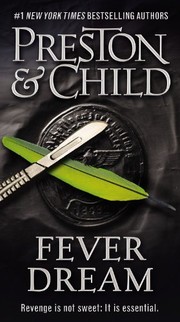
Opens the Helen arc: Pendergast learns that his wife's death on safari twelve years earlier was murder. The best-constructed opening of any of the arcs, and again ends on a hook rather than a resolution.
The middle book, and the one most likely to annoy a reader who has not been warned: it deepens the conspiracy and ends mid-sentence, dramatically speaking. Only start it if the third book is already to hand.
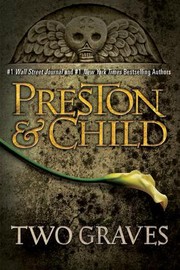
Closes the Helen trilogy and answers the questions the previous two raised, with a cost to the series' cast that carries forward. Read straight through from Cold Vengeance.
The Later Books Worth Reading
IntermediateSample the post-arc novels selectively, using the three that stand up rather than continuing volume by volume.
▸ Study plan for this stage
Pace: Four to five weeks. Blue Labyrinth first, then Crimson Shore and The Obsidian Chamber, which are a pair and must be read in that order — Crimson Shore ends on a cliffhanger that The Obsidian Chamber answers. Crimson Shore is 378 pages and The Obsidian Chamber 407, both quick. This is where the path
- Blue Labyrinth is the strongest book after Two Graves — a body on Pendergast's doorstep and a poisoning plot rooted in the family's past — and it is the one that best uses the accumulated backstory. Constance Greene gets her best material here.
- The later novels depend on continuity rather than building it. Blue Labyrinth is only good if you have read the Diogenes arc, which is the practical argument for this path's ordering.
- Crimson Shore is a genuinely good gothic mystery for three quarters of its length — a small Massachusetts town, a stolen wine cellar, a walled-up skeleton — before an abrupt genre shift that divides readers sharply.
- The Obsidian Chamber resolves the Crimson Shore cliffhanger and settles the Constance thread, which makes it the natural end point: the two long arcs are closed and the third recurring relationship is resolved.
- Everything after The Obsidian Chamber is the series in steady state — competent, readable in more or less any order, and worth picking up only if you want more of the same.
- The reading-order rule in one line: the museum duology in order, the two standalones freely, each trilogy as an indivisible unit, and the later books selectively.
- Preston and Child continue to publish in the series, so the shelf beyond this path keeps growing; nothing on it is required to have read the story this path tells.
- What in Blue Labyrinth would be meaningless to a reader who started there? Make a specific list — it is the best measure of how much continuity the late series carries.
- Where exactly does Crimson Shore change genre, and does the setup support the shift or contradict it?
- What does The Obsidian Chamber settle about Constance, and is it a resolution or a reset?
- Having read fifteen books: which of the two arcs is the reason the series has its reputation, and why?
- Where would you tell a new reader to stop, and would you tell them the same thing you were told at the start of this path?
- Close out the Pendergast file: everything now known about family, money, jurisdiction and history, with the book each fact came from. The document is the series' actual continuity, and it is more coherent than most readers expect.
- Read the last chapter of Crimson Shore and stop for a day before starting The Obsidian Chamber, then note how the delay felt. It is a small experiment in what these cliffhangers are actually doing to you.
- Finish the structural log across all fifteen books and look at what changed between The Relic and The Obsidian Chamber: chapter length, viewpoint count, how much prior knowledge each opening assumes.
- Write the reading-order note you would hand to someone starting today: which books are mandatory, which arcs are indivisible, which can be skipped, and where to stop.
- Pick one post-Obsidian Chamber novel, read fifty pages, and check it against your log. Whether it adds anything to the template is the honest test of whether to continue.
Next up: This is the end of the path: both major arcs read as units, the best standalones read, and the remaining shelf available with no obligation to it.

A body on Pendergast's doorstep and a poisoning plot rooted in his family's past — the strongest of the books after Two Graves, and the one that best uses the accumulated backstory. Constance Greene, the series' other long-running oddity, gets her best material here.

A small Massachusetts town, a stolen wine cellar and a walled-up skeleton. It is a genuinely good gothic mystery for three-quarters of its length before an abrupt genre shift, and it ends on a cliffhanger that the next book answers.

The direct sequel to Crimson Shore, and the natural end point for this path: it resolves that cliffhanger and settles the Constance thread. Everything after it is the series in steady-state, readable in any order and worth picking up only if you want more of the same.