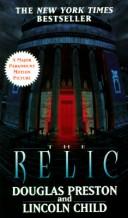
Start with The Relic. It is the first book, it is a fast museum-monster thriller, and it introduces the running cast — but you should know going in that Pendergast is a supporting character in it. He drifts into the American Museum of Natural History in a black suit, says something unnerving, and drifts out again. The novel belongs to Margo Green.
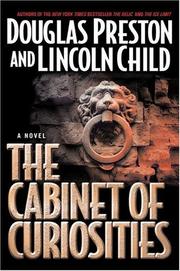
If what you want is the character rather than the arc, start with The cabinet of curiosities instead. It is the third book, it is the one most readers name as the series' best, it puts Pendergast squarely at the centre, and it opens a new phase cleanly enough to work as a first novel. The cost is that you meet Margo, D'Agosta and Smithback already established. Either choice is reasonable; what does not work is starting later than the third book, because from there the continuity compounds hard.
The first four
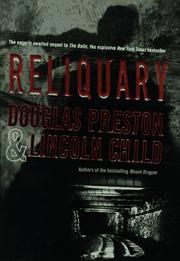
The Relic and Reliquary are a direct pair — read them together or not at all, since Reliquary is a sequel in the strict sense. The cabinet of curiosities is the step change: a nineteenth-century serial killer, a Manhattan excavation, and the first real look at Pendergast's family and money. Still life with crows moves the whole apparatus to a Kansas farming town, works almost entirely as a standalone, and introduces Corrie Swanson, who matters a great deal later.
The Diogenes trilogy
Brimstone, Dance of death and The Book of the Dead are one continuous story about Pendergast's brother, and they are the strongest sustained stretch in the series. Read them consecutively; the middle book in particular does not stand alone. This is where the books stop being procedurals with a strange detective and become something closer to gothic melodrama, which is either the appeal or the point at which you get off.
A missing volume, and the second trilogy
The eighth book, The Wheel of Darkness, is not in our catalogue. Many readers rate it the weakest of the run, so the gap costs less than it might, though it does resolve a thread left open by the Diogenes books. Cemetery dance follows it. Then Fever dream, Cold vengeance and Two graves form a second trilogy, this one about Pendergast's wife Helen — globe-trotting, increasingly baroque, and the point at which some long-time readers feel the series left the plausible behind for good.
The later books
Blue Labyrinth, Crimson shore and The Obsidian Chamber are the last three on this list, and they are more self-contained than the trilogies, though Crimson shore and The Obsidian Chamber connect directly. The series has continued well past them — White Fire sits between Two graves and Blue Labyrinth and is not in our catalogue, and there are several more novels after The Obsidian Chamber that are not represented here either.
Honest warnings
These began as forensic thrillers and drifted steadily toward the supernatural; how far they drift is the most common complaint from readers who loved the first four. The books are also co-written throughout by Douglas Preston and Lincoln Child, though our catalogue credits most of them to Preston alone and one to Child. Content runs to graphic murder, mutilation and body horror.
Where to stop
The Book of the Dead is the cleanest exit — seven books, one complete character arc, and the highest quality per page in the run. Readers who want more should carry on to Two graves, which closes the Helen story, and treat anything after that as optional. More thriller reading is on Discover.
Follow the full ordered path here: Agent Pendergast Reading Order: Where to Start with Preston and Child.
Ready to learn something deeply?
Build a reading path — free