A Bride's Story Reading Order: Where to Start
A Bride's Story is read in publication order, volume one onward, and the only thing that surprises new readers is that it is not really one couple's story — after the opening volumes Kaoru Mori keeps stepping sideways to other brides along the same Silk Road, then circles back. That structure is deliberate, so resist the urge to skip the digressions; the later volumes only land because you met those households. The series runs to fourteen volumes and is still Mori's ongoing work; our catalogue is missing volumes 11, 13 and 14, so this path takes you as far as volume 12 and names the rest in the notes rather than pretending the gap is not there.
Start Here: Amir and Karluk
BeginnerMeet the marriage the series is named for, and learn to read Mori's pages slowly — the embroidery and woodwork carry as much story as the dialogue.
▸ Study plan for this stage
Pace: Two to three weeks for the three volumes — about 192 pages each, so roughly 570 pages total, but plan on far slower going than that count implies. Mori draws carpets, saddles, wood carving and embroidery at a level of detail that rewards stopping, and readers who treat these like ordinary manga fini
- The age gap as the premise, not the scandal: Amir is twenty and Karluk is twelve, and Mori's interest is in two people negotiating a household rather than in shocking you with the arrangement
- Marriage as an alliance between families — Amir arrives as a transaction between clans, and everything that goes wrong in Vol. 2 follows from the fact that a transaction can be reversed
- Craft as characterisation: what a person embroiders, carves or cooks tells you their status, their tribe and their mood, and Mori expects you to read the objects as closely as the faces
- The nineteenth-century Central Asian steppe as a real economy — bride price, horses, hunting, seasonal migration — rather than as a romantic backdrop
- The Halgal, Amir's birth clan, as the threat that structures Vols. 2 and 3, and the reason the domestic comedy of Vol. 1 acquires teeth
- Mr Smith, the English ethnographer, as the outsider whose presence lets Mori explain the culture without any character having to explain it to another
- Panel density and the absence of speed: Mori's pages are quiet, and the pacing is a deliberate argument that ordinary domestic life is worth this much drawing
- What does Amir actually do in the household in Vol. 1, and how does the work she does establish who she is before she says much of anything?
- Why does the Halgal want Amir back, and what does their demand reveal about how these marriages were understood on both sides?
- How does Karluk change between Vol. 1 and the end of Vol. 3, and at what specific moment does he start acting as a husband rather than as a boy?
- What is Mr Smith doing on the steppe, and how does Mori use him without making him the protagonist?
- If you stopped at the end of Vol. 3, would this be a complete story? What is finished, and what is obviously not?
- Pick one full-page interior in Vol. 1 and list every craft object in it — textiles, carved wood, metalwork, cookware. The inventory is the fastest way to see the research behind the series.
- Find the archery or hunting sequence in Vol. 1 and reread it panel by panel, following where Mori places the eye-line. Amir's competence is established almost entirely through action drawing.
- Write a paragraph on what changes about Vol. 1 once you have finished Vol. 3 and know what the Halgal wanted. Reread its first twenty pages afterward.
- Track the embroidery motifs across the three volumes and note where the same pattern reappears on a different object. Mori uses recurring patterns as a family signature.
Next up: You now have the marriage the series is named for and a working feel for Mori's pace — which is exactly what you need for Vol. 4, where she walks away from Amir and Karluk entirely and the series shows its real shape.
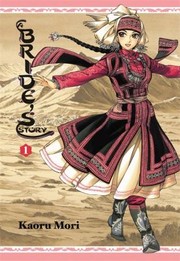
The only place to start. A twenty-year-old bride is married into a family whose son is twelve, and Mori spends the volume on the ordinary business of a household on the nineteenth-century steppe. Linger on the panels; the density of the drawing is the argument for the series.
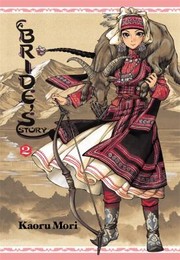
Amir's birth family reappears wanting her back, and the domestic comedy acquires a real threat. Second because the first volume's calm is what makes this one frightening.
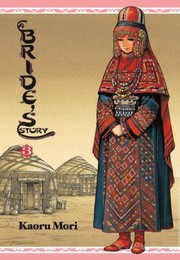
Resolves the Halgal crisis and closes the opening movement. Third, and the point at which you have read a complete story — if you stop here you have not been cheated, but the next volume is where the series reveals its real shape.
The Twins
BeginnerAdjust to the anthology structure, and see how Mori uses a second marriage to comment on the first.
▸ Study plan for this stage
Pace: About a week to ten days for two volumes, roughly 200 pages each. These are the fastest-reading books in the path — the twins' courtship is played at farce speed and the panel-to-panel rhythm is much quicker than the opening volumes — so do not stretch them out. Read Vols. 4 and 5 consecutively; the
- The anthology structure revealed: the series is not one couple's story but a survey of marriages along the Silk Road, and Vol. 4 is where that becomes undeniable
- Mr Smith as the connective tissue — the series follows the traveller, not the family, which is why the digressions are structural rather than optional
- Laila and Leily as a deliberate contrast to Amir: loud, scheming, and choosing their own husbands, where Amir was delivered by agreement
- The Aral coast as a different economy from the steppe — fishing and boats instead of horses and herds, and Mori redraws the material culture from the ground up
- Comedy as a tonal instrument: Mori proves the series can be funny without changing its research standards or its drawing
- Bride price and courtship negotiation as the actual plot engine of the twins' arc, which lets Mori show the marriage market from the daughters' side
- What is your first reaction to Vol. 4 abandoning Amir, and does Vol. 5 justify the detour?
- How do Laila and Leily's methods of getting married differ from how Amir's marriage was arranged, and what does the contrast say about choice in this world?
- What does Mori change in her drawing to make the Aral coast feel unlike the steppe — architecture, clothing, work, water?
- Where in Vol. 5 does the comedy break and something more serious show through, and why does she place it there?
- What is Mr Smith learning, and how much of the series is actually his story?
- Write two hundred words arguing that Vol. 4 is either the moment the series becomes great or the moment it loses focus. Take a real position; this is the volume most readers disagree about.
- Compare a domestic interior on the Aral coast in Vol. 4 with one from Amir's household in Vol. 1 and list the material differences you can see without reading any dialogue.
- Reread the twins' first appearance after finishing Vol. 5 and mark how early Mori sets up the resolution of their courtship.
- Note every panel across the two volumes where Mr Smith is silently observing rather than speaking. His position in the frame is the series' argument about outsiders.
Next up: Having accepted that the series will keep moving, you are ready for Persia, where Mori swaps the open steppe for an enclosed urban household and writes the quietest and most radical marriage in the whole run.
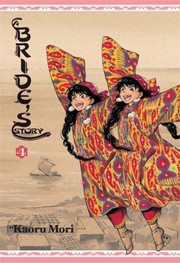
The English traveller Mr Smith leaves the village and the series follows him, introducing the twin sisters Laila and Leily on the Aral coast. Fourth: this is the pivot from one story to many, and it is the volume that decides whether the series is for you.

Finishes the twins' courtship at farce pace, the funniest stretch Mori has drawn. Fifth, immediately after — the two volumes are a single arc split across a binding.
Persia
BeginnerFollow the series into a wealthier, more enclosed world, and read its most quietly radical marriage.
▸ Study plan for this stage
Pace: Ten days to two weeks for Vols. 6 and 7, about 194 and 190 pages. These are slower than the twins' volumes and closer in pace to the opening — the bathhouse scenes in particular are drawn to be lingered over — so read them consecutively but without hurrying. Vol. 7 assumes everything Vol. 6 establis
- Anis's loneliness inside a comfortable marriage: wealth and kindness do not solve the problem the volume is about, which is that she has no one to talk to
- The Persian city as an enclosed world — courtyards, bathhouses, walls — drawn deliberately against the horizon-wide steppe of the earlier volumes
- Sisterhood by oath as the volume's real subject, and the most quietly radical relationship Mori has drawn in the series
- Polygamy handled without editorial: Mori shows the arrangement working and not working for specific women rather than delivering a verdict on it
- Water, tilework and steam as the drawing challenge of these volumes — Mori's rendering of the bathhouse is the technical showpiece of the middle run
- The widening pattern confirmed: after Persia it is clear the series will keep adding households rather than settling into one
- What does Anis actually lack at the start of Vol. 6, given that her marriage is by every visible measure a good one?
- What is a sisterhood oath in the world of the book, and how seriously does the household take it?
- How does Mori draw enclosure in the Persian volumes, and what does the change in the amount of visible sky do to the mood?
- Does Vol. 7 resolve Anis's situation, or does it leave something deliberately open? What would a resolution even look like here?
- Having read four different marriages now, what is Mori's recurring question about them?
- Choose one bathhouse page in Vol. 6 and describe in writing how Mori renders steam, wet skin and tile differently from each other. It is the clearest lesson in her tonal technique in the whole series.
- Count the panels in Vol. 6 that show open sky, then do the same for twenty pages of Vol. 1. Write one sentence on what the difference is doing.
- Write a short comparison of Anis and Amir as wives — what each has, what each wants, and what each is permitted to ask for.
- Mark the point in Vol. 7 where the story turns back toward the road. Note what Mori does to signal the series is moving on.
Next up: With three household types behind you — steppe, coast and Persian city — you can read the later brides as variations on a theme you now recognise, and start noticing the threads Mori has been quietly leaving open.

Anis, a lonely young wife in a Persian city, and the bathhouse friendship that becomes the volume's real subject. Sixth: the tonal shift from the steppe is intentional and works best straight after the twins.

Concludes the Anis arc and returns to the road. Seventh, and the volume that establishes the series will keep widening rather than settling.
The Later Brides
IntermediateFollow the remaining households the series visits and watch the separate threads begin to pull back toward each other.
▸ Study plan for this stage
Pace: Four to five weeks for four volumes, roughly 190 to 226 pages each and about 790 pages in total. This is the longest stage and the one where the series pays off setups laid two thousand pages earlier, so read the four consecutively rather than dipping in. One important housekeeping note: our catalog
- Talas returning in Vol. 8, and why her earlier appearance in the opening volumes is what makes her story land — this is the clearest proof the digressions were structural
- Mr Smith's own story finally moving, after eight volumes as an observer, and what it costs the series to give the outsider a plot
- Ankara in Vol. 9 as the most conventional romance Mori has attempted, and why the conventionality is the setup rather than a lapse
- Pariya as the series' best character — prickly, anxious, disastrously bad at the social performance her marriage market requires — and Mori's most sympathetic study of someone who does not fit
- The convergence: threads laid down separately start crossing, and the anthology begins behaving like a single novel
- Amir and Karluk's household seen from outside, after volumes away, and how differently it reads once you have met the alternatives
- The series as unfinished work — Mori is still drawing it, so the path stops rather than ends, and Vols. 13 and 14 continue past our catalogue
- Where exactly was Talas introduced, and what does Vol. 8 assume you remember about her?
- Why does Mori wait until Vol. 8 to advance Mr Smith's own story, and what changes about how you read him afterwards?
- What makes Pariya difficult, and how does Mori keep her sympathetic without softening the difficulty?
- In what specific ways does returning to Amir and Karluk in Vol. 12 read differently from the opening volumes?
- Having read ten volumes, what would you now say the series is actually about — marriage, women's work, the Silk Road, or the vanishing of all three?
- Before starting Vol. 8, go back to Talas's scenes in Vols. 1 to 3 and reread them. The stage is built on that memory and most readers no longer have it.
- Write two hundred words on Pariya making the case that she, not Amir, is the series' central character. The argument is stronger than it sounds and forces you to articulate what Mori values.
- Keep a one-line note per household as you read — bride, region, economy, what she wants. By Vol. 12 you will have a map of the series that no single volume gives you.
- Find a passage in Vol. 12 that only works because of something established in the first three volumes, and write down the connection. This is the exercise that proves the reading order matters.
Next up: You have followed Mori's obsessive period research across a decade of volumes; the last stage goes back to where that obsession started, in the earlier series she drew before the Silk Road.
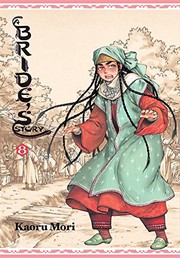
Talas returns and Mr Smith's own story finally moves. Eighth: her earlier appearance is set up in the first three volumes, so this only pays off in order.
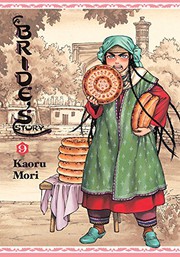
Ankara, and the most conventional romance in the series — which is exactly why Mori can make it sting. Ninth, straight on from eight.

Back to the steppe and to Pariya, the prickliest and best-loved character Mori has created. Tenth: the series is now rewarding everything you were asked to sit through earlier.

Carries the Pariya thread onward and returns to Amir and Karluk's household. Read volume 11 in between if you can find it — it is missing from our catalogue, not from the series.
Mori's Other Series
IntermediateRead the earlier Mori series that shows where the obsessive period detail came from.
▸ Study plan for this stage
Pace: A single week, or one long evening. Emma, Vol. 1 is 192 pages and reads faster than any volume of A Bride's Story because Victorian London demands less unfamiliar visual decoding than the steppe did. Treat this as a separate series that happens to share a numbering convention — start at its own Vol.
- Same method, different century: Victorian London instead of nineteenth-century Central Asia, and the identical refusal to skip past domestic detail
- Class rather than clan as the obstacle — Emma is a maid and the barrier is English social stratification, where Amir's barrier was family and tribe
- Mori's research signature visible in a setting you already know something about, which makes it easier to see what she is actually doing with period detail
- The maid's working day drawn as real labour, the direct ancestor of the household work that fills A Bride's Story
- Restraint as the shared technique: in both series the emotional turns happen in small gestures and held panels rather than in declarations
- How an earlier, less confident version of the same artist reads — the drawing in Emma is looser and the ambition narrower, and seeing that is the point of reading it last
- What does Mori's Victorian London have in common with her Central Asia, beyond the obvious period-drama surface?
- Where can you see her drawing improving between Emma and A Bride's Story — backgrounds, faces, crowds, textiles?
- How does class function as an obstacle here compared with how family obligation functioned for Amir?
- Is the domestic labour drawn with the same seriousness in Emma, or is A Bride's Story doing something the earlier series was not yet doing?
- Having read both openings, what would you say Mori's actual subject is across her whole career?
- Read Emma, Vol. 1 in one sitting, then immediately reread the first thirty pages of A Bride's Story, Vol. 1. The continuity of method is unmistakable and the difference in confidence is instructive.
- Put a page of Emma's household work beside a page of Amir's and write down three concrete drawing differences.
- Write a paragraph on which setting suits Mori's method better and why. There is a real case for both.
- Make a note of which A Bride's Story volumes you would reread first now that the path is finished. Volumes 11, 13 and 14 are the obvious next purchases; the series is ongoing and this path is a stopping point, not an ending.
Next up: This is the end of the path — ten volumes of A Bride's Story plus the series that taught Mori how to draw them — and the natural next move is to hunt down Vols. 11, 13 and 14 and finish what she has published so far.

Victorian London instead of Central Asia, a maid instead of a bride, and the same refusal to hurry. It is a separate series in the same numbered-volume format, so start at its own volume one rather than treating it as a continuation.