100 Bullets Reading Order: Where to Start Brian Azzarello's Crime Comic
100 Bullets begins as an anthology with one repeated premise — a man called Agent Graves hands someone an attache case containing a gun, a hundred untraceable rounds and proof of who ruined their life — and turns, without ever announcing it, into a single hundred-issue conspiracy novel about a criminal aristocracy called the Trust and the enforcers who used to police it. That shift is the reason reading order matters here: the early trades look self-contained and are quietly laying track. This path takes the run in trade order and marks where the standalone stories stop and the Minutemen plot takes over. A catalogue note first: the first two collections resolve here under their volume titles rather than as numbered volumes, and the final two trades do not resolve at all, so this path runs to volume eleven and says where to go for the rest.
The Standalone Arcs
IntermediateLearn the premise, meet Graves and Shepherd, and read the short revenge stories that the series is still pretending to be.
▸ Study plan for this stage
Pace: Two to three weeks for three trades. First Shot, Last Call and Split Second Chance collect five issues each; 100 Bullets Vol. 3 is 128 pages. A trade a week is comfortable, but read them closer together than that if you can, because everything in the next stage depends on recognising faces from thes
- The premise as stated in First Shot, Last Call: an attache case containing a gun, a hundred untraceable rounds, and irrefutable proof of who ruined your life. The offer is always the same; the interest is entirely in who takes it and what they do instead.
- Agent Graves is not a benefactor. Nothing in these three books explains why he is doing this, and the reader is meant to notice that the recruitment reading is available from the first arc.
- Mr Shepherd appears in Split Second Chance and is plainly working the same territory as Graves without working with him. Two men, one system, opposed — that is the whole later plot in miniature.
- Eduardo Risso's storytelling carries information the script does not. Silhouette, black shape and panel geometry do the work that a prose crime novel would give to interiority; Brian Azzarello's dialogue is deliberately elliptical and assumes the art is telling you the rest.
- Dizzy Cordova in the opening trade and the Chicago story in Vol. 3 are the two the series keeps coming back to. Vol. 3 is the run's most self-contained story and the one that usually decides whether a reader continues.
- The dialogue is heavy street idiom and puns, and characters routinely lie inside it. Rereading a conversation after you know who someone is is a normal part of reading this series, not a failure of attention.
- These first two collections are catalogued here under their volume titles rather than as numbered volumes; from Vol. 3 onward the numbering resolves normally.
- What exactly does Graves offer, and what does he never offer? Quote the terms as they are stated in First Shot, Last Call.
- In each of the three trades, does the person handed the case use it? What is the pattern in who does and who does not?
- What do you actually know about Shepherd after Split Second Chance, as opposed to what you have inferred?
- Vol. 3 is usually called the best self-contained story in the run. What does it have that the earlier arcs do not?
- Where in these three books does Risso tell you something Azzarello's dialogue does not say at all?
- Keep a running list from page one: every person handed a case, what they were told, and what they did. By Vol. 5 that list stops being an anthology index and becomes a personnel file, and you will want it already written.
- Take one conversation from First Shot, Last Call between Graves and the recipient and reread it after finishing Vol. 3, marking each line that reads differently once you suspect he is auditioning people rather than avenging them.
- Pick a single page from Vol. 3 and describe what happens using only the panel shapes and the black areas — no dialogue. Then read the dialogue and note how much of it was redundant.
- Write down, before starting stage two, your one-sentence theory of what Graves wants. Date it. You will check it against Vol. 5.
Next up: You now have the format the series is pretending to be, so the next stage is legible as what it is: the point at which that format stops being the truth.

The opening trade, collecting the first five issues, and the correct starting point: Dizzy Cordova out of prison with a case in her hands, and the Atlantic City story that introduces the format. Catalogued under its volume title rather than as volume one — that numbered form returns an omnibus here instead.

The second collection, and the first hint that Graves is running something larger than a series of favours — Mr Shepherd appears and the two men are clearly not on the same side. Also filed under its volume title rather than a number.
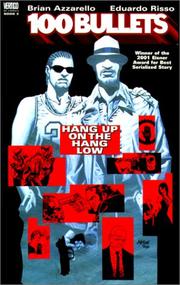
Hang Up on the Hang Low, the run's best self-contained story and the one that usually converts sceptical readers: a Chicago boy, his father, and a job that goes exactly as badly as it should. From here the numbered volumes resolve normally.
The Conspiracy Surfaces
IntermediateWatch the anthology structure break down as the Trust, the thirteen families and the Minutemen move from background detail to plot.
▸ Study plan for this stage
Pace: Three weeks. Vol. 4 is the longest of the three at 264 pages and needs its own week; Vol. 5 and Vol. 6 are 144 pages each. Read these three back to back with no gap — Vol. 5 in particular assumes you can place minor faces from the standalone arcs, and a month's break is what makes readers give up he
- The Trust: thirteen families, an old arrangement, and a set of rules that Vol. 5 finally states rather than implies. Once the rules are on the page, most of what happened in stage one has a different explanation.
- The Minutemen are the enforcement arm those rules created, and the series' real subject. Graves's attache cases stop looking like charity the moment you know what he used to run.
- Vol. 4 is the structural hinge: several people you met as one-off recipients turn out to have been recruited, which retroactively converts the anthology into a plot.
- Vol. 6 is the last volume that still runs shorter arcs alongside the main story. After it, the standalone form is gone for good.
- Azzarello withholds exposition as a matter of policy. Information arrives as something one character already knows and another is being told for a reason — always ask what the speaker gains by saying it.
- Risso's layouts get more aggressive across these three volumes as the cast grows: recurring visual tags on characters are doing the job a novel would do with a name check.
- State the Trust's rules as Vol. 5 gives them. Which of them has already been broken by the time you read them?
- Which people from the standalone arcs turn out in Vol. 4 to have been recruited rather than helped?
- What were the Minutemen originally for, on the account the series gives here — and who ended that arrangement?
- Vol. 6 runs a short arc and the main plot at once. What does the short arc contribute that the main plot could not carry?
- How does your stage-one sentence about what Graves wants read now? What in Vol. 5 forced the revision?
- Draw the Trust as a diagram after Vol. 5 — families, who speaks for them, who has broken which rule — and keep it beside you for the rest of the run. This is the standard way readers survive volumes seven onward.
- Reread the Shepherd scenes in Split Second Chance immediately after finishing Vol. 5, and mark every line that was a statement of position rather than a piece of small talk.
- Add a second column to the case-recipient list from stage one: which of them are now identified as Minutemen, and which volume did the identifying.
- Take one shorter arc from Vol. 6 and work out what it plants for later — a face, a location, a debt. Note it, because Vol. 6 is the last time the series buries something in a story that looks disposable.
Next up: With the Trust named and the Minutemen established, the next three volumes stop explaining anything and simply run the story at speed, which is only readable because you built the diagram.
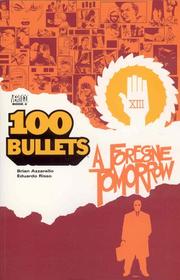
The volume where the series stops being deniable: Graves's operation gets an outline, and several characters from earlier arcs turn out to have been recruited rather than helped. Read it directly after volume three.
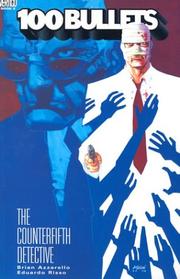
The Trust is named and its rules laid out, and the Minutemen become the actual subject. This is the point of no return for a casual reader — the remaining volumes assume everything here.
The last volume that still runs shorter arcs alongside the main plot, and the strongest use of Eduardo Risso's storytelling in the middle of the run. Risso is not a co-writer but the series is unreadable as a script; the layouts carry most of the information.
The Minutemen Take Over
IntermediateFollow the long middle stretch where the series becomes one continuous story and the cast doubles.
▸ Study plan for this stage
Pace: Three to four weeks. Vol. 7 is 167 pages, Vol. 8 and Vol. 9 are 224 each, and they are denser than the page counts suggest — the cast is large, the dialogue is allusive, and rereading pages is normal here. This is the most violent stretch of the series: sustained on-page killing, mutilation and sexu
- Croatoa: the spoken word that turns someone who has been living an ordinary life back into a Minuteman. Once you have seen it used, every earlier scene where a bystander behaves oddly is worth revisiting.
- Vol. 7 is the Minutemen arc proper, and the point where the series expects you to hold thirty issues of faces in your head simultaneously.
- Alliances invert rather than break. In Vol. 8 the useful question is never who is loyal but what each person believes the Trust's rules currently permit them to do.
- Vol. 9 supplies the functional answer to what the Minutemen were for, which is the question the whole run has been deferring since Vol. 5.
- Graves and Shepherd are now openly the two poles of the story, and the attache case has become an instrument in a war rather than a moral test.
- The catalogue records Vol. 8 with a comma — 100 Bullets, Vol. 8 — but it is the same numbered trade as the volumes on either side of it.
- What does Croatoa do, and what does its existence imply about every Minuteman who has appeared so far living a normal life?
- By the end of Vol. 8, which of the thirteen families is still intact, and which of Graves's people are still his?
- What were the Minutemen for? Answer using Vol. 9 rather than the version Graves gives about himself.
- Which character in these three volumes changes side without ever saying so, and what is the panel that tells you?
- Lono is the series' clearest case of a character who is not being redeemed. What is he there to demonstrate?
- Update the Trust diagram after every volume in this stage, in a different colour per volume. The pattern of which lines you have to erase is itself the plot of the middle run.
- Find the first appearance of each Minuteman as an ordinary person in the earlier trades, and reread that appearance immediately after their reactivation. This is the specific reread the series is built to reward.
- Track one recurring visual motif across Vol. 7 to Vol. 9 — the case itself, the bullets, Dave Johnson's cover imagery — and note where it appears in the interior art rather than as decoration.
- After Vol. 9, write a one-paragraph answer to what the Minutemen were for, then compare it with the theory you dated in stage one.
Next up: The war is now fully declared and the survivors are counted, which is the only state from which the endgame volumes make sense.
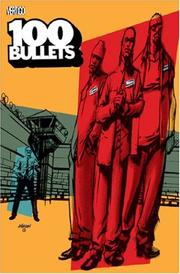
The Minutemen arc proper. The dialogue gets denser and more allusive here, and the series starts demanding that you remember faces from thirty issues back — worth reading the earlier volumes close together for that reason.
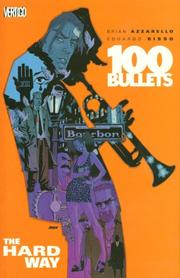
The double-crosses accumulate and the alliances invert. Catalogued with a comma as 100 Bullets, Vol. 8; it is the same numbered trade as the volumes around it.
The most violent stretch of the run and the one that finally explains what the Minutemen were for. Do not attempt this volume without the two before it.
Toward the End
IntermediateRead the run as far as this catalogue carries it, and know what remains and how to get it.
▸ Study plan for this stage
Pace: Two weeks. Vol. 10 and Vol. 11 are 192 pages each and read quickly by this point because the cast is fixed and the dialogue is doing less concealing. Read them together, and read the closing note in this stage before you buy anything else, because the series does not end where this path ends.
- Vol. 10 is the Trust turning on itself: the families stop maintaining the arrangement and start liquidating each other, and the Minutemen choose sides for the last time.
- Vol. 11 is the last trade that resolves in this catalogue, and it stops short of the ending. The story is not finished here and nothing in this stage should be read as a conclusion.
- Volumes twelve and thirteen do not resolve in our catalogue in any form we could verify. To finish, look for those two trades directly, or for the five-book collected edition, whose Book Five covers the same material.
- The collected five-book edition and these numbered thirteen-volume trades are different paginations of the same run. Mixing the two is the standard way readers accidentally reread or skip a hundred pages.
- Everything the run has done with reading order pays off here: the endgame is populated almost entirely by people you first met as one-off recipients in stage one.
- Azzarello's structural bet was that a hundred-issue conspiracy could be assembled out of stories that each looked disposable. These two volumes are where you can finally assess whether it worked.
- What breaks the Trust's arrangement in Vol. 10 — an external pressure, or something the rules made inevitable?
- Which characters from the standalone arcs are still alive at the end of Vol. 11, and in what role?
- What is unresolved at the end of Vol. 11? Make an explicit list before you go looking for the remaining trades.
- Was the anthology opening a genuine structure or a bait? Argue it from what Vol. 10 and Vol. 11 do with those early characters.
- If you were handing this run to someone else, would you tell them the first three trades are standalone, or not? Why?
- Before starting Vol. 10, reread First Shot, Last Call cover to cover. It takes an evening and it is the single most rewarding thing you can do in this stage — the opening trade reads as a different book once you know who everyone in it becomes.
- Finalise the Trust diagram: mark every family and Minuteman as alive, dead or unaccounted for at the last page of Vol. 11, and note which of those questions the two missing trades must answer.
- Write down your reading-order verdict for a friend: which trades are skippable, which are not, and where you would tell them to stop if they only wanted one arc.
- Decide, and note, which edition you will use to finish — the separate twelfth and thirteenth trades or Book Five of the collected edition — and check its page range against where Vol. 11 stopped so you do not overlap or skip.
Next up: This is where the catalogue runs out rather than where the story does; the last two trades or Book Five of the collected edition finish it.
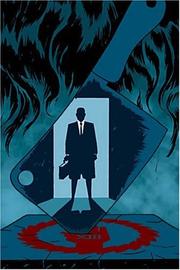
The endgame begins: the Trust turning on itself, and the surviving Minutemen choosing sides for the last time.
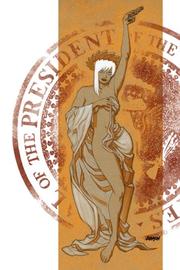
The last volume that resolves in our catalogue, and it stops short of the ending — volumes twelve and thirteen do not resolve here in any form we could verify. To finish the story, look for those two trades or for the five-book collected edition, whose Book Five covers the same material; do not mix that edition with these numbered volumes, since the two count issues differently.