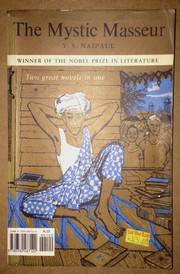
Start with Miguel Street. It is a set of linked sketches about a Port of Spain street, written when Naipaul was in his twenties, and it is genuinely funny — the ambitions and self-deceptions of a dozen neighbours, told by a boy who is not yet judging them. It runs a couple of hundred pages, it makes no demands, and it establishes the ear for speech that everything later depends on. Our catalogue also carries The Mystic Masseur and Miguel Street, an omnibus that pairs it with his first published novel; either edition works.
The obvious alternative is A House For Mr Biswas, and it is the greater book, but it is also five hundred-odd pages about a man failing repeatedly to acquire a house, and its power comes from accumulation rather than incident. Readers who start there without the Trinidad ear already tuned frequently mistake patience for tedium. Read the sketches first and Biswas becomes what it actually is: the same street seen at full depth.
Phase one: comic Trinidad
Miguel Street first, then A House For Mr Biswas. That is the whole of the entry sequence and you could stop there permanently with a clear conscience. Biswas is drawn from his father, and it is the warmest thing Naipaul ever wrote — a novel about a small, thwarted, stubborn man that manages both to see his absurdity and to insist on his dignity. Be warned that the middle third is deliberately repetitive: houses are built, houses fail, the Tulsi family closes back in. That repetition is the argument, but it is also where people stop.
Phase two: the dark novels
The tone changes hard. Guerrillas, based loosely on real events in Trinidad, is a short, ugly, tightly controlled novel about a revolutionary posture with nothing behind it, and it contains a scene of violence that many readers find genuinely difficult. A Bend in the River is the major achievement of this phase — an Indian trader in a nameless African river town watching a new state consume itself. It is also where the objections to Naipaul are loudest, because its bleakness about postcolonial societies is read by some as clear sight and by others as contempt. That argument is real, unsettled, and worth knowing about before you open the book rather than after.
In Free State and The Enigma of Arrival are not in our catalogue; the second in particular is the quiet, autobiographical late novel that admirers often name as his best, and it is easy to find.
Phase three: the travel books
Naipaul wrote as much reportage as fiction, and the reportage is where his reputation is most disputed. the middle passage, published as The Middle Passage, is his return to the Caribbean and is scathing about the societies he came from. An Area of Darkness VS Naipaul is the first of three books on India, written in 1964, and is the angriest — India as personal wound rather than subject. Among the Believers, his account of travelling through Iran, Pakistan, Malaysia and Indonesia after 1979, is a book people still argue about; its critics call it a prosecution brief, its defenders call it reporting that was unwelcome. Read at least one to understand the writer, but read them as arguments rather than as surveys, and read a counter-argument beside them.
Where to stop
Most readers should stop after A Bend in the River. You will have the comedy, the masterpiece and the mature bleakness, and the later work mostly restates the case with less energy. If you want only one Naipaul in your life, make it A House For Mr Biswas.
His Trinidad sketches sit interestingly beside the American South of William Faulkner — two writers building a whole world out of one small, gossiping place.
Follow the full ordered path here: V.S. Naipaul Reading Order: Where to Start.