Read Life and Fate first. It is the book Grossman is remembered for, the manuscript the KGB confiscated in 1961 while telling him it could not be published for two hundred years, and it stands entirely on its own. Nothing in it requires prior reading. If you only ever read one Soviet novel, read that one. It is not currently in our catalogue, which is a gap in the catalogue rather than a judgement about the book.
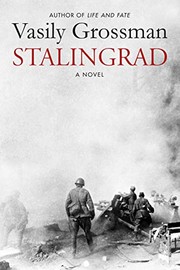
The other route is to begin with Stalingrad, the earlier novel that shares its characters and was published in censored form in 1952 as For a Just Cause. Robert Chandler assembled the 2019 English translation from several manuscripts, restoring much of what Soviet editors removed. Read in sequence, the two make one enormous work: the first half shows the world before the siege, so that the second half has something to destroy.
The order controversy, honestly
There is a real argument here, not a manufactured one.
The case for Stalingrad first: the emotional payoff of Life and Fate depends on knowing these families in peacetime, and readers who take them in order almost always say the second book hit harder for it. The case against: Stalingrad was written inside the system, under editorial pressure, with the compromises visible — heroic Soviet workers, a warmer view of the Party, an authorial voice that has not yet stopped hedging. It is a good novel where Life and Fate is a great one, and starting with the compromised half means eight hundred pages before you reach the reason you came.
The recommendation: if you already read long Russian novels comfortably, go straight to Life and Fate. If you do not, or if you want the full arc and have the time, start with Stalingrad and treat it as the long approach march it is. What you should not do is read Life and Fate and then go back expecting the earlier book to match it.
Also worth knowing but not in our catalogue: Everything Flows, the unfinished late novel that goes at Lenin directly; A Writer at War, his war notebooks edited by Antony Beevor and Luba Vinogradova, which is the best short introduction to Grossman as a reporter; and The Road, a story collection containing The Hell of Treblinka, one of the earliest eyewitness accounts of a death camp.
Warnings before you start
Both novels open with a cast list running to dozens of names across three or four families, and Russian naming conventions mean one character may appear as a given name, a patronymic, a surname and a diminutive. Photograph the family tree at the front and refer to it without shame. The battle chapters are the easy part; the domestic and scientific chapters are where the real book is, and where the pace drops.
Read alongside, not before
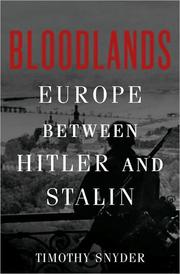
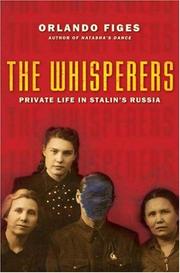
Two histories in our catalogue make the world legible without spoiling the fiction. Bloodlands by Timothy Snyder covers the territory between Germany and Russia where most of the killing happened, and argues that the Nazi and Soviet atrocities have to be seen as one landscape — a framing some historians dispute, and the dispute is worth knowing about. The Whisperers by Orlando Figes reconstructs private family life under Stalin from interviews and personal archives; its sourcing has been challenged by other scholars, which is a reason to read it attentively rather than a reason to skip it. Either book explains the fear that Grossman assumes his readers already understand.
Where to stop
For most people the sequence ends with Life and Fate. Read Everything Flows only if you want to see how much further he went once he had stopped hoping to be published. For more context on the period, Bloodlands and related histories sit a click away.
Follow the full ordered path here: Vasily Grossman Reading Order: Where to Start.
Ready to learn something deeply?
Build a reading path — free