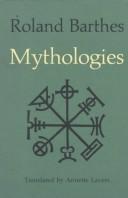
Start with Mythologies, 161 pages of short essays on 1950s French popular culture — wrestling, steak and chips, soap powder, a magazine cover — plus the theoretical closer, Myth Today. It is the most enjoyable thing Barthes wrote and it is the reason most people read him at all. Then read Jonathan Culler's Barthes, a 128-page guide organised by the roles Barthes occupied rather than by chronology, so that the roles have something concrete to attach to.
The complaint that there are several Barthes is really the argument for reading him in sequence. The path follows one arc: a structuralist who wanted a science of signs becomes the theorist who declares the author dead, and ends as a writer of fragments about desire and grief. Two records on this list carry marketplace junk in the title field and one binds two separate works together — those are flagged below, because they change what you should actually buy.
The science of signs
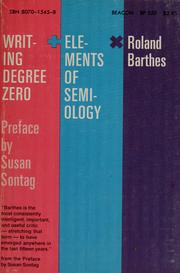
Writing degree zero and elements of semiology. is one catalogue record containing two works. Writing Degree Zero is the 1953 first book, arguing that literary style is never innocent; Elements of Semiology is the Saussure-derived primer. Because the combined volume is what our catalogue holds, Elements of Semiology is not listed separately on the path — you do not need to buy it twice. The record runs to 111 pages and its display title carries a stray full stop.
Critical Essays collects the pieces from the years of Barthes's quarrel with academic literary history, the polemics that made him a public figure. Read them as working papers between the first book and the fashion project.
THE FASHION SYSTEM. — our record's display title really is in shouting capitals — is the most rigorous and least loved book in the corpus: clothing described not as garments but as the written language magazines use about them. It is the one people abandon, and abandoning it is a defensible choice. It is also the book that makes the next stage legible, because Barthes himself came to treat its scientific ambition as a phase he had passed through.
The turn
Image-Music-Text is the essential English collection: The Death of the Author, The Rhetoric of the Image on advertising, and the photography essays that Camera Lucida later revisits. If you read one volume after Mythologies, read this one.
The pleasure of the text is 67 pages of fragments separating pleasure from bliss and refusing to build a system out of either. The form is the argument. The rustle of language then gathers the later essays, including From Work to Text and The Reality Effect, and is the closest Barthes came to an expository statement of the post-structuralist position.
The late, personal Barthes
Empire of Signs reads Japan as a system of surfaces — food, packaging, calligraphy, the empty centre of Tokyo — and says explicitly that it is not a description of a real country. Our catalogue files it under a mangled bookseller string, [Empire of Signs] [By, so search by author and check what you are ordering.
Roland Barthes by Roland Barthes is an autobiography in alphabetised fragments that opens by instructing the reader to treat it all as spoken by a character in a novel. A Lover's Discourse follows: eighty figures of the lover's mind, arranged alphabetically, voiced in the first person. It was his best-selling book by a wide margin and it is the one people who dislike theory still love. Our record for it displays a bookseller's description as its title, Roland Barthes / A Lover's Discourse Fragments First Edition 1978, which is the same book under a listing string.
Camera Lucida is the last book, 124 pages on what photography is, written in mourning for his mother and built on the distinction between studium and punctum. It is the proper end of the arc: the semiologist admitting that the thing that matters in an image cannot be coded.
Grief, then the life
Mourning diary collects the index cards Barthes wrote daily in the two years after his mother's death, published long after his own. Read it directly after Camera Lucida, which came out of the same period and the same material. Close with Tiphaine Samoyault's Barthes, the 584-page modern life drawn from the full archive — note that our catalogue holds two different books under the bare title Barthes, hers and Culler's, so buy by author. A biography of Barthes is a far better book once you know the work, which is why it sits last. The stage goals and reading schedules are at /paths/pt_ai_understanding-roland-barthes.