Tiki is a rum discipline wearing a costume. The drinks are built from blended rums, fresh citrus, sugar syrups and spice, and the decoration is the least important part of them. Read in the order below and you will make a correct Mai Tai in the first week, understand why it works in the first month, and know what the style actually borrowed and from whom by the end.
Before anything else, one correction, because it is the most common mistake buyers make with these books. Jeff Berry's Beachbum Berry Remixed is a combined and corrected edition of his two earlier collections, Grog Log and Intoxica! — and neither of those is on this path. It does not supersede his other books here. Beachbum Berry's sippin' safari and Beachbum Berry's Potions of the Caribbean are separate works with different purposes, and you want all three.
Get a real drink on the bar
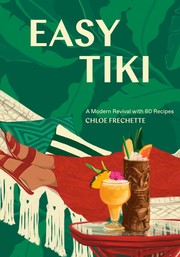
Easy Tiki is the shortest way in: a slim book with a tight recipe set and no shopping list running to forty bottles. Start here so you are mixing this week rather than reading about mixing.
Smuggler's Cove is the complete modern manual and the most important tiki book of the century — rum categories, syrup recipes, the history of the bars, and the drinks that define the style, in 352 pages. Martin Cate's rum classification system is the framework the rest of this path assumes. Read Minimalist Tiki immediately afterwards as the corrective to its scale: Matt Pietrek's case that a handful of well-chosen bottles covers most of the canon, with the specific bottles named. That pairing will save you a great deal of money.
Rum, which is most of the answer
And a Bottle of Rum is a history of the Americas told through ten drinks, and it belongs first in this stage because it explains why rum has no coherent labelling system — which is the practical problem the next two books work around.
Rum the Manual is Dave Broom tasting his way through the categories systematically and, unusually, testing rums mixed rather than neat, which is how you will use them. It is catalogued under that bare title. Rum Curious is the technical backing: Fred Minnick on fermentation, still type, ageing, and the additives and age statements the industry is coy about. Read it third, once you have opinions to test.
The recovered canon
Now the Berry books, and they are the reason the modern revival has accurate specs at all. Beachbum Berry Remixed is the reference collection — several hundred mid-century recipes recovered and corrected, and the volume to keep on the bar. Beachbum Berry's sippin' safari is the detective story behind them: Berry tracking down surviving Don the Beachcomber bartenders and decoding spec sheets that had been deliberately obscured with coded ingredient numbers. Beachbum Berry's Potions of the Caribbean goes behind tiki to what it drew on — planter's punch, swizzles and rum punches across four centuries — and is the book that shows how much of the exotic bar was reworked from real regional practice.
Technique
Liquid intelligence is not a tiki book and is the best available treatment of the two variables tiki lives on. Dave Arnold measures what crushed ice, flash blending and shaking actually do to a drink's temperature and dilution. Read it when your drinks are inconsistent and you cannot say why.
Tiki is Shannon Mustipher's book, published as Tiki: Modern Tropical Cocktails, and it is the most useful here for developing your own specs — Caribbean-forward, building new drinks on the classic templates rather than reproducing them.
Where the style came from
Two Sven Kirsten books close the path, both large Taschen volumes and both largely photographic. Our catalogue displays the first as The Book Of Tiki (Midsize), which is a format tag from the record rather than part of the title; the book is The Book of Tiki, an archaeology of American tiki bars, restaurants and motels, and the founding work of the revival. Read it for material culture, not recipes.
Tiki Pop: America imagines its own Polynesian Paradise is the more analytical of the two, treating the whole style as a postwar American fantasy about the Pacific. It is the right last book, because it makes clear what the drinks are and are not connected to: a twentieth-century American invention that borrowed Polynesian imagery wholesale, and a genuine Caribbean drinks tradition underneath.
The full ordered path, with each stage's goal and what to practise, is at /paths/pt_ai_tiki-cocktails.