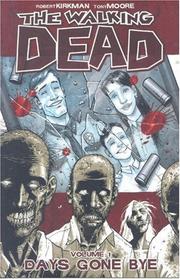
Start with The Walking Dead, Vol. 1. It collects the first six issues, it is exactly where Robert Kirkman and Tony Moore began, and unlike most long-running series there is no chronological wrinkle to reason about: the comic runs in a straight line from issue 1 to issue 193 and never flashes back to a prequel you were supposed to read first.
The obvious alternative is a Compendium edition, which bundles roughly eight volumes into one brick at a much lower price per page. If cost is your constraint, buy those instead — the material is identical, and there is also a Compact Edition line reprinting the same content at a smaller trim size. This path tracks the numbered volumes because that is how wikis, back-issue bins and every other reading guide refer to the series. If you arrived from the television show, still begin at volume 1: the two versions diverge early and then permanently, and several characters who die on screen are alive in print, and the reverse.
Volumes 1 to 8: Atlanta, the farm, the prison
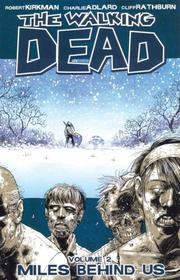
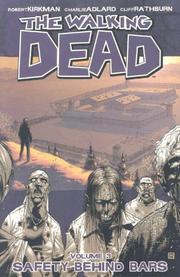
The Walking Dead, Vol. 1 sets up the premise in six issues. The Walking Dead Volume 2 and The Walking Dead Volume 3 are catalogued with the word Volume rather than the abbreviation used elsewhere — a records artefact, not a different edition. From The Walking Dead, Vol. 4 through The Walking Dead, Vol. 8 the story settles into the prison arc and introduces the Governor, and this is where the series establishes what it actually is: a book about how people organise themselves after the emergency stops being an emergency. Volume 8 contains the sequence most readers remember as the point of no return.
Volumes 9 to 15: the road and Alexandria
The Walking Dead, Vol. 9 picks up in the wreckage. Volumes 10 through 13, from The Walking Dead, Vol. 10 to The Walking Dead, Vol. 13, are the wandering stretch, and they are the slowest run in the series — the cast is small, the destinations are provisional, and progress is measured in miles. Push through. The Walking Dead, Vol. 14 and The Walking Dead, Vol. 15 arrive at Alexandria and reset the entire premise from survival to governance, which is the shift the back half of the series is built on.
Volumes 17 to 24: All Out War and the rebuild
Our catalogue is missing volume 16, which sits between The Walking Dead, Vol. 15 and The Walking Dead, Vol. 17. That gap is ours, not a gap in the series — pick it up separately so the Alexandria arc reads continuously. From The Walking Dead, Vol. 17 the conflict with Negan builds through The Walking Dead, Vol. 18 and The Walking Dead, Vol. 19 into the two-volume war that runs across The Walking Dead, Vol. 20 and The Walking Dead, Vol. 21. Then The Walking Dead, Vol. 22 jumps forward in time, and The Walking Dead, Vol. 23 and The Walking Dead, Vol. 24 show the result: something that looks like a society, with trade, courts and a fair-day.
Volumes 25 to 32: the Whisperers and the end
The Walking Dead, Vol. 25 introduces the antagonists most readers rate second only to the Governor, and the arc peaks in the war that runs from The Walking Dead, Vol. 26 through The Walking Dead, Vol. 28. The Walking Dead, Vol. 29 and The Walking Dead, Vol. 30 turn toward the Commonwealth, a far larger settlement that reframes the whole question of what rebuilding costs. The Walking Dead, Vol. 31 and The Walking Dead, Vol. 32 finish it.
Where to stop is a genuine question here. Volume 24 is a real resting point — the story has arrived somewhere. The ending in volume 32 was published with no advance notice, and opinion on it is split: some readers find it a clean landing, others find it abrupt. Both reactions are common enough that you should decide for yourself rather than take anyone's word for it. One flat warning: this series is graphically violent and unusually bleak about what people do to each other, and it does not soften as it goes.
Follow the full ordered path here: The Walking Dead Reading Order: Where to Start.