New Zealand history is short in written years and long in argument. Most readers arrive wanting the Treaty of Waitangi explained, and most leave more confused than they started, because the Treaty exists in two texts that do not say the same thing. Read the wrong book first and you inherit somebody else's conclusion before you have the facts to test it.
The second trap is chronological. Plenty of popular accounts open in 1840 with British annexation, which quietly demotes several centuries of Māori settlement into a prologue. A better sequence gives you one reliable spine, then the deep past, then the founding document, then the interpretive quarrels that have shaped how New Zealanders argue about all of it.
Start with one dependable survey
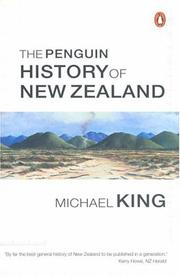
Begin with The Penguin history of New Zealand. Michael King wrote it for general readers late in his life, and it remains the default single-volume account: readable, humane, and willing to hold Māori and Pākehā history in the same frame rather than treating one as background to the other. It gives you the chronology you will hang everything else on.
Follow it with Being Pakeha now, King's personal essay on what it means to be a non-Māori New Zealander with no other homeland. It is short, and it is the fastest way to understand why questions of belonging and biculturalism carry the charge they do. Reading it beside the survey turns dates into a live argument.
Go back before 1840
Tangata Whenua, edited by Atholl Anderson with Judith Binney and Aroha Harris, is the big illustrated history of Māori from Polynesian voyaging onward. It draws on archaeology, oral tradition, and written records together, and it is the corrective to any account that starts with European arrival. Take it slowly; it is a reference as much as a read.
Then tackle the document itself. Claudia Orange's The Treaty of Waitangi is the standard scholarly history of how the Treaty was drafted, signed, ignored, and revived. Its central service to a new reader is showing precisely where the English and te reo Māori texts diverge, particularly around sovereignty and kāwanatanga, and why that divergence is not a translation quibble but the heart of a still-unresolved dispute.
Then the interpretive arguments
James Belich reframed the field, and his work is best read after you have the basics. Making peoples covers settlement to the end of the nineteenth century and argues for a New Zealand shaped by explosive colonisation rather than gentle transplantation. The New Zealand Wars and the Victorian Interpretation of Racial Conflict is narrower and more combative: it reassesses the mid-century wars and argues that Victorian accounts systematically underrated Māori military skill. Historians still contest parts of that reading, which is exactly why it repays reading alongside Orange rather than instead of her.
Paradise reforged is the sequel to the first volume, carrying the story through the twentieth century and the long attachment to Britain that Belich calls recolonisation. Together the two Belich volumes are the most ambitious synthesis available, and the most opinionated.
Close with The stolen island, Scott Hamilton's account of the 1863 abduction of the people of 'Ata and the Pacific labour trade that surrounded it. It is a small book about a single episode, and it does what a general survey cannot: it pulls New Zealand into the wider Pacific, where its history is entangled with Tonga, Peru, and the traffic in people that ran between them.
If you only want the essentials, King and Orange will carry you a long way. If you want to understand why New Zealanders argue the way they do, you need Belich too. Work through the full path in order and each book earns its place.
Follow the full ordered path here: Best Books on New Zealand History, in Reading Order.