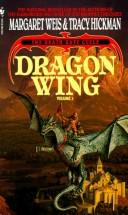
Start with Dragon Wing. The Death Gate Cycle is seven books, the order is fixed, and the path ships all seven — this is one of the rare series where the answer to "what order do I read it in" is genuinely simple. There is no prequel to place, no companion volume, no chronological-versus-publication argument, and no continuation. Weis and Hickman finished it in 1994 and left it finished.
What is worth explaining is why the order is fixed, because the first four books do not read like a sequence and readers who expect one often stop.
The four worlds, books one to four
The premise is that a single world was deliberately sundered into four elemental realms — air, fire, stone and water — by a race called the Sartan, who then imprisoned their rivals the Patryns in a labyrinth. Each of the first four volumes strands the same two characters, the Patryn agent Haplo and the Sartan Alfred, on a different fragment, with its own cast, its own catastrophe and its own argument about what the sundering cost.
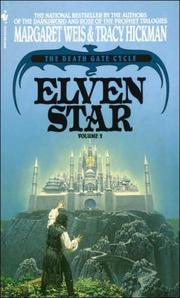
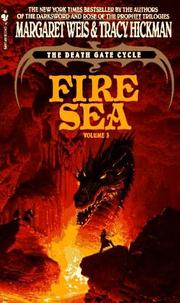
Dragon Wing is the realm of air: floating continents, an assassination plot, and Haplo arriving in a world he has been sent to destabilise. Elven Star is fire, and it is the volume readers most often stall on, because it discards nearly the entire cast of the first book. That near-total reset is deliberate and structural rather than a misstep, and the cycle repays accepting it. Fire Sea is stone — necromancy, a dying underground civilisation, and the point at which most readers say the series justifies itself. The Serpent Mage is water, and it brings the dragon-snakes fully into view, which is where the four separate stories stop being separate.
The debt comes due, books five to seven
The Hand of Chaos returns to the air realm of Dragon Wing with everything the intervening three books established. It is the volume that converts four standalones into one story, and it is close to unintelligible if read early. Into the Labyrinth finally shows the prison-world the cycle has referred to for five books without depicting, and it is the darkest thing Weis and Hickman published together. The Seventh Gate resolves the sundering, the two races, and the relationship between Alfred and Haplo that is the cycle's actual spine.
The one honest warning
Read out of order, or read as four unrelated fantasies plus a confusing finale, the cycle looks weaker than it is. Read in order, the sequence itself carries the argument: you are shown four separate consequences before you are shown the cause. The stall point is Elven Star, and the advice is to push through it rather than to skip it — book five depends on it directly.
Note also that the reading is front-loaded with worldbuilding vocabulary. Each book opens with appendices and in-world documents that are genuinely useful, not decoration; the magic systems of both races are described in enough detail that skimming those sections makes later plot turns arbitrary.
Where to stop
Nowhere. This is the rare series with no diminishing tail — no sequels, no shared-world spin-offs by other hands, and no late-career return. Seven books is the whole thing, the last one is an ending rather than a door left open, and the full ordered sequence with per-stage notes is on the reading path. If you want something comparable afterwards, our Discover page has other completed fantasy sequences.