Most reading lists on AIDS quietly pick one of three subjects and call it the epidemic. There is the American crisis and the activism that rewrote how drugs get approved. There is the literature produced by people writing while they died. And there is the global epidemic, which killed vastly more people, is still running, and gets a paragraph at the end if it appears at all. Taking them in that order works, because the activism only makes sense after the first years and the global story only lands after you understand what treatment access meant to people who already had it.
The AIDS Epidemic: The Best Books to Read, in Order
August 1, 2026 · 3 min read
The first years
And the Band Played on is the foundational chronicle of the epidemic's first five years and of the institutional failures that let it spread. One thing has to be said plainly: Shilts's Patient Zero narrative about Gaëtan Dugas has since been disproved by genetic evidence, and the framing did real damage to a real man's memory. Read the book for its reporting on the CDC, the blood banks and the federal response, and discount that thread entirely.
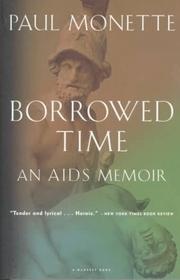
Borrowed Time puts one relationship where Shilts puts a national timeline. Monette's memoir of his partner's illness and death was written while the epidemic was still ongoing, and the pairing with Shilts is deliberate.
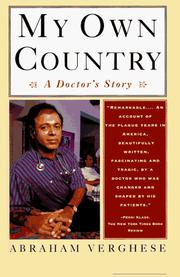
My own country corrects the assumption that this was a disease of coastal cities. A physician in rural Tennessee watches men come home to die, and shows the medical encounter from the doctor's side.
The activism that changed medicine
How to Survive a Plague is the clearest account of how the science and the politics moved together — treatment activists who learned virology well enough to argue with the FDA and the drug companies, and who lived to see antiretrovirals arrive in 1996.
Let the Record Show is built from nearly two hundred interviews and deliberately decentres the figures France foregrounds, insisting on the women, people of colour and drug users usually cut from the story. Schulman is explicit that she is arguing with the standard account. Reading the two back to back is unusually productive precisely because they do not agree about who did the work.
Written from inside it
AIDS and its metaphors examines the military and moral language wrapped around the disease — plague, invasion, punishment — and what that language cost the sick. It is short, and it changes how you read everything else here.
Close to the Knives is not an argument or a history. Wojnarowicz wrote it in fury while dying, and it is the most uncompromising thing the American epidemic produced. It reaches something the other forms cannot.
Where the virus came from, and the larger epidemic
The origins of AIDS reconstructs how a chimpanzee virus became a human pandemic, implicating colonial-era medical campaigns and unsterilised injections in its early amplification. It replaces speculation with a defensible reconstruction, and it is careful about the limits of the evidence.
No Time to Lose is the best available account of the international politics of AIDS. Piot co-discovered Ebola and ran UNAIDS, and writes about denialism, funding fights and the campaign to get antiretrovirals to people who could not pay for them.
The Invisible Cure asks why HIV spread so much further in parts of Africa than elsewhere, and argues that sexual network structure and locally generated behaviour change mattered more than imported prevention programmes. Epidemiologists have debated those conclusions since; the argument is serious enough to follow rather than to take on trust.
Memory, and an epidemic that has not ended
The Gentrification of the Mind argues that the deaths of tens of thousands of urban gay people enabled a literal gentrification of the neighbourhoods they had lived in, and a flattening of political imagination afterwards. It is polemical, and it asks a question nobody else asks.
To End a Plague reports twenty years of the American global AIDS programme from Uganda and Washington — what an enormous and imperfect intervention achieved, and where it fell short. It is the right closing book because it treats the epidemic as ongoing rather than as history. Nothing in this path is medical information; it is history, and the clinical picture has changed enormously since most of these books were written.
Follow the staged version with study plans on the full path, or see the AIDS epidemic hub.
Follow the full ordered path here: The AIDS Epidemic: The Best Books to Read, in Order.
FAQ
- Is And the Band Played On still worth reading given the Patient Zero problem?
- Yes, with the caveat carried openly. Its reporting on institutional failure — the CDC, the blood supply, federal funding, the press — has held up, and it remains the fullest chronicle of the first five years. The Patient Zero thread was disproved by later genetic sequencing showing HIV was already circulating in the United States before Dugas could have introduced it, and the framing caused real harm. Read the book, drop that chapter.
- How to Survive a Plague and Let the Record Show cover the same period. Do I need both?
- They cover the same organisation and disagree about it, which is the reason to read both. France centres the treatment activists who worked with the science establishment; Schulman built her account from nearly two hundred interviews and insists on the members usually left out of that story. If you read only one you will not know the other exists, and the disagreement is substantive rather than stylistic.
Get the books
- 1And the Band Played onAmazon ↗Randy Shilts
- 2Borrowed TimeAmazon ↗Paul Monette
- 3My own countryAmazon ↗Abraham Verghese
- 4How to Survive a PlagueAmazon ↗David France
- 5Let the Record ShowAmazon ↗Sarah Schulman
- 6AIDS and its metaphorsAmazon ↗Susan Sontag
As an Amazon Associate we earn from qualifying purchases. Some book links are affiliate links; you pay the same price and we may earn a small commission.
Follow the full reading path

Best Books on the AIDS Epidemic, in Reading Order
Beginner12books120 hrs5 stages
Ready to learn something deeply?
Build a reading path — free