Tapestry weaving is not the same craft as cloth weaving, even though it uses the same equipment vocabulary. In tapestry the weft does not travel selvedge to selvedge; each colour turns back where its shape ends, and the image is built from those discontinuous passes. Nearly every frustration a beginner has — waisted selvedges, warp showing through, gaps where two colours meet — traces back to consequences of that one structural fact.
So the reading order runs from doing to understanding. Weave something small first, then read the structural books, because the technical explanations only land once your hands have produced the problem the author is describing.
Weave a piece first
Start with Tapestry Weaving by Kirsten Glasbrook. It is a project-driven beginner book: simple frame loom setup, warping, the basic shapes and joins, and finished small pieces you can complete in an evening or two. The colour photography is clear about hand position, which is worth more than a paragraph of description.
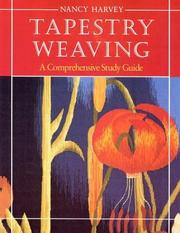
Nancy Harvey's Tapestry weaving covers similar introductory ground with a more classical, technique-first approach and better coverage of shading and hatching methods. The two overlap enough that you do not need both at the start — take Glasbrook if you want to make something this week, Harvey if you prefer to understand the method before you warp up. Come back to the other one later.
Understand the structure
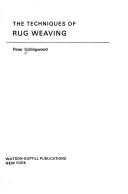
The techniques of rug weaving is the serious book on this path. Peter Collingwood was a weaver of formidable rigour, and this is a systematic treatment of weave structures, tension, selvedge behaviour, and the mechanics of what the yarn is actually doing. It is written for rugs rather than pictorial tapestry, and it is dense; read it after you have woven, and read it in sections rather than cover to cover. Nothing else on this list will improve your selvedges as much.
The Weaver's Companion is the reference you keep at the loom — a small spiral-bound book of sett tables, yarn calculations, and conversion charts. It teaches nothing on its own and answers the practical questions that stop you mid-project, particularly how much yarn a planned piece will consume.
Colour, history, and finishing
Color and fiber is Patricia Lambert's treatment of colour theory as it behaves in yarn rather than in paint. This matters because tapestry mixes colour optically — adjacent picks of two hues read as a third at viewing distance, and dyed fibre shifts under different light. It will change how you build a palette and why hatching and blended butterflies work.
The art of tapestry gives you the historical dimension: the medieval and Renaissance workshop tradition, the great European series, and the scale at which this craft once operated. It is a looking book rather than a doing book, and it is genuinely useful for understanding composition and cartoon design.
Finish with Finishing touches for the handweaver, which covers the part beginners neglect entirely — securing warp ends, hems, joins, fringes, and mounting. A well-woven tapestry finished badly looks amateur, and this is the only book here that treats it properly.
Work in that order and your third piece will be markedly better than your first. Follow the full path, and see the related fibre-craft hubs if you want to widen the library.
Follow the full ordered path here: Best Books on Tapestry Weaving, in Order.