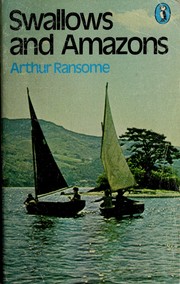
Start with Swallows and Amazons, the first book, and read the series in publication order. That is the short answer and it holds up better here than it does for most long series, because Ransome wrote these in sequence over eighteen years and the children age, roughly, as the books go.
The advice you will hear against it is to skip straight to We didn't mean to go to sea, which many readers consider the best book of the twelve and which works as a standalone. It genuinely is the strongest single volume. But it is strongest because you already know these children, and its central situation depends entirely on your knowing exactly how careful John is and what it costs him to break a rule. Read it fourth or seventh and it lands. Read it first and it is a competent adventure story about strangers.
There is one real wrinkle, and it is worth knowing before you hit it rather than after.
The Lake District books
Swallows and Amazons introduces the Walker children camping on an island and the Blackett sisters who claim it, and it takes its time. Modern readers sometimes find the opening slow. It is worth the patience: almost nothing dramatic happens and the book is completely absorbing anyway, which is the trick Ransome pulls off repeatedly.
Swallowdale moves the camp inland after a shipwreck and is the most leisurely book in the series. Winter holiday brings in Dick and Dorothea Callum, two bookish newcomers who become the most important additions to the cast, and freezes the lake. Pigeon post is a summer of amateur gold prospecting and drought, and won the first Carnegie Medal.
The two that are not real
Here is the wrinkle. Peter Duck and Missee Lee are not adventures the children have. They are adventures the children invent — yarns told among themselves, with pirates, treasure and, in the second, a Cambridge-educated Chinese pirate chief. Ransome never signposts this inside the books, so readers who take them as literal instalments conclude the series has abruptly gone silly.
Read them in publication position, but read them knowing what they are: holiday inventions in the voice of children who have read too much Stevenson. Missee Lee also carries dated and stereotyped depictions of its Chinese characters, which is a plain fact about a 1941 adventure story rather than a reason to hide the book from the list.
The Norfolk Broads pair
Coot Club and The Big Six form their own sub-series and share almost no cast with the lake books. They follow Dick and Dorothea and a group of local Broads children, and Coot Club must come before The Big Six because the second is a detective story resolving grudges set up in the first. The Big Six is the most tightly plotted thing Ransome wrote, and readers who bounce off the camping books often like it best.
The late books
We didn't mean to go to sea is the peak: an accidental North Sea crossing, and the only book in which the danger is not managed. Secret water follows immediately and is a slower survey-and-mapping story on the Essex saltings, which suits some readers and not others.
The Picts and the Martyrs or, Not welcome at all is a domestic comedy of hiding from an aunt, and quietly one of the funniest. Great Northern? takes the whole cast to the Hebrides for a bird-nesting mystery and is the last completed book.
Stop there. Ransome began a thirteenth and never finished it, and there is no cliffhanger left dangling — Great Northern? is a clean ending. If the series is losing you earlier, the natural place to leave it is after The Picts and the Martyrs.
Follow the full path below for the sequence with each book in place.
Follow the full ordered path here: Swallows and Amazons Reading Order: Where to Start.