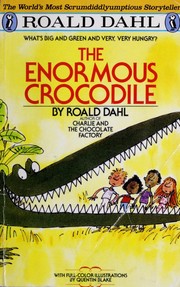
Start with The Enormous Crocodile. It is thirty-odd pages, it can be read aloud in one sitting, and it contains the whole Dahl formula in miniature: a plainly wicked adult, children who are never patronised, and a genuinely nasty ending for the villain.
The obvious starting point is Charlie and the Chocolate Factory, and for a confident reader of eight or nine that is fine. For anyone younger it is too long for a first Dahl, and starting there is the most common reason a child bounces off him. Length, not fame, is the right sorting principle here.
The first rung: short and read-aloud
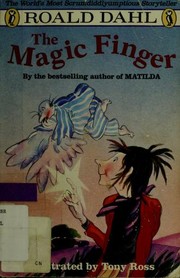
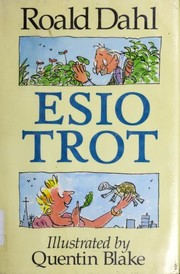
After The Enormous Crocodile, take The Magic Finger and Esio Trot. Both are very short, both turn on a single idea, and Esio Trot is the mildest thing he wrote — no cruelty at all, which makes it a useful test of whether a young reader wants more or less of that.
The second rung: short novels
Fantastic Mr Fox is next. The British title has no full stop after Mr, which is worth knowing when you are searching. The Twits is the meanest book in the list and children tend to love it for exactly that reason. George's Marvelous Medicine, spelled with two Ls in British editions, involves a boy mixing household chemicals into a potion for his grandmother — a number of parents would rather it did not, and that is a fair call to make in advance.
The third rung: the famous ones
James and the Giant Peach was his first children's book and reads as slightly stranger and looser than what came after. Charlie and the Chocolate Factory follows. Then the long ones: The BFG, which is the warmest of the major titles and the one with the invented language; Danny, The Champion of the World, which is the most realistic thing he wrote and the only one with a genuinely loving parent at its centre; and Matilda, which is the best constructed of all of them.
The Witches sits here too, with a caveat. It is the most frightening book Dahl wrote — real menace, no rescue for a long stretch, and an ending that does not restore what was lost. It also depicts witches as women in a way that has drawn steady criticism, including from readers who otherwise defend him. Preview it before handing it over.
Charlie and the Great Glass Elevator is the sequel and is widely considered much weaker than the first — sillier, more scattered, and dependent on jokes about American politics that have entirely dated. Read it only if the first was a hit.
For older readers: the memoirs
Boy is the childhood memoir, and it is the book to reach for when a reader has outgrown the novels but still wants Dahl — the school beatings and the surgery scenes are told with the same flat relish as the fiction. Going Solo continues it into East Africa and the RAF, and is properly adult in places. Together they are the best argument that the cruelty in the children's books came from somewhere.
Two things every buyer should check
First, editions. Puffin issued substantially edited texts of the children's books in 2023, altering descriptions and language, and after the response published a separate Classic Collection restoring the originals. Both are in print. Check which text you are buying, because it is not always stated on the cover.
Second, the author. Dahl made antisemitic statements publicly on more than one occasion, and his family issued an apology for them after his death. That is a matter of record rather than interpretation. How much it should bear on reading the books to a child is a real question that families answer differently, and it is not one an article can settle for you.
The full ladder, arranged by length and age, is on the path below.
Follow the full ordered path here: Roald Dahl in Reading Order: Which Book to Read First.