Abstract algebra is many students' first encounter with mathematics as the study of pure structure — groups, rings, and fields defined by axioms rather than numbers you can picture. That leap in abstraction is where people stall, and the wrong first book, too terse or too advanced, can make the whole subject feel arbitrary.
The order that works is to start with a genuinely gentle introduction, then a book that balances accessibility with depth, and finally the comprehensive references you will keep for years. Each book below is chosen to keep the abstraction climbing at a pace you can absorb.
Start gently
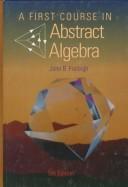
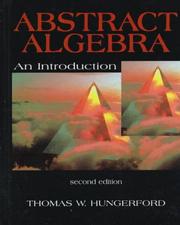
Begin with A first course in abstract algebra by John Fraleigh, long prized as the friendliest serious introduction to groups, rings, and fields, with the motivation and examples beginners need. Abstract algebra by Thomas Hungerford offers a similarly approachable path with a slightly different emphasis, good as a second perspective when a concept refuses to click. These build the intuition that terser books assume you already have.
Deepen with a balanced text
Once the basic structures feel familiar, Algebra by Michael Artin is a celebrated text that weaves in linear algebra and geometry, giving the subject a concrete, visual grounding that pure axiomatic treatments lack. It is demanding but rewarding, and it reshapes how you see the connections between algebra's many parts.
Reach the comprehensive references
For the definitive treatment, Abstract algebra by David Dummit and Richard Foote is the encyclopedic graduate standard that covers essentially everything and serves as a reference for a lifetime. To go deep on the crown jewel of the subject, Galois theory by Ian Stewart is the accessible route into the theory connecting field extensions and group theory, and Field and Galois theory by Patrick Morandi provides a more advanced, thorough treatment. Linear algebra by Serge Lang sharpens the linear-algebraic foundations the abstract theory rests on, and Basic algebra by Nathan Jacobson rounds out the path with a rigorous graduate-level view of the whole landscape.
Read in this order and abstract algebra stops feeling like arbitrary axioms. Follow the full path to go from your first group to a working command of rings, fields, and Galois theory.
Follow the full reading path →
Ready to learn something deeply?
Build a reading path — free