Read one book about psychiatry and you will come away with a firm opinion, which is the problem. Practitioners disagree publicly and in print about what the diagnoses are, what the drugs do over the long run, and whether the field's history is a story of progress at all. A single volume will hand you one side of that argument as if it were the settled account.
So the order here is not a difficulty ramp. It is a deliberate pairing: an insider's defence read against a historian's revision, patient accounts read before the theoretical critique of the categories that named them, and the sharpest critics read alongside rather than instead of the mainstream. This path is for understanding a contested discipline. It is not a guide to diagnosing or treating anyone, and no book in it is a substitute for clinical care.
Two accounts of the same century
Shrinks is the profession's story about itself, told by a former president of the American Psychiatric Association: an escape from asylums and from Freud into biological medicine. Read it first, because almost everything later in the path is either defending this account or arguing with it.
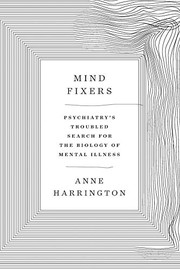
Mind Fixers covers the same century and reaches a much more qualified verdict — that the biological revolution promised mechanisms it has not delivered. Read it immediately afterwards. Neither author is a fringe figure, and the value is entirely in the contrast: the same events, weighted differently.
What the conditions are actually like
The Center Cannot Hold is a law professor's account of building a career while living with schizophrenia, including forced restraint and hospitalisation. It is the strongest available corrective to reading psychiatry only through clinicians, and Saks writes analytically enough that you can argue with her.
An unquiet mind follows: a clinical psychologist who studies bipolar disorder describing having it, ambivalence about lithium included. The double vision — patient and researcher in one person — is rare and hard to dismiss from either direction.
The Collected Schizophrenias is a set of essays that are unusually sharp about diagnosis as an event: how a label arrives, what it permits, what it costs. It makes the critique of categories personal before the next stage makes it theoretical.
The critics, on their own terms
Desperate Remedies opens this stage because Scull argues from archival history rather than polemic, documenting treatments the field adopted with confidence and abandoned quietly. It sets the evidentiary standard against which sharper claims can be judged.
Asylums is Goffman's 1961 ethnography of the mental hospital as a total institution, and the origin of most later thinking about institutionalisation. It studies institutions rather than illness, which is why it survives as evidence whatever your view of psychiatry.
The Myth of Mental Illness appeared the same year and mounts the most famous frontal attack on the concept itself. Read it as an argument to be examined rather than adopted; Saks and Jamison in the previous stage are the obvious test case against it, and this path gives you both on purpose.
Anatomy of an Epidemic argues from published long-term data that outcomes on psychiatric medication are worse than the field acknowledges. Many psychiatrists reject Whitaker's causal reading of that data, and the dispute is unresolved. Read it against Lieberman rather than in place of him, and notice which studies each side leans on.
How the work is actually done
Saving Normal is internal criticism from the centre: the psychiatrist who chaired the DSM-IV task force arguing that diagnostic expansion went too far. It checks both Lieberman's optimism and Whitaker's indictment.
Of Two Minds is an anthropologist embedded in psychiatric residency, watching trainees learn two incompatible frameworks and choose between them case by case. It explains why the field's public arguments are reproduced inside every individual practitioner.
Kaplan and Sadock's Synopsis of Psychiatry is the standard clinical reference and belongs last. Read it selectively, to see how the disputes above are handled in a text written for people in supervised training. It is a map of what the profession teaches.
Follow the whole path and you end up able to state each position in its strongest form, which is the only honest outcome available here.
Follow the full ordered path here: How to Understand Psychiatry Through Books, in Order.