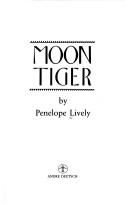
Start with Moon tiger. A dying historian narrates her own century and refuses to do it in chronological order, cutting between a childhood, a wartime love affair in Egypt and a hospital bed. It won the Booker Prize in 1987, and it is also the clearest statement of the subject Lively worked at for fifty years: how memory holds history, and how badly.
The obvious alternative is to start at the beginning of her adult fiction, and it is the wrong move for a practical reason. Lively wrote for adults and for children across the same decades, so a search on her name returns a bewildering mix, and new readers routinely start with a children's book by accident — The Ghost of Thomas Kempe, which won the Carnegie Medal, is the one most likely to turn up. It is a fine children's novel and it tells you nothing about the adult writer.
The novels of accident and consequence
Lively's adult fiction returns again and again to a single move: something small and half-forgotten in the past reorganises a life in the present. Three novels work that seam directly, and they are the natural continuation after Moon tiger.
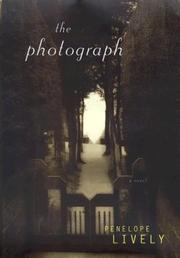
The photograph opens with a man finding a photograph of his dead wife holding another man's hand. Everything he thought he knew rearranges itself around it. It is the tightest of the three and the best of her later novels.
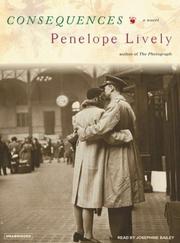
Consequences follows three generations of women from 1935 onward, each shaped by a decision taken before she was born. It is the most straightforwardly enjoyable book here, and the one to hand to someone who wants a story rather than a technique.
Family album is a large house, six children and a secret that everybody half-knows and nobody says. The quietly unsettling one. It is also the least resolved, deliberately, which some readers find its point and others find a frustration.
The earlier novel
According to Mark predates the Booker win. A biographer falls in love with his subject's granddaughter, and the novel turns comic and very sharp about what biography does to the truth. Take it when you want to see her range — it is funnier than anything else on this list.
It also answers a question readers of the later books tend to ask, which is whether Lively was always this interested in the unreliability of the record. She was. The difference is that the early novels treat it as a comic predicament and the late ones treat it as the condition of being alive.
The memoir
Dancing fish and ammonites was written in her eightieth year: old age, memory, and six objects she had kept. It is short, and it explains the fiction better than any critic has. Finish here rather than beginning here — read after the novels, it works as a commentary on them; read first, it gives away what she spent the fiction discovering.
Where to stop
One book is enough if that book is Moon tiger. Two is Moon tiger and The photograph. Readers who want the full arc should add Dancing fish and ammonites at the end and stop there.
There is no series and nothing accumulates, so the order above is a recommendation about quality and difficulty rather than a rule. The only genuinely important thing is not to start with a children's book by mistake. More on the Penelope Lively hub.
Follow the full ordered path here: Penelope Lively in Order: Where to Begin with Her Novels.
Ready to learn something deeply?
Build a reading path — free