Making paper by hand is deceptively simple: pull fiber from water onto a screen and dry it. The catch is that everything about the result depends on fiber preparation, and beginners who skip that end up with lumpy, weak, or crumbling sheets. The craft is easy to try and easy to get discouraged by without the right guidance.
A good reading order starts you making sheets right away, then deepens your understanding of fibers and technique, then opens up world traditions and the long history of paper itself. Each book expands what you can make.
Make your first sheets
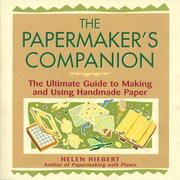
Start with Papermaking with Garden Plants and Common Weeds by Helen Hiebert, an accessible, inspiring guide that gets you pulling real sheets from materials in your backyard. Follow it with her The Papermaker's Companion, a thorough handbook of tools, techniques, and troubleshooting that turns those first sheets into a repeatable practice.
Deepen your technique
Once you can make consistent paper, learn the craft more fully. Hand Papermaking by Mary Reimer and The art and craft of papermaking by Sophie Dawson cover fiber preparation, sheet forming, and finishing in depth, so you understand why your paper behaves as it does. This is where thin, strong, beautiful sheets stop being luck.
Explore traditions and history
When technique feels solid, widen your view. Washi, the world of Japanese paper by Sukey Hughes introduces the extraordinary tradition of Japanese papermaking and its refined fibers. The Nature and Making of Papyrus by Bridget Leach reaches back to paper's ancient predecessor, and Papermaking by Jules Heller and Paper and Book Intensive by Elaine Koretsky place your practice within the full history and artistry of the craft.
Read in this order and a screen and a vat become a genuine creative studio. Follow the full path to go from your first rough sheet to paper worthy of your best work.
Follow the full reading path →
Ready to learn something deeply?
Build a reading path — free