Optics looks approachable — light, lenses, rainbows — and then reveals itself as one of the richest subjects in physics, where ray tracing, wave interference, Fourier analysis, and quantum electrodynamics all describe the same beams. Read the advanced texts too early and the mathematics buries the intuition. Read in order and each layer prepares the next.
The path here builds intuition first, then the standard undergraduate and graduate texts, then the specialized frontiers of Fourier optics, lasers, and nonlinear phenomena.
Build intuition first
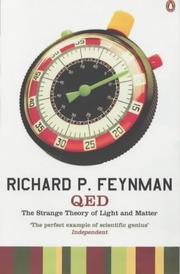
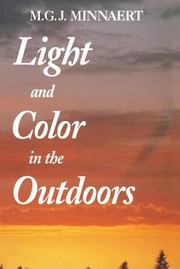
Start with Qed - The Strange Theory of Light and Matter, Feynman's famously clear lectures on how light really behaves at the deepest level — no equations, all insight, and a foundation that pays off later. Then step outside with Light and Color in the Outdoors, Minnaert's classic that teaches you to see halos, rainbows, mirages, and shadows as physics in action. Together they anchor the abstractions in things you can point at.
The core textbooks
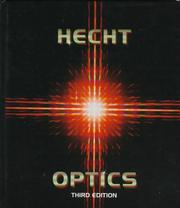
Now the workhorses. Optics by Hecht is the standard modern undergraduate text, moving from geometric optics through interference, diffraction, and polarization with unusual clarity. Introduction to modern optics is a compact, rigorous complement that many find sharpens the wave picture. For the graduate-level treatment, Principles of optics — Born and Wolf — is the monumental reference that has defined the field for decades; demanding, but the place serious study eventually arrives.
The specialized frontiers
The final arc branches into modern optics. Introduction to Fourier optics reframes imaging and diffraction in terms of spatial frequencies, the conceptual leap behind everything from holography to modern microscopy. Lasers is the authoritative treatment of how coherent light is generated and controlled, and Photonics extends the story into how light is guided and manipulated in real devices. Close with Nonlinear optics, which enters the regime where intense light changes the medium it travels through — the physics behind frequency conversion and much of modern photonics.
Read in this order, optics becomes a ladder you can actually climb: intuition, then formalism, then frontier. Follow the full path to work through it stage by stage.
Follow the full reading path →
Ready to learn something deeply?
Build a reading path — free