Nationalism is one of the few subjects where reading order genuinely determines what you end up believing. Three or four major books were published within a couple of years of each other around 1983 and set the terms of the field; almost everything since is a response. Read a critique before the thing it criticises and you will absorb an objection to a position you never understood.
The other trap is that the central question sounds simple and is not. Are nations modern inventions, manufactured by print, states and industrialisation? Or are they modern political forms built on much older ethnic material? Serious scholars still disagree, and a reading list that quietly picks a side is doing you a disservice. This one does not.
The modernist core
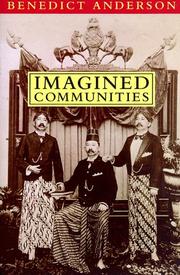
Begin with Imagined communities by Benedict Anderson, the most influential book in the field and the most readable. Its argument — that a nation is a community imagined by people who will never meet, made thinkable by print capitalism and vernacular languages — is now so widely absorbed that people repeat it without knowing the source. Anderson is also unusual in taking the emotional pull of nationalism seriously rather than treating it as a mistake.
Nations and Nationalism by Ernest Gellner makes the harder, more systematic version of the modernist case: industrial society requires a mobile, literate, culturally standardised workforce, so it produces nations because it needs them. Gellner is drier than Anderson and more rigorous, and the two are usually read as a pair.
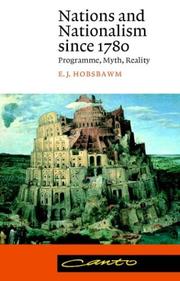
Nations and nationalism since 1780 by Eric Hobsbawm brings a Marxist historian's scepticism, arguing nationalism is largely a project of elites and states. Read it alongside The Invention of tradition, the volume Hobsbawm edited with Terence Ranger, whose case studies show ceremonies and customs presented as ancient being manufactured within living memory. Those essays are the most concrete demonstration of the modernist thesis anywhere.
How nations were actually made, and how they are maintained
Peasants into Frenchmen by Eugen Weber (the catalogue files the author name inverted) is the empirical heart of this path. It tracks how rural populations in nineteenth-century France came to think of themselves as French, through roads, schools, conscription and markets, and it grounds abstract theory in something you can see happening.
Banal nationalism by Michael Billig then turns the question around: not how nations are built, but how established ones are reproduced daily through flags nobody notices, weather maps, and the word "we" in a newspaper. It is short and it changes how you read the news.
The counter-arguments — and they are real
The ethnic origins of nations by Anthony D. Smith is the major dissent. Smith accepts that nations are modern but argues they are built on durable pre-modern ethnic cores, and that the modernists cannot explain why some groups produce nations and others do not. Do not read Smith as a footnote to Anderson and Gellner; he is arguing they are wrong about something important, and the dispute is unresolved.
Nationalism by Elie Kedourie offers an older, quite different account, treating nationalism as a doctrine traceable to German idealist philosophy — an intellectual history rather than a sociological one. Nationalism and the state by John Breuilly returns the emphasis to politics, reading nationalism primarily as a form of political mobilisation, and Nationalism Reframed by Rogers Brubaker replaces the category of the nation with a set of relationships between nationalising states, minorities and external homelands, which is often the more useful lens for Central and Eastern Europe.
The critique from outside Europe, and the normative question
The nation and its fragments by Partha Chatterjee argues that anticolonial nationalism was not a copy of a European model, as Anderson's account implies, but was constructed in a cultural domain colonial power never reached. It is the strongest challenge to the field's Eurocentrism.
Close with Why Nationalism by Yael Tamir, which shifts from explanation to judgement and defends a liberal nationalism against both nationalist excess and its wholesale rejection. That is a contested position, and you will be well placed to argue with it. Follow the full path in order rather than sampling — the sequence is the argument.
Follow the full ordered path here: Best Books on Nationalism, in Reading Order.