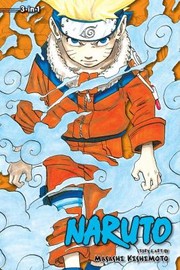
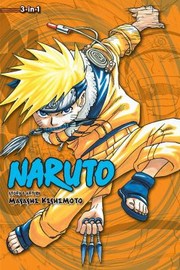
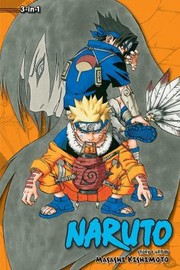
Start with Naruto #1-3. Publication order is story order, there is no chronological alternative, and the series was built to be read from chapter one — the opening pages establish the village, the sealed monster inside the protagonist and the reason everyone treats him the way they do, and every later reveal is calibrated against that.
The one thing to settle before you buy is the edition. This path uses VIZ's 3-in-1 omnibus, which collects three single volumes per book at around six hundred pages each. The arithmetic is simple and you will need it: omnibus one is single volumes 1 to 3, omnibus two is 4 to 6, and so on. The twelve omnibus volumes here carry you through single volume 36 — exactly half of the seventy-two-volume series. When someone online tells you the good part starts at volume thirteen, they mean single volume thirteen, which is inside omnibus five. Translate before you argue.
Do not mix editions
Naruto exists in singles, in this 3-in-1 omnibus, and in boxed sets. Pick one numbering and stay inside it. Mixing is how people buy the same chapters twice, and with a series this long that is an expensive mistake. The omnibus is the cheapest per chapter and the most practical for a first read.
Part I: omnibus one to nine
Naruto #1-3 is the setup and the weakest stretch of the series — broad gag comedy, a children's-adventure register, and art that is visibly early. Readers who bounce off Naruto almost always bounce here, and it is worth saying plainly that it does not represent what follows. The turn comes inside Naruto #4-6, with the Land of Waves arc, which is the first time the series treats violence and death as having weight.
Naruto #4-6 through Naruto #13-15 cover the Chunin Exams, which is the run most readers name as the best sustained stretch in the book: a tournament structure that lets Kishimoto introduce a large cast quickly, followed by an invasion that turns the tournament's stakes real. Naruto #16-18 and Naruto #19-21 handle the aftermath and the search for a new village leader. Naruto #22-24 and Naruto #25-27 take the series to the end of Part I, which closes on a confrontation between the two leads that is the emotional payoff of everything before it.
Part II begins: omnibus ten to twelve
Naruto #28-30 opens Part I's sequel, published in English under the same title but known from the anime as Shippuden. The cast is older, the tone is darker, and the Akatsuki move from background threat to the driving antagonist. Naruto #31-33 and Naruto #34-36 are the early Part II arcs and are widely rated among the strongest material in the whole series.
Where to stop
The end of Part I — single volume 27, which is Naruto #25-27 here — is a real stopping point and not a cop-out. It resolves the central relationship, closes the arc the first chapter set up, and leaves the world intact. A substantial number of readers stop there deliberately and are content. If you carry on, the honest warning is that the last twenty or so single volumes escalate into a scale of conflict and lore that many readers find the series is not built to carry; opinion divides sharply on the final arc.
What you can skip
Nothing, in the manga. The filler everyone complains about is an anime problem — the television adaptation padded heavily to stay behind the manga, and entire arcs there have no printed source. The manga has no filler. It also has no side stories you need: the light novels, the spin-off gaiden and the sequel series Boruto are all optional and none of them are on this path.
Content notes
Frequent violence including the deaths of children, torture, and a recurring theme of child soldiering that the series treats seriously rather than as set dressing. Also worth knowing before you commit: this is a very long book. Seventy-two single volumes is a multi-month read even at a fast pace.
Follow the full ordered path here: Naruto Reading Order: Where to Start and What Order to Read the Manga In.