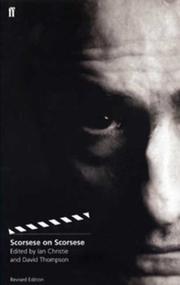
Start with Scorsese on Scorsese, the Faber interview volume edited by David Thompson and Ian Christie from conversations and lectures, which runs film by film from Who's That Knocking at My Door onward. It is the closest thing to an autobiography that exists, and every later writer quotes it.
That is the structural fact about this subject. There is no single authorised biography everyone agrees on, so the Scorsese shelf works differently from most director bibliographies: the strongest material is him talking, at length, over fifty years. This path therefore begins with the interview books, sets the New Hollywood context that produced him, moves to biography and film-by-film survey, then to academic criticism, and closes with the collaborators and source texts. Each entry says what kind of book it is, because the titles will not tell you.
Scorsese in his own words
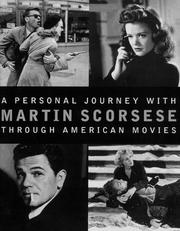
After the Faber volume, read Conversations with Scorsese, Richard Schickel's book-length dialogue conducted over years and reaching into the 2000s films the earlier book predates. Schickel was a Time critic and he pushes back in a way an authorised career survey does not. A personal journey with Martin Scorsese through American movies is the book of his four-hour documentary on American cinema, written with Michael Henry Wilson. It is not about his own films at all; it is his critical canon, and it explains the borrowings and homages that the later criticism spends chapters decoding.
The context: New Hollywood
Easy riders, raging bulls is Peter Biskind's gossipy narrative journalism about the 1970s American film generation — Coppola, Spielberg, Altman, Ashby, Scorsese — and the drugs and money that ended it. Read it for the industry mechanics and not as scholarship: Biskind's sourcing has been contested and several of his subjects have disputed his account of them. Scorsese by Ebert collects forty years of Roger Ebert's reviews as the films were released, plus interviews and Ebert's own later reassessments. The value is the contemporaneous record — which films were understood on arrival, and which took twenty years.
Biography and film-by-film survey
Martin Scorsese : a Biography is Vincent LoBrutto's unauthorised full-life account: Little Italy, NYU, the asthma, the marriages, the cocaine years, the recovery. It is the standard one-volume life and the place to check dates the interview books gloss over. Scorsese up close is Ben Nyce's film-by-film critical study, working through the features in order and readable rather than theoretical; it is the bridge into the harder criticism, because Nyce describes what is on screen before anyone starts interpreting it. Martin Scorsese, catalogued under that bare title, is Peter Brunette's anthology in the University Press of Mississippi Conversations with Filmmakers series — press interviews from 1969 onward by many different interviewers. The point of it is the range, and the visible drift in how Scorsese explains himself over time.
The critical readings
The Scorsese connection is Lesley Stern's academic close reading in the BFI mould, tracing how the films quote and rework other cinema — Powell, Minnelli, the Westerns — as a system rather than a set of nods. It is the hardest book here and the most rewarding if you already know the films well. The word made flesh is Michael Bliss's short monograph on Catholicism and conflict in the films, reading guilt, penance and redemption as a consistent sacramental structure; the full published title names Catholicism and conflict explicitly, though the catalogue displays it bare. A cinema of loneliness is not a Scorsese book — Robert Kolker's comparative study of Penn, Kubrick, Coppola, Altman, Spielberg and Scorsese as the defining American auteurs. Read it last in this stage, because it places him against his peers rather than inside his own preoccupations.
The collaborators and the sources
Wiseguy is Nicholas Pileggi's reported book on the mob associate Henry Hill, which became Goodfellas almost line for line, and it is the clearest available case study of Scorsese's adaptation method. Schrader on Schrader is the companion Faber interview volume for Paul Schrader, who wrote Taxi Driver, Raging Bull and The Last Temptation of Christ — an essential corrective, because it shows how much of the theological tension credited to the director arrived already on the page. Taxi driver is Schrader's published screenplay, catalogued with a bracketed screenplay tag. In the blink of an eye closes the path and is by neither man: Walter Murch's short book on film editing. It is here because Scorsese's fifty-year partnership with the editor Thelma Schoonmaker is the least-documented part of his work, and Murch is the best account of what that job involves.
One gap to state plainly: this list runs out around 2011. Nothing here covers Silence, The Irishman or Killers of the Flower Moon, and there is no book-length treatment of the late work in our catalogue.
Follow the full ordered path here: Martin Scorsese: The Best Books to Read, and the Order to Read Them.