Persian, or Farsi, pleasantly surprises learners: once you get past the Perso-Arabic script, the grammar is remarkably simple, with no grammatical gender and regular sentence patterns. There is also a real gap between formal written Persian and the spoken language, so a smart book order addresses both. The sequence below handles the script, then structure, then the spoken-written divide.
Remember the constant of language learning: books build reading, grammar, and vocabulary reliably, while speaking Persian comfortably comes from practice with audio and conversation partners. Use these as the backbone and add real talking.
Learn to read the script
Persian uses the Perso-Arabic alphabet, so start there. Alef Baa: Introduction to Arabic Letters and Sounds teaches the shared script and sounds thoroughly, an excellent foundation since Persian uses the same letters. Then Read and Write Persian (Farsi) in 7 Days, Nazanin Mirsadeghi's focused primer, drills the Persian script specifically so you can start reading words quickly.
Build the beginner foundation
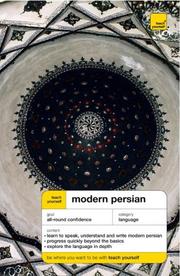
With the script in hand, take a full course. Colloquial Persian, a complete self-study program, teaches everyday language with English explanations and audio, and Modern Persian: A Course-Book for Beginners provides a structured classroom-style path through the basics. For the grammar underneath, Persian Grammar, John Mace's clear reference, and Teach Yourself Modern Persian, Narguess Farzad's course, together give you both explanation and graded practice.
Handle speech and reading
Because spoken Persian differs from the written form, Spoken Persian, Ann Lambton's classic on the colloquial language, is valuable for understanding how people actually talk. Then start reading with Elementary Persian (Farsi) Reader, a graded collection of texts that eases you into real Persian, and consolidate words with Persian Vocabulary, John Mace's thematic vocabulary reference, to steadily widen your range.
Work these in order and Persian opens from an unfamiliar script into a genuinely accessible language. Follow the full path, and pair every stage with listening and speaking to turn reading knowledge into conversation.
Follow the full reading path →
Ready to learn something deeply?
Build a reading path — free