Here's the uncomfortable truth about online family trees: a huge share of them are fiction. Not maliciously — just built by clicking hints and copying other people's trees, errors compounding with every merge, until someone is confidently descended from a man who died childless. Genealogy has a real research method with real evidence standards, and the difference between hobbyists who hit walls and researchers who break through them is almost entirely whether they learned it.
Genealogy done right: books for tracing your family history
July 9, 2026 · 2 min read
The path, stage by stage
Start with inspiration, then get rigorous. Henry Louis Gates, Jr.'s Finding Your Roots, Season 2 — the companion to the beloved series — shows what family history looks like when it's done well: records and DNA braided into stories that reshape how people see themselves. It's the "why" that sustains the "how."
The "how" begins with Val D. Greenwood's The Researcher's Guide to American Genealogy, the standard text for decades: censuses, probate, land, church, and court records — what each source actually says, where it lives, and how it lies. Then the discipline that separates research from collecting: Elizabeth Shown Mills's Evidence Explained teaches source citation and, more deeply, evidence analysis — original versus derivative, primary versus secondary, and why it matters. Thomas W. Jones's Mastering Genealogical Proof turns that into the field's formal reasoning standard, with exercises: how you prove an ancestral connection rather than merely assert it.
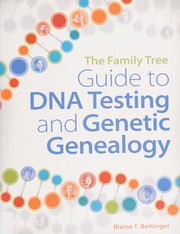
The modern stage is DNA. Blaine T. Bettinger's The Family Tree Guide to DNA Testing and Genetic Genealogy explains what the tests can and can't tell you, and Genetic Genealogy in Practice — Bettinger with Debbie Parker Wayne — is the workbook that makes centimorgans and match clusters into tools instead of trivia. DNA plus documents is how modern brick walls actually fall.
The habit: write the proof paragraph
Every time you add an ancestor or a connection, write a short paragraph stating the claim, listing each source, and explaining why the evidence supports the conclusion — including what conflicts and why you discount it. This is the Genealogical Proof Standard in miniature, and it does two things: it catches your own wishful thinking in the moment, and it leaves a trail your future self (and your descendants) can trust. It also changes how you search — once you know you'll have to defend a claim in writing, you start noticing which records would actually prove it. Trees built this way don't collapse when a new record surfaces; they absorb it.
The full path runs seven books — roughly 70 hours of reading, repaid in full the first time a brick wall falls. Follow the path, start at the genealogy hub, or add context for what your ancestors lived through at the history hub.
FAQ
- Are the online tree hints on ancestry sites reliable?
- Treat them as leads, never conclusions. Hints surface possible records, but many trees they draw on are unsourced copies of copies. The evidence standards in Mills and Jones are how you turn a hint into a proven fact.
- Which DNA test should I take for genealogy?
- Autosomal DNA is the standard starting point — it covers all ancestral lines back several generations. Bettinger’s guide explains the test types, what each can prove, and how to actually work with your matches.
Get the books
- 1The researcher's guide to American genealogyAmazon ↗Val D. Greenwood
- 2Finding Your Roots, Season 2Amazon ↗Henry Louis Gates, Jr.
- 3The family tree guide to DNA testing and genetic genealogyAmazon ↗Blaine T. Bettinger
- 4Evidence ExplainedAmazon ↗Elizabeth Shown Mills
- 5Mastering genealogical proofAmazon ↗Jones, Thomas W. Ph.D.
- 6The DNA Guide for AdopteesAmazon ↗Shannon Combs-Bennett
As an Amazon Associate we earn from qualifying purchases. Some book links are affiliate links; you pay the same price and we may earn a small commission.
Follow the full reading path


Trace your family history
Beginner8books86 hrs5 stages
Ready to learn something deeply?
Build a reading path — free