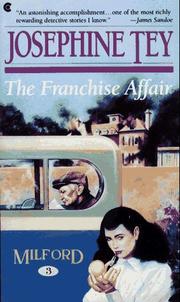
Start with The Franchise Affair. Two women in an isolated house are accused by a teenage girl of kidnapping and beating her; the girl's account is detailed, consistent and apparently unassailable; there is no body and no crime scene, only two irreconcilable stories. It is the clearest demonstration of what Tey actually does, which is not puzzle-plotting but the slow pressure of a community deciding what it wants to believe.
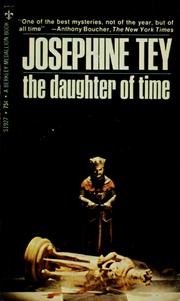
The obvious alternative is The Daughter of Time, easily her most famous book, and it is the wrong place to begin. It is an argument rather than a plot: Inspector Grant, immobilised in a hospital bed, works through the historical case against Richard III for the murder of the princes in the Tower and concludes he was innocent. It is gripping if you already like Tey's voice, and its central case is disputed by professional historians, several of whom regard it as a partisan reading of the evidence. Neither of those is a reason to skip it — it is a reason to read it fourth, when you can enjoy the argument without needing it to be a mystery novel.
The Alan Grant novels, in publication order
The Man in the Queue came first, in 1929, and is the weakest of the six. A man is stabbed in a theatre queue, Grant investigates competently, and the case is resolved by a development that a modern reader will find deflating. Read it for completeness, not for pleasure, and do not read it first — plenty of people have bounced off Tey here and never tried again.
The Franchise Affair followed in 1948. Grant is barely in it; the investigating is done by a country solicitor, and the book is stronger for it.
The Daughter of Time is 1951, and The Singing Sands is 1952, published after her death. That last one has Grant on sick leave, travelling to the Hebrides with claustrophobia and a dead man's scrap of verse, and it is a quieter book than the others — landscape, recovery and a lightly held puzzle. It is a fitting last note but not a strong entry point.
Two Grant novels, A Shilling for Candles and To Love and Be Wise, are not in our catalogue. Their absence is ours, not a judgement on them; To Love and Be Wise in particular is well liked.
The two standalone novels
Brat Farrar is the one to read second. A young man is coached to impersonate the missing heir of a horse-breeding family, walks into the house, and finds that the deception is the least dangerous thing in the story. It is an inversion of the whodunit — you know exactly who the fraud is from page one — and the suspense comes from the fraud himself starting to care about the people he is robbing. Many readers rate it above The Franchise Affair.
Miss Pym disposes is set in a women's physical training college and spends most of its length as a comedy of manners about students and staff, with the crime arriving very late. If you like the register, it is a delight. If you came for detection, it will feel like a bait and switch, so save it.
The order that actually works
The Franchise Affair, then Brat Farrar, then Miss Pym disposes, then The Daughter of Time, then The Singing Sands, then The Man in the Queue if you want the complete set. That ignores publication order entirely, and it should: there is no continuity to preserve, Grant is a thin recurring presence rather than a developing character, and reading her best two first is the only way to avoid the trap of judging her by her debut.
Tey was a pen name — the author was Elizabeth Mackintosh, who also wrote plays as Gordon Daviot. You will occasionally find her under all three names in secondhand shops. See more classic crime paths on Discover.
Follow the full ordered path here: Josephine Tey books in order: where to start with Inspector Alan Grant.