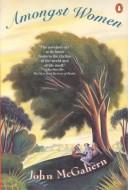
Start with Amongst Women. It is under two hundred pages, it contains one household and one dying man, and it does more with that than most novelists manage with a century and three continents. Moran, an old IRA veteran running his farm and his daughters by the same methods, is one of the great tyrants in Irish fiction, and McGahern writes him without a shred of editorialising — you are simply put in the room and left to work out how love and fear became the same thing in that house.
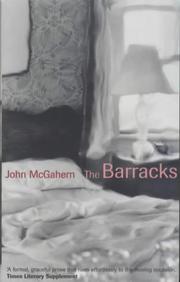
The obvious alternative is The Barracks, his 1963 debut, and it is a genuinely fine novel. But it is the work of a writer still finding the register, and readers who begin there sometimes mistake the deliberate quietness for slightness. Amongst Women is the same sensibility at full strength, and once you have felt it you can go back and see exactly what he was reaching for in 1963.
Read the early novels second
The Barracks is about a policeman's wife in a rural Garda station who learns she is dying and tells nobody. It shares its setting, its weather and its silences with everything McGahern wrote afterwards, and read after Amongst Women it plays as the first sounding of the same note.
The dark followed in 1965 and is the one with the biography attached. It deals plainly with a boy's fear of his father, sexual shame and a priest, and the Irish Censorship Board banned it. McGahern was dismissed from his teaching post in Dublin shortly afterwards, and he did not publish another novel for nine years. Knowing that changes how the book reads, though the book is strong enough without it: it is the angriest thing he wrote and the closest to his own childhood.
The leavetaking is the weak point of the six, and the honest thing to say is that McGahern thought so too. He rewrote the entire second half for the 1984 edition, saying the original had failed — the English sections had come out as reportage rather than fiction. Read it if you are working through everything; skip it if you are not. Which text you get depends on the edition, and the later one is the one he stood over.
The late books are the destination
That They May Face the Rising Sun is his last novel and, for a growing number of readers, his best. It has essentially no plot: a year passes at a lake in Leitrim, people call in, the seasons turn, someone dies, the work gets done. Published in the United States as By the Lake. If Amongst Women is McGahern on constraint and damage, this is McGahern on what a life looks like when the damage is behind you, and the difference in warmth between the two is the whole arc of his career.
Memoir came in 2005, the year before he died, and covers the same ground as The dark and Amongst Women without the fictional cover — his mother's death, his father's violence, the fields. Published in the United States as All Will Be Well. Read it last, on purpose: it is the book most likely to be spoiled by arriving early, because it tells you which parts of the novels were true.
What is missing here, honestly
McGahern was at least as good a short-story writer as a novelist, and his Collected Stories is not in our catalogue. If any of the six books above lands for you, that collection is the obvious next purchase, and several of the stories — the Christmas ones especially — are as fine as anything in the novels.
How much is enough
Two books will do. Amongst Women and That They May Face the Rising Sun bracket the career and hold nearly everything McGahern had to say. Everything else deepens the picture rather than changing it. Find more Irish literature paths on Discover.
Follow the full ordered path here: John McGahern Reading Order: Where to Begin with Ireland's Quiet Master.