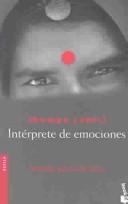
Start with Interpreter of Maladies. It is her first book, nine stories, and it won the Pulitzer Prize in 2000 — deservedly, because the title story and "A Temporary Matter" are as good as the American short story got that decade. The stories move between Calcutta and New England and are built on ordinary domestic misalignments: a couple who can only tell the truth during a power cut, a tour guide who mistakes politeness for intimacy. Nothing is showy. Everything lands.
Go to the stories before the novels. Lahiri is a short-story writer who has also written novels, and the compression is where her particular gift lives — the ability to let a whole marriage turn on one withheld sentence. Beginning with The Namesake is not a mistake, exactly, but it gives you the most conventional version of her.
The American books
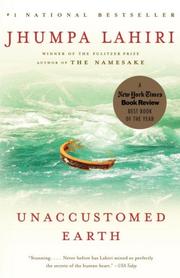
Interpreter of Maladies, then Unaccustomed Earth. The second collection is longer, the stories are closer to novellas, and a good number of readers consider it the better book — particularly the closing Hema and Kaushik triptych, which follows two characters across decades and three linked stories. If the first collection worked on you, this one will work harder.
Then The Namesake, her first novel, about a Bengali-American boy saddled with the name Gogol and the whole freight of his parents' migration. It is the most widely read thing she has written, it was filmed, and it is the book to hand someone who wants a straightforward, moving novel. It is also slightly thinner than the stories, because a Lahiri story does in twenty pages what this does in three hundred.
The Lowland is the ambitious one: two brothers in 1960s Calcutta, the Naxalite movement, a killing, and forty years of consequence in Rhode Island. It reaches for a scale the earlier work avoided and it is more diffuse for it. Read it if the political and historical material appeals; it is the one book of hers where readers most often report admiration rather than absorption.
The Italian turn
Then the break. Lahiri moved to Rome, stopped writing in English, and began publishing in Italian. In Other Words is the first result — a bilingual essay-memoir about deliberately giving up the language she had mastered for one she had not. It is the key to everything after it.
Whereabouts, a short novel of forty-six brief chapters narrated by an unnamed woman moving through an unnamed Italian city, is the fullest expression of the new mode. The sentences are short, the plot is close to absent, and the emotional register is restrained to the point of austerity.
Be honest with yourself here: this is a genuinely different writer. Readers who came for the warmth and specificity of the Bengali-American stories often find the Italian books thin, and readers who find the early work too tidy often prefer the later. Neither reaction is wrong. If In Other Words does not persuade you, stop there rather than pushing on to Whereabouts out of duty.
Where to stop
Interpreter of Maladies, Unaccustomed Earth and The Namesake are the essential three. Everything else is for readers who want to follow a career rather than read the best books in it — which is a perfectly good reason, just a different one.
Does order matter?
Not for plot; none of these books connect. It matters for calibration. The stories set the standard by which the novels get judged, and the English work sets up the meaning of the Italian work. Read backwards and Whereabouts is simply a slight book by an unfamiliar writer. Read forwards and it is an argument. More author paths on Discover.
Follow the full ordered path here: Jhumpa Lahiri Reading Order: Where to Start.