Inorganic chemistry is vast almost by definition — it is the chemistry of nearly every element and every kind of bond outside the narrow world of carbon chains. That breadth can feel like a catalog to memorize, but underneath it are a few powerful theories that make the whole periodic table legible. Reading in order is how you find that structure.
The path starts with a comprehensive foundation, sharpens the tools of bonding and symmetry, and then focuses on the coordination and organometallic chemistry that dominate modern research and catalysis.
The comprehensive foundation
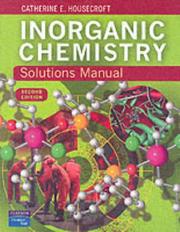
Start with Inorganic chemistry by Housecroft, a modern, well-illustrated text that surveys atomic structure, bonding, and the descriptive chemistry of the elements at a manageable depth. Chemical bonding by Winter is a short, focused companion that nails the bonding models — a small book that pays off across everything else you read.
The theoretical tools
Two theoretical frameworks unlock the transition metals. Chemical applications of group theory by Cotton teaches molecular symmetry, the mathematical language behind spectroscopy and orbital analysis, and it is the tool that makes later topics click. Introduction to Ligand Field Theory by Ballhausen then explains how metal d-orbitals split in the presence of ligands — the theory that accounts for the color, magnetism, and reactivity of coordination compounds.
Coordination and organometallic chemistry
The research heart of the field is here. Comprehensive Coordination Chemistry II is the encyclopedic reference for metal complexes, and Inorganic chemistry by Huheey offers a rigorous, advanced treatment of principles and reactivity. From there, organometallic chemistry — compounds with metal-carbon bonds — drives modern catalysis: The organometallic chemistry of the transition metals by Crabtree is the beloved teaching text, and Hartwig's The Organometallic Chemistry of the Transition Metals is the comprehensive advanced reference for those going deeper into mechanism and synthesis.
Read in this order and inorganic chemistry stops being a list and becomes a coherent theory of bonding across the periodic table. Follow the full path to go from atomic structure to the frontier of catalysis and coordination chemistry.
Follow the full reading path →
Ready to learn something deeply?
Build a reading path — free