Start with Billy Budd, Sailor and Other Stories. Not the whale. This volume gives you "Bartleby, the Scrivener" and "Benito Cereno" — two of the best short works in American literature — plus the late novella that Melville left unfinished at his death. It is a few hundred pages, it contains the prose, the irony and the moral vertigo, and it costs you no months.
"Bartleby" alone justifies the recommendation: a clerk on Wall Street who responds to every instruction with "I would prefer not to," and a narrator whose reasonable decency is slowly exposed as complicity. If that story lands, you are a Melville reader. If it does not, Moby Dick was never going to work either.
The sea novels
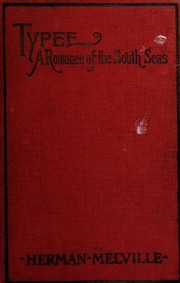
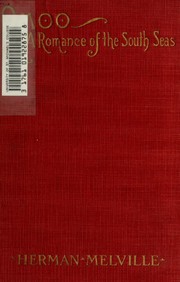
Then go back to the beginning. Typee was Melville's first book and his most popular in his lifetime — a young sailor jumps ship in the Marquesas and lives among islanders who may or may not intend to eat him. It is fast, sensuous, sceptical about missionaries, and genuinely enjoyable in a way his reputation does not prepare you for. Omoo is the direct sequel, looser and more comic.
Redburn and White-Jacket come next. Both are worth reading and both are minor, and Melville said so himself in letters — he described writing them for money rather than conviction. Redburn is a first-voyage novel with a wonderfully bleak Liverpool section; White-Jacket is a life-aboard-a-warship documentary whose account of flogging helped change naval policy. Read one, not necessarily both.
The path also carries a second Melville collection, The Piazza Tales, catalogued in a combined edition with the Billy Budd material. The stories overlap with the first volume, so treat it as an alternative rather than an addition.
The whale
Before you open Moby Dick, read Nathaniel Philbrick's Why read Moby-Dick?. It is about a hundred and thirty pages, it is written by someone who knows the whaling history cold, and its job is precisely to get you through the door. It contains no spoilers worth the name — the plot is not the point — and it reframes the digressions as the reason to read rather than the obstacle.
Then read Moby Dick itself. Two honest warnings. First, the cetology chapters are real: long stretches of taxonomy, rope, blubber, and the anatomy of a whale's head, interrupting the chase. Do not skip them, but do read them as what they are — essays, comic set pieces, and a sustained argument that no system of knowledge can contain its subject. Second, the book changes register constantly, from Shakespearean soliloquy to stage directions to natural history, and readers expecting a consistent adventure novel find that disorienting rather than thrilling.
Take it at fifty pages a day and it becomes one of the great reading experiences. Take it at ten pages before sleep and it will defeat you.
What is not here
This path omits Pierre, The Confidence-Man and the enormous poem Clarel. That is mostly the correct call — Pierre is a fascinating disaster, The Confidence-Man is a bleak late experiment that only rewards committed readers, and Clarel is for scholars. Chase them afterwards if you want, but nobody should feel the list is incomplete without them.
Where to stop
Billy Budd, Sailor and Other Stories plus Moby Dick is the essential Melville, and Typee is the bonus that makes him a person rather than a monument. Stopping there is entirely reasonable; the rest of the bibliography is for people who have already decided.
For another American novelist who wrote long, strange and difficult, see William Faulkner.
Follow the full ordered path here: Herman Melville Reading Order: Where to Start.