A glacier is a slow river of ice, a climate archive and a water supply for a couple of billion people, and the books about them split along exactly those lines. Pick at random and you can read three in a row without once meeting the physics of why ice flows at all.
The second problem is the cliff. Four books here are university texts built on continuum mechanics and thermodynamics; the rest are field memoirs, histories and photographic surveys. A reading order for this subject is mostly about crossing that gap on purpose rather than by accident.
Start in the field
Begin with Ice Rivers. Jemma Wadham is a glaciologist writing about her own fieldwork from Antarctica to the Himalaya, and she builds the working mental model of a glacier as a system with a surface, a bed and a plumbing network. It is a better entry than the obvious alternative, Ice by Mariana Gosnell, which is a sprawling and delightful natural history of ice in every form, from sea ice to icicles, and well over five hundred pages long. Read Gosnell second, for breadth and pleasure.
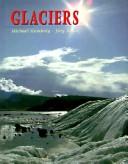
Glaciers by M. J. Hambrey is a different kind of object again: an illustrated survey in which the photographs carry as much of the explanation as the text. Keep it open beside the other two, because seeing a crevasse field or a calving margin does work that a paragraph cannot.
The ice-age story
How the ice ages were discovered and explained is one of the great detective stories in earth science. Frozen Earth by Doug Macdougall tells it as narrative history. Ice ages by John Imbrie is the older classic on the same subject, the book that made Milankovitch orbital cycles legible to non-specialists; its closing chapters are dated, but it remains the clearest account of the argument itself.
Then The Two-Mile Time Machine by Richard Alley, the most valuable popular book on this list. Alley worked on the Greenland cores, and he explains how a layer of ice becomes a year-by-year climate record and what those records revealed about abrupt change. The ice chronicles by Paul Mayewski covers the same coring programme from another participant and overlaps heavily; read Alley and treat Mayewski as optional.
Greenland, and the politics of melting
The Ice at the End of the World by Jon Gertner braids Greenland exploration with the science that grew out of it, and it is the best-written book here. The fate of Greenland is a photographic and reportorial companion on the same subject. Glaciers by Jorge Daniel Taillant shifts ground entirely, to Andean ice, mining and glacier protection law, which is where the subject stops being purely scientific and starts being contested.
The textbooks
Glacial Geology by Matthew Bennett is the right first technical book. It is about landforms and sediments, what glaciers leave behind, and it needs geological vocabulary rather than heavy mathematics. Glaciers and Glaciation by Douglas Benn is the standard advanced survey, wide enough to hold process, landform and climate together, and it is the one to own if you own only one.
The last two are mechanics. Principles of Glacier Mechanics by Roger Hooke assumes calculus and introduces stress, strain and flow law properly, at a pace a motivated undergraduate can follow. The physics of glaciers by Kurt Cuffey is the field's reference text, graduate level, built on continuum mechanics and thermodynamics, and it will punish you for skipping Hooke.
The full path keeps this order, so the ice cores and the flow laws arrive after you already know what a glacier is doing.
Follow the full ordered path here: The Best Books on Glaciers and Ice Sheets, in Order.