The French horn has a reputation for difficulty, and the reason is specific rather than mystical. In the register where most orchestral horn writing lives, the natural harmonics of the instrument are packed so tightly that the difference between the note you want and the one either side of it is a small change in embouchure and air, not a fingering. On a trumpet a wrong note is usually a wrong valve. On a horn it is usually you.
That is why this subject, more than almost any other on ReadingSherpa, comes with a plain statement up front: books supplement a teacher here, they do not replace one. Embouchure placement, the position of the right hand in the bell, and the ear training that lets you hear a partial before you play it all need someone listening in the room. It is also why most of the path below is sheet music — graded methods and etudes — rather than prose. Work through them with a teacher and they are excellent. Work through them alone and you will practise your errors.
The first method
Pottag-Hovey Method for French Horn, Book I is the standard beginner method and has been for decades. It is dry and it is thorough, in the way school band methods are: long tones, simple intervals, gradual range extension, and enough repertoire to keep the exercises from feeling like a treadmill. Its virtue is that it introduces range slowly, which matters on an instrument where pushing for high notes early builds habits that take years to unpick.
The book that actually explains the instrument
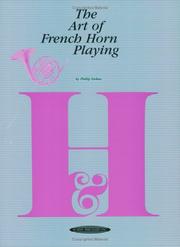
The Art of French Horn Playing is the one genuine prose book here, and it is the canonical text. Philip Farkas was principal horn of the Chicago Symphony, and he wrote the clearest account anyone has managed of what the player is physically doing — embouchure formation, breathing, the hand in the bell and what it does to pitch and colour, mouthpiece choice, and how to practise. Read it early, alongside the first method book, and reread it after a year, when the paragraphs that meant nothing will suddenly describe something you have felt.
Building technique
Pottag-Hovey Method for French Horn, Book 2 continues the first, extending range, key coverage and rhythmic demand. Follow it in sequence; there is no reason to skip ahead, and the gap between the two books is deliberately small.
22 Etudes for French Horn Op. 64 is the step up from method to musicianship. Müller's etudes are studies rather than exercises — they are meant to be played musically, with phrasing and dynamic shape, while also being hard enough to expose weak intervals and unsupported air. This is the point where lessons stop being about producing a note and start being about producing a line.
The wider view
The Horn by Kurt Janetzky is history and context rather than instruction: the natural horn, the arrival of valves, the instrument's role in the orchestra, and how the repertoire we play was shaped by what the instrument could do at the time. It sits last because it is far more interesting once you have struggled with the thing yourself.
One practical note the books tend to assume: get the horn checked before you blame yourself. A leaking valve, a stuck rotor or a badly matched mouthpiece will produce exactly the symptoms a beginner reads as poor technique. A repair technician and a teacher, in that order, solve more problems than a sixth book would.
Five titles is the whole verified list, and for this instrument that is enough — the missing ingredient was never more reading.
Follow the full ordered path here: How to Learn the French Horn from Books, in Order.