Buy one beginner book and tie everything in it before buying a second. The failure mode in fly tying is not a shortage of instruction — it is owning six pattern books and a bench full of materials while still fighting thread tension. Every skill that matters transfers between patterns, and you acquire it by repetition, so the reading order here is deliberately narrow at the start and only widens once your proportions are consistent.
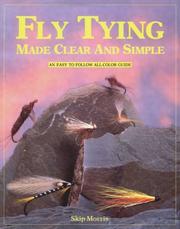
Fly tying made clear and simple by Skip Morris is the standard first book for good reason: large step-by-step photographs, a small set of genuinely useful patterns, and instructions written for someone who has never held a bobbin. Simple flies by Morgan Lyle is the natural companion and makes an argument as well as teaching patterns — that flies with three materials catch as well as flies with nine, which is both true and unusually helpful to a beginner drowning in a catalogue.
Widening out
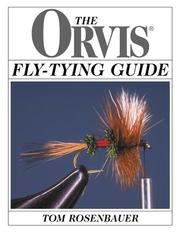
The Orvis Fly-Tying Guide by Tom Rosenbauer is organised by technique rather than by pattern, which is the right structure for the second stage: once you can follow a recipe, what you need is to understand why a dubbing loop exists. The Fly-Tying Bible by Peter Gathercole covers a hundred patterns with photographic sequences and has a British and European emphasis, so it is the better reference if you fish that side of the Atlantic. Charlie's fly box by Charlie Craven is the most contemporary book on the path — modern materials, current commercial patterns, and photography detailed enough to work from without video.
Materials and the natural world
Fly-Tying Materials by Eric Leiser is the reference on what everything on your bench actually is, how to select it and how to store it. It is an older book, and this matters practically: some materials it discusses are now restricted or effectively unobtainable, and substitutions are the norm rather than the exception. Check current rules before ordering feathers on the strength of a decades-old recommendation.
Essential Trout Flies by Dave Hughes answers the question every new tier asks — which patterns do I actually need — with a short list and its variations, and it is the antidote to pattern accumulation. Guide to aquatic trout foods by Dave Whitlock is the entomology, and it is what turns tying from copying into designing: once you know what a mayfly emerger is doing in the surface film, the shape of the hook and the position of the wing stop being arbitrary.
Going deep by category
Tying Dry Flies by Randall Kaufmann is the specialist treatment of the hardest common category, where hackle quality and proportion are unforgiving. Tying emergers by Jim Schollmeyer and Ted Leeson covers the stage of the insect's life that catches most fish and that most beginners neglect. Tying Small Flies by Ed Engle is about size 18 and below, which is a genuinely different skill rather than the same skill scaled down — material selection, hook choice and thread control all change, and this is the book that explains why your size 20 midges look like size 16 midges.
The Fly Tier's Benchside Reference to Techniques and Dressing Styles by Ted Leeson and Jim Schollmeyer is the encyclopedia: enormous, indexed by technique, photographed step by step, and unsuitable as a first book by design. Buy it when you find yourself wanting to know the four ways to mount a wing rather than the one way your beginner book showed you.
The classics
Two older books are here for how they think rather than what they instruct. The art of tying the wet fly by James E. Leisenring, from 1941, is the source of the soft-hackle and flymph tradition and of a whole approach to fishing the fly below the surface. A modern dry-fly code by Vincent C. Marinaro, from 1950, came out of the Letort in Pennsylvania and introduced the thorax dun and a serious treatment of terrestrials; it is an argument about what trout see, and it reads more like natural philosophy than instruction. Neither is a good place to learn from, and both are worth reading once you can tie.
One honest limitation
No book teaches thread tension. Proportion, material selection and sequence are all learnable from photographs; the feel of the thread as it locks a material down is not, and every experienced tier will tell you the same. Use the books for structure and a vise beside a video for the first dozen flies. Follow the full ordering on the path, or browse other craft subjects on Discover.
Follow the full ordered path here: Fly Tying: The Best Books to Read, in Order.