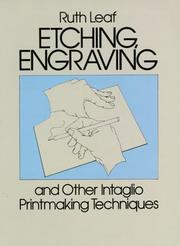
If you want to make prints, start with Walter Chamberlain's Etching and engraving, the Thames and Hudson manual — it covers the intaglio processes specifically, in sequence, with clear diagrams of the plate at each stage. Ruth Leaf's Etching, engraving, and other intaglio printmaking techniques is the other good starting manual: a Dover paperback, cheap, workshop-oriented, and stronger than Chamberlain on troubleshooting a bite that has gone wrong.
If you want to look at prints rather than pull them, skip straight to the identification and history section below. The two halves of this subject barely overlap, and buying a technique manual when what you wanted was connoisseurship is the commonest mistake here.
Practical note before the list: etching involves acids or mordants, solvents, and in traditional aquatint a fine rosin dust. Every serious manual here says the same thing about ventilation, gloves and disposal, and none of them is a substitute for a properly equipped workshop.
The general references
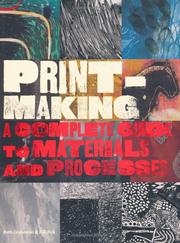
Three books try to cover all of printmaking, and you want one. Printmaking by Beth Grabowski and Bill Fick is the modern comprehensive guide — best on contemporary materials, photo processes and digital hybrids, and the most likely to reflect a workshop you would actually walk into today. The Complete Printmaker by John Ross, Clare Romano and Tim Ross is the older classic, broader in its relief and lithography coverage. The printmaking bible by Ann d'Arcy Hughes and Hebe Vernon-Morris is the largest and most heavily illustrated, and works well as a browsing reference rather than a course.
Intaglio by Robert Adam and Carol Robertson is the one to add if you care about the shift away from strong acids and traditional grounds — it is built around safer contemporary methods, including saline sulphate etching and acrylic resists, and it is written by people who teach them.
The art of etching by E. S. Lumsden is a different proposition. It dates from the 1920s and belongs to the etching revival, so some of its materials advice is obsolete and some of its solvents you should not use; what survives is an unusually good account of drawing on the plate and of what makes a line expressive. Read it after a modern manual, not instead of one.
The second book called Printmaking, by Donald Saff and Deli Sacilotto, is a university textbook that runs history and process together — heavier than Grabowski and Fick and better if you want the technical development explained rather than just demonstrated.
Learning to look
How to identify prints by Bamber Gascoigne is the essential book on this side and unlike anything else here. It is organised by what you can see under magnification — the burr of a drypoint, the flat plateau of a wood engraving, the ruled grain of a mezzotint, the dot pattern of a photomechanical reproduction — and it will teach you in a weekend to date and place a print you have never seen. Every dealer and curator owns it.
Prints and Printmaking by Antony Griffiths is the British Museum introduction: process, history and a glossary, written by a keeper of prints and drawings, and the best short scholarly overview of how the trade and the collections worked.
A History of Engraving and Etching by Arthur Hind is the standard old survey, first published in 1923 and still cited. Its attributions and dating have been revised in many particulars by a century of subsequent scholarship, so use it for the shape of the story and check specifics elsewhere.
One artist, and one wide view
Rembrandt as an etcher by Christopher White is the monograph on the single most important printmaker in the medium, and it is written by a scholar who was also examining states and papers directly — it is where you learn what a state is and why collectors care. The art of the print by Fritz Eichenberg closes the list: a large illustrated survey by a working wood engraver, warmer and more personal than Griffiths, and good for finding out which printmakers you want to chase next.
Work through the path in order and you will be able to both pull a plate and read one.
Follow the full ordered path here: The Best Etching and Engraving Books to Read First.