Electrical engineering is one of the least forgiving subjects to learn out of order. The field is a tower: signals sit on circuits, circuits sit on physics, and each layer quietly assumes you already own the one beneath it. Open a signal-processing text before circuits are automatic and every page feels like it is written in a language you half-speak.
The fix is sequence. You want to build intuition for how current and voltage behave, then formalize that intuition into analysis methods, then move up into devices, signals, and fields. Rushing to the famous graduate texts is the classic mistake — they are rewarding only once the fundamentals are reflexes.
Build circuit intuition first
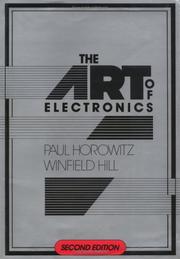
Start with The art of electronics. It is beloved because it teaches how real circuits behave before drowning you in derivations — the practical instinct that textbooks often skip. Pair it with a rigorous fundamentals text: Fundamentals of electric circuits and Electric circuits both drill nodal and mesh analysis, transient response, and AC steady state until they are automatic. Engineering circuit analysis covers the same ground with a slightly more mathematical hand, so use whichever explanations click for you.
Move into devices and electronics
Once you can analyze any linear circuit, add the active components. Microelectronic circuits is the standard bridge from passive networks to amplifiers, transistors, and op-amps, and it treats design, not just analysis. Electronic devices and circuit theory comes at the same material from the device physics side — diodes, BJTs, FETs — so you understand why the components in the previous book behave as they do.
Reach signals, systems, and fields
Now the abstraction leap. Signals and Systems is the canonical text for thinking in the time and frequency domains: convolution, Fourier and Laplace transforms, the ideas that underpin everything from audio to control. Follow it with Discrete-time signal processing for the digital world of sampling, the DFT, and filter design — the backbone of modern electronics.
Finally, close the loop with the physics that all of it rests on. Elements of electromagnetics is the gentler on-ramp to fields, waves, and transmission lines, while Engineering electromagnetics covers the same territory with the classic problem sets. Read them last, when you have the mathematical maturity to enjoy them rather than endure them.
Follow the full path in order and each book turns the next one from intimidating into obvious. From here, the neighboring civil, aerospace, and environmental engineering paths share the same math backbone, so the discipline you built here transfers directly.
Follow the full reading path →
Ready to learn something deeply?
Build a reading path — free