Computer architecture is one of the rare subjects where a determined reader can build the entire tower — a switch, a gate, a register, an instruction set, a pipeline, a cache hierarchy, a multiprocessor — with nothing skipped. It is also a subject where starting at the wrong rung reliably ends the attempt. Most people who stall began with a university textbook that assumed digital logic they had never been taught.
The sequence below fixes that. It starts with a book that requires no electronics background at all, moves through logic and the classic undergraduate datapath text, takes the detour every working programmer should take into how code meets the machine, and finishes with the quantitative literature on instruction-level parallelism, memory and multicore.
From a switch to a working computer
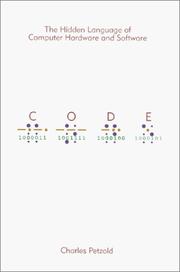
Code is the best entry point in the field, and it is not close. Petzold begins with flashlights and Morse code and ends with a functioning computer, never skipping a step and never assuming a prerequisite. Readers who open a textbook first usually stall; this book is what prevents that.
But How Do It Know covers similar ground but builds one specific simple CPU in complete detail, register by register. Its value is repetition against a different concrete machine, which is what makes the mental model stick. If you found Petzold easy, you can skip it — the two overlap deliberately.
The Elements of Computing Systems is where reading turns into building. This is the Nand2Tetris book: you construct gates, an ALU, a CPU, an assembler and a compiler yourself. Do it before any textbook and the textbook reads as commentary on work you have already done.
Logic, and the datapath
Structured Computer Organization gives the clearest available map of how the levels stack — digital logic, microarchitecture, instruction set, operating system, assembly. Treat it as a short orientation rather than a course.
Digital Design and Computer Architecture teaches the hardware properly: Boolean algebra, sequential design, hardware description languages, then a processor built out of them. For self-taught readers, whose logic design is almost always the weak link, this belongs before the next book rather than after it.
Computer Organization and Design is the canonical undergraduate text and the core of the path — instruction sets, arithmetic, the pipelined datapath, memory hierarchy and I/O, with the performance equations that let you argue about tradeoffs in numbers instead of adjectives.
Where your code meets the machine
Computer Systems: A Programmer's Perspective is the single most immediately useful book here if you write software for a living. Machine-level representation, linking, exceptional control flow and the memory hierarchy, all framed by their effect on real program performance. Our catalogue record is the third edition; later printings exist and any recent edition serves.
Inside the Machine tours microarchitectures that actually shipped — Pentium, PowerPC, Core — explaining superscalar execution and pipelining through real design decisions. It is the bridge from teaching machines to commercial ones, and it dates from a particular hardware moment, which is part of why it reads so concretely.
The quantitative end
Computer Architecture: A Quantitative Approach is the graduate standard and the reason for everything above it: pipelining, instruction-level parallelism, memory hierarchy design, vector and domain-specific accelerators, argued from measurements rather than assertions.
Modern processor design goes deeper than that on the processor core specifically — register renaming, dynamic scheduling, branch prediction, speculation. Take it if the core is what interests you; skip it if the memory system is.
A primer on memory consistency and cache coherence is short, precise and the clearest treatment anywhere of the two ideas that make multicore hard. Read it before Parallel computer architecture, which assumes both and then covers shared-memory and message-passing machines, interconnects and scaling. Finishing there is fitting: architecture becomes a question of communication rather than computation.
Work through it stage by stage with the study plans on the full path, or see the computer architecture hub for adjacent topics.
Follow the full ordered path here: How to Learn Computer Architecture from Books, in Order.